
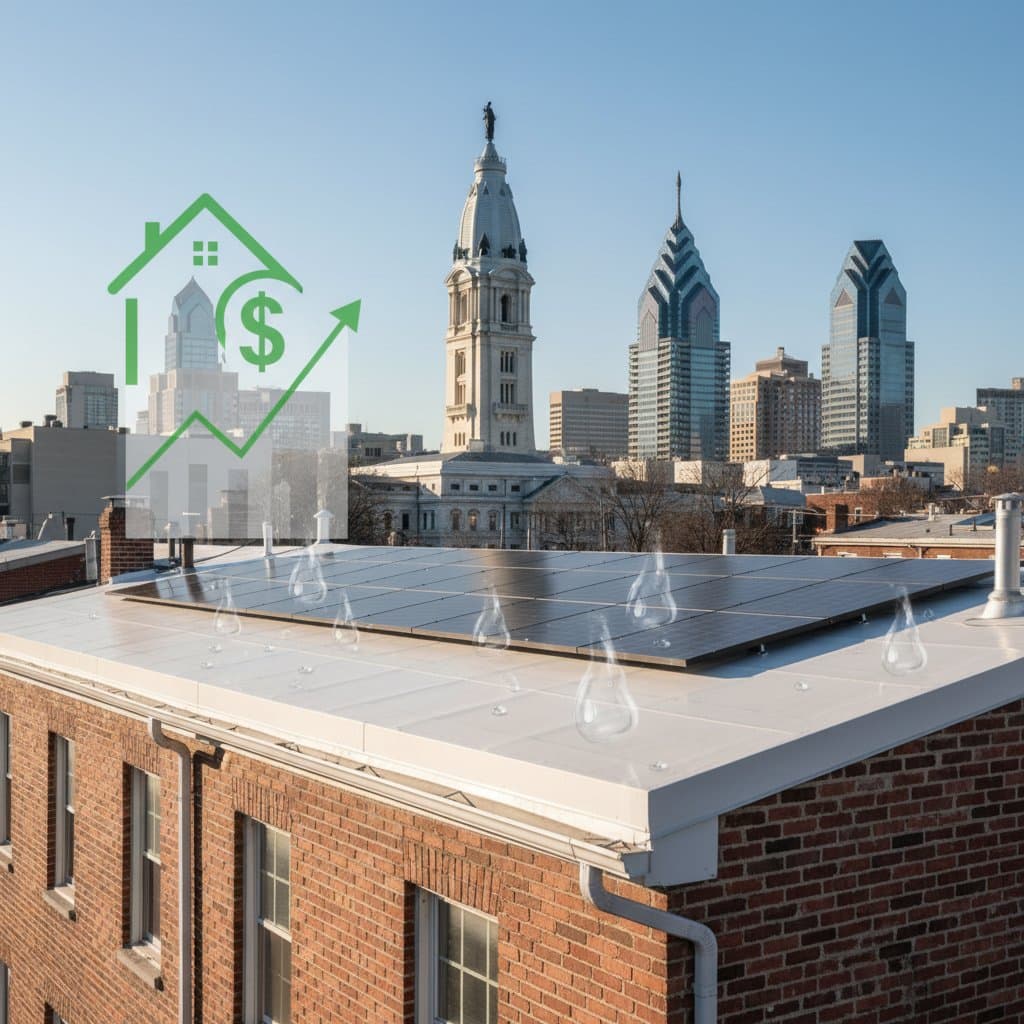
Claim Over $600 in Savings: Federal Tax Credits for Cool Roofs in Philadelphia
Homeowners in the Philadelphia region often face high energy bills during summer months. Upgrading to a reflective or cool roof offers a straightforward solution to reduce cooling costs and qualify for substantial federal tax credits exceeding $600. These roofs reflect sunlight to maintain lower temperatures, easing the burden on air conditioning systems and enhancing overall home comfort.
Cool roofs incorporate specialized coatings or light-colored materials designed to deflect solar heat. This approach minimizes heat absorption, which in turn lowers attic and indoor temperatures. Homeowners benefit from reduced energy consumption, improved property efficiency, and potential increases in resale value over time.
Principles Behind Reflective Roofing
Traditional dark roofs absorb up to 90 percent of incoming solar energy, causing surface temperatures to exceed outdoor levels by as much as 100 degrees Fahrenheit on sunny days. Reflective roofs, however, employ pigments and coatings that redirect 65 to 85 percent of solar radiation back toward the sky. This reflection reduces the thermal mass of the roof, limiting heat conduction into the home.
The underlying physics involves the interaction of sunlight's photons with roof surfaces. Absorptive materials convert photon energy into heat, while reflective ones scatter the energy away. When integrated with adequate insulation and attic ventilation, these roofs can decrease cooling energy requirements by 10 to 20 percent, directly impacting utility expenses.
Quantifying Energy and Cost Savings
Consider a standard Philadelphia single-family home that consumes approximately 10,000 kilowatt-hours of electricity annually, with 40 percent attributed to air conditioning. A reflective roof that reduces cooling needs by 15 percent saves 600 kilowatt-hours per year. At Pennsylvania's average rate of 18 cents per kilowatt-hour, this yields $108 in annual savings, accumulating to more than $1,000 over a decade.
Federal tax credits further amplify these benefits by offsetting material costs for eligible products. For a $5,000 material investment, a 10 percent credit delivers $500 in tax relief. Higher-qualifying products or combined incentives can push total savings beyond $600, providing immediate financial returns alongside ongoing bill reductions.
Navigating Federal Tax Incentives
The Energy Efficient Home Improvement Credit, part of the federal tax code, reimburses a portion of costs for roofs meeting specific reflectivity and emissivity standards. Products certified under ENERGY STAR or equivalent programs typically qualify, covering items such as reflective coatings, membranes, and shingles. Eligibility requires documentation of product specifications and installation details.
Homeowners claim the credit on IRS Form 5695 during tax filing. For roofs with reflectivity ratings above 0.65, the credit applies to 10 percent of qualified expenses, capped at certain limits. Consulting a tax professional ensures accurate application, maximizing deductions based on roof size and material choices.
Exploring Local Rebates and Programs
Philadelphia residents should review offerings from PECO and other utilities for rebates on energy-efficient roofing. These incentives often provide $0.10 to $0.30 per square foot for installations using reflective materials. A 2,000-square-foot roof at $0.20 per square foot receives $400, which, when added to federal credits, surpasses $600 in total support.
Community programs through Philadelphia's green initiatives may offer supplemental grants for projects achieving measurable energy reductions. Verify eligibility by contacting local energy offices or utility providers early in the planning process. These layered incentives accelerate payback periods and encourage sustainable upgrades.
Planning Installation and Material Selection
Reflective roofs suit both new installations and retrofits, applied via coatings on existing surfaces or integrated into full replacements. Opt for white or near-white membranes for maximum reflectivity, or select durable options like cool shingles and metal roofing for varied aesthetics. In Philadelphia's temperate climate, balanced tones such as cool gray provide summer cooling without excessive winter heat loss.
Engage a certified contractor to assess roof pitch, drainage systems, and current condition. They can simulate performance using tools that predict temperature drops and energy savings. Proper installation ensures longevity and compliance with incentive requirements, avoiding common pitfalls like uneven coating application.
Ensuring Longevity Through Maintenance
With routine care, reflective roofs match the durability of conventional systems, often lasting 20 to 30 years. Annual inspections remove debris, dirt, and potential algae that diminish reflectivity. A gentle wash with water and mild detergent restores surface efficiency without harsh chemicals.
Coatings generally require reapplication every 10 to 15 years to sustain performance. Manufacturers provide warranties guaranteeing reflectivity retention above 0.50 for extended periods. Schedule maintenance alongside other home tasks, such as gutter cleaning, to maintain optimal function and eligibility for ongoing rebates.
Evaluating Costs and Return on Investment
Reflective roofing materials cost approximately 10 percent more than standard options, adding $800 to an $8,000 project compared to $7,200 for dark roofs. Incentives and energy savings recover this premium within five to seven years. Beyond breakeven, the system generates net gains, potentially totaling $3,000 to $5,000 over its lifespan through combined bill reductions and credits.
Factor in regional labor rates and material availability when budgeting. Obtain multiple quotes from vetted installers to secure competitive pricing. Long-term analysis reveals reflective roofs as a prudent investment for Philadelphia's variable weather patterns.
Taking Action: From Assessment to Implementation
Begin with a professional energy audit to quantify your home's cooling demands and roof potential. A qualified contractor measures surface area, analyzes shading from trees or structures, and recommends tailored products. Confirm incentive eligibility through manufacturer certifications before proceeding.
Post-installation, retain all receipts and specifications for tax purposes. Integrate roof maintenance into your annual home upkeep routine to preserve savings. Adopting a cool roof not only trims expenses but also contributes to a more energy-resilient and environmentally conscious residence.
Frequently Asked Questions
What materials qualify as reflective roofs?
Products meeting ENERGY STAR standards with a solar reflectance index of at least 78 for low-slope roofs or 29 for steep-slope roofs qualify. These include coatings, single-ply membranes, and modified bitumen systems verified by independent testing.
How do I apply for the federal tax credit?
File IRS Form 5695 with your tax return, attaching proof of purchase and installation for eligible materials. The credit covers 30 percent of costs up to $1,200 annually for energy-efficient improvements, including roofs.
Are there restrictions on roof colors for incentives?
Incentives prioritize reflectivity over color, but light shades like white, cool gray, or tan achieve the highest ratings. Darker tones with specialized pigments may still qualify if they meet minimum reflectance thresholds.
Can reflective coatings be added to an existing roof?
Yes, liquid-applied coatings serve as effective retrofits for asphalt shingles or metal surfaces. Ensure the substrate is clean and sound; professional application guarantees adhesion and performance.