
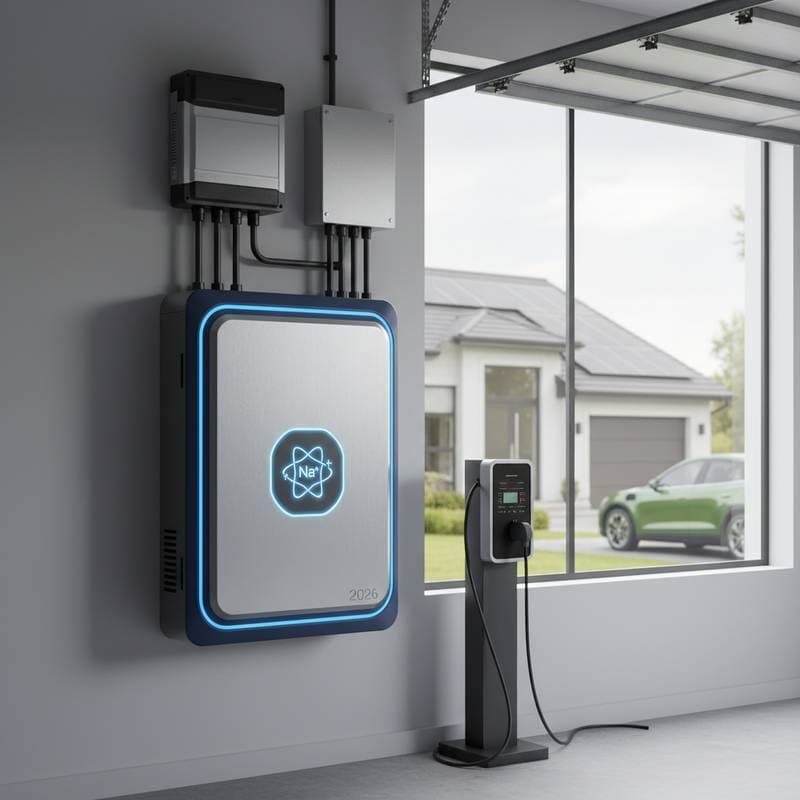
Why Sodium-Ion Batteries Could Cut Your Energy Costs in 2026
Solar research can feel overwhelming at first, especially when battery choices keep expanding. Homeowners hear about lithium-ion batteries everywhere, yet a new option is emerging that could shift the energy storage market. Sodium-ion batteries are gaining attention for one simple reason. They promise similar performance at a lower price.
For households considering solar with storage, this could mean faster payback and greater energy independence without sacrificing reliability. Both lithium-ion and sodium-ion batteries store energy through chemical reactions that move ions between electrodes. The main difference is the element used.
What Makes Sodium-Ion Different
Sodium is more abundant than lithium, and it can often be sourced locally rather than imported. This abundance cuts material costs and reduces the need for specialized mining. Inside a sodium-ion battery, sodium ions travel from the positive electrode to the negative electrode during charging.
When discharging, the ions move back, releasing stored energy as electrical current. The chemistry functions similarly to lithium-ion, but sodium ions are larger and move differently within the cell structure. Engineers are refining materials to handle that movement efficiently.
Because sodium is heavier, early prototypes had lower energy density. That meant larger batteries for the same capacity. Recent advancements in electrode design and electrolyte composition have narrowed that gap. The latest sodium-ion cells can reach about 140 to 160 watt-hours per kilogram, compared to 180 to 220 for standard lithium-ion models.
That difference matters for electric vehicles, but for stationary home storage, space is less critical. What matters most is cost, safety, and cycle life.
Why Homeowners Should Care
The main appeal of sodium-ion batteries lies in affordability and resilience. Lithium prices have fluctuated sharply because of limited supply chains. Sodium, by contrast, is everywhere. Table salt contains it, and extraction processes are simpler and cheaper.
This can stabilize prices for battery packs and reduce the overall cost of solar energy systems. A typical home battery today might cost about 10,000 dollars installed for 13 kilowatt-hours of usable storage. If sodium-ion systems enter the market at 25 percent lower cost, that same capacity could drop to around 7,500 dollars.
Pair that with a standard 7 kilowatt solar array, and the economics change quickly.
Basic Cost Example
Assume a 7 kilowatt solar system produces 1,300 kilowatt-hours per kilowatt each year. That equals about 9,100 kilowatt-hours annually. If the local utility rate is 18 cents per kilowatt-hour, the homeowner avoids roughly 1,640 dollars in yearly electricity costs.
Without storage, about half of that savings may be limited by net billing or time-of-use restrictions. With a battery, the household can capture more of its solar energy for evening use. If a sodium-ion battery cuts installation cost by 2,500 dollars compared to lithium-ion, and the system offsets an extra 500 dollars in utility bills each year, the payback shortens by roughly five years.
Over the battery lifespan, that difference can mean several thousand dollars in additional net savings.
Performance and Longevity
Cycle life refers to how many times a battery can charge and discharge before its capacity drops below 80 percent. Many lithium-ion batteries last between 4,000 and 6,000 cycles. Early sodium-ion designs matched around 2,000 cycles, yet modern versions now exceed 4,000.
For a typical home that cycles once per day, that equals more than ten years of service. Temperature tolerance is another strong point. Sodium-ion batteries operate well in colder conditions, where lithium-ion performance declines.
This makes them appealing for regions with seasonal variation. They also pose less risk of thermal runaway, which occurs when internal temperatures spike. That safety margin may simplify permitting and insurance requirements.
Environmental and Supply Advantages
Sodium extraction has a smaller environmental footprint than lithium mining. It avoids the high water use and chemical processing that often accompany lithium production. Since sodium sources are widespread, domestic manufacturing could expand quickly without heavy resource constraints.
That encourages local jobs and supply stability. Cobalt and nickel, used in many lithium-ion batteries, are not required for sodium-ion chemistry. Removing those metals lowers both cost and ethical concerns tied to mining practices.
For homeowners who value sustainability, this makes sodium-ion an appealing complement to solar power.
How They Integrate with Solar Systems
From a technical standpoint, sodium-ion batteries connect much like lithium-ion units. They use the same inverters and monitoring software in most cases. The battery bank stores excess solar generation during the day, then releases it at night or during grid outages.
The main difference lies in the cell voltage, so manufacturers design compatible management systems to balance charge and protect longevity. Once installed, the homeowner can view production and usage data through a mobile app.
These systems track charge cycles, temperature, and discharge rates. Routine monitoring helps identify potential issues early, keeping performance consistent.
Real-World Value
Imagine a household in a suburban area with a monthly electric bill of 180 dollars. After solar installation, the bill drops to about 60 dollars due to remaining grid fees and nighttime usage. Adding a battery allows the home to use nearly all its solar output directly, cutting the bill to around 20 dollars.
Over a year, that saves about 480 dollars more than solar alone. If the sodium-ion battery costs 2,500 dollars less at purchase, the combined financial gain over its lifespan climbs even higher. Utility programs that offer time-of-use rates make storage even more valuable.
Charging the battery during off-peak solar hours and discharging during peak demand avoids high-rate periods. This strategy can improve return on investment without any change in household behavior.
Maintenance and Monitoring
Sodium-ion batteries require minimal maintenance. Most systems are sealed and managed electronically. Owners only need to keep the area clean, ensure adequate ventilation, and update software as needed.
Annual system checks confirm that the inverter and battery management system operate properly. To extend life, avoid deep discharges whenever possible. Keeping the battery between 20 and 90 percent charge reduces stress on the cells.
Many smart systems automate this range for optimal balance between usable capacity and longevity.
Planning Your Solar Storage Upgrade
Before choosing a battery, homeowners should review local incentives and utility policies. Some regions offer rebates for energy storage, and federal tax credits often apply to batteries installed with new solar systems. When comparing quotes, ask each installer to include both lithium-ion and sodium-ion options if available.
Evaluate cost per kilowatt-hour of storage and estimated cycle life. For those planning to install solar soon, it may make sense to prepare the system for future battery integration. Ensuring that the inverter supports multiple chemistries provides flexibility as sodium-ion products reach the market.
Once prices stabilize, upgrading will be straightforward.
FAQ
1. Are sodium-ion batteries available for residential use now?
They are entering pilot production, and several manufacturers have announced plans for home storage units. Availability should expand as certification and distribution progress.
2. How safe are sodium-ion batteries compared to lithium-ion?
They are less prone to overheating and have a wider safe operating temperature range. This makes them suitable for indoor or garage installations without extensive cooling.
3. Can existing solar systems use sodium-ion batteries?
Yes, most modern inverters can integrate with them once compatible firmware is provided. Always verify with the installer before purchase.
4. Do sodium-ion batteries hold less energy?
They store slightly less energy per unit weight, but for stationary setups, the difference is minor. The lower cost per kilowatt-hour often compensates for the larger size.
5. What is the expected lifespan?
Around ten to fifteen years depending on usage, temperature, and depth of discharge. Proper system management extends performance.