
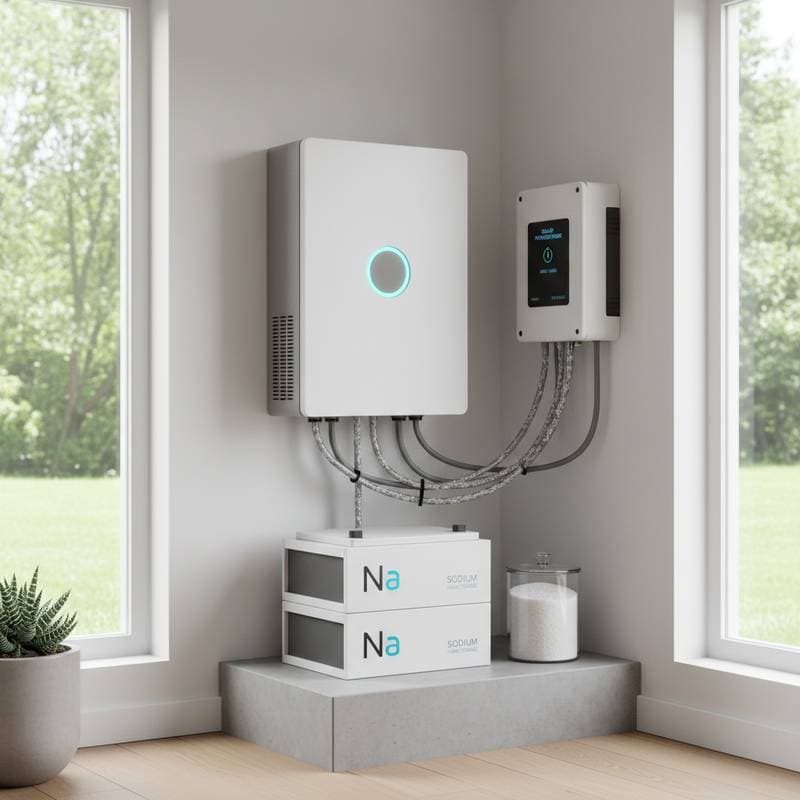
Sodium-Ion Batteries: The Affordable Lithium Alternative for Home Energy Storage
Home solar systems depend on reliable storage. Lithium-ion batteries have dominated the market for years, but their price and material demands limit access for many homeowners. A new option is gaining attention, using one of the most abundant elements on earth: sodium. Sodium-ion batteries are emerging as a practical, low-cost alternative that can change how residential energy storage is built and maintained.
Why Homeowners Are Looking Beyond Lithium
Lithium offers high energy density, long cycle life, and proven performance. Yet the supply chain for lithium is costly and uneven. Mining and refining require specialized facilities and strict transport controls. These limitations raise prices for batteries used in solar storage units, electric vehicles, and portable electronics.
Sodium-ion chemistry solves part of this problem. Sodium is readily available from seawater and salt deposits. It costs far less to extract and process. That cost advantage can reduce the overall price of home energy storage systems, making solar more financially accessible to a wider group of homeowners.
How Sodium-Ion Batteries Work
Sodium-ion batteries store and release energy in a way similar to lithium-ion designs. During charging, sodium ions move from the positive electrode to the negative electrode. During discharge, the ions return, releasing electrical energy.
The main difference lies in the active materials. Sodium ions are larger than lithium ions, which affects how they fit into the electrode structure. This change can lower energy density slightly, but it also improves stability. Sodium-ion batteries can tolerate wider temperature ranges and handle repeated charge-discharge cycles with less stress on the materials.
Key Advantages for Residential Use
- Lower material cost. Sodium sources are inexpensive and widely distributed, reducing the price of raw components.
- Improved thermal safety. Sodium-ion cells are less likely to experience thermal runaway, the chain reaction that can lead to fires.
- Easier recycling and disposal. Sodium compounds are less reactive than lithium compounds. Recycling methods are simpler and safer.
- Suitable for stationary storage. While sodium-ion batteries have lower energy density, that limitation matters less for fixed home systems where weight is not critical.
- Sustainable supply. Shifting from lithium to sodium reduces dependence on scarce minerals like cobalt and nickel. This change supports a cleaner and more secure supply chain.
Safety Considerations for Homeowners
Energy storage carries real risks. Sodium-ion systems still operate at high voltage levels and can release dangerous current if damaged or improperly wired. Homeowners should never open or attempt to service a battery pack.
If a battery enclosure feels hot, emits odor, or shows swelling, disconnect power from the inverter and call a licensed electrician. Only professionals can inspect and replace faulty cells safely.
Before purchase or installation, confirm that the unit is listed by a recognized testing laboratory such as UL or ETL. The label indicates that the product meets electrical safety standards.
Installation and Code Context
In most areas, the local authority having jurisdiction oversees energy storage installations. Permits are required for any system connected to a home electrical panel.
A licensed electrician must size the battery bank for the inverter and solar array. The electrician must also confirm that wiring and overcurrent protection match the National Electrical Code. Additional steps include verifying grounding and bonding connections as well as testing GFCI and AFCI protection circuits.
Homeowners can mount control panels, label circuits, and maintain clear access, but all energized work must be handled by a qualified installer.
Comparing Sodium and Lithium in Home Systems
Energy density differs between the two technologies. Lithium-ion batteries store more energy per unit weight, while sodium-ion batteries are heavier for the same capacity. Cycle life shows advanced sodium-ion chemistries approaching the same performance as mid-range lithium systems, often exceeding several thousand cycles with proper management.
Temperature range favors sodium-ion batteries in colder climates, where lithium cells can lose efficiency. Cost projections indicate sodium-ion systems can reduce overall storage costs by a notable margin once production scales. Environmental impact assessments note that sodium mining has fewer ecological concerns than lithium extraction, which often involves high water usage.
Practical Maintenance and Monitoring
Homeowners should treat sodium-ion systems as they would any major electrical appliance. Keep the area around the battery cabinet dry and well ventilated. Avoid storing flammable materials nearby.
Check the monitoring app or control panel regularly. The following indicators may suggest issues that need professional evaluation: rapid drop in charge level without load, inverter displaying a fault code, audible clicking or popping from the enclosure, or unusual smell or visible corrosion at terminals. If any of these signs appear, shut down the system and contact a licensed electrician or the manufacturer support team.
The Path Toward Affordable Storage
Researchers and manufacturers continue to refine sodium-ion chemistry. Improvements in electrode design and electrolyte composition are raising capacity and efficiency. As production expands, experts expect the cost gap between lithium and sodium systems to widen in favor of sodium.
For homeowners, this shift means more accessible energy independence. Lower battery costs make it possible to store solar power for evening use, backup protection, or time-of-use rate savings.
Evaluating Storage Options for Your Home
Before purchasing any battery system, homeowners should schedule a consultation with a licensed solar installer or electrician. The professional will evaluate household load and backup needs, assess roof or ground-mounted solar capacity, design a code-compliant electrical layout, and recommend compatible inverter and battery models.
Review your current solar system specifications. Check available space for a future battery enclosure. Monitor updates from reputable manufacturers offering UL-listed sodium-ion products. Contact your local authority having jurisdiction to confirm permitting requirements for new storage technologies.
Sodium-ion batteries will soon offer homeowners a safer, lower-cost alternative for solar energy storage. With proper installation and professional oversight, they can deliver reliable power, reduce grid dependence, and make renewable energy more attainable for every household.