
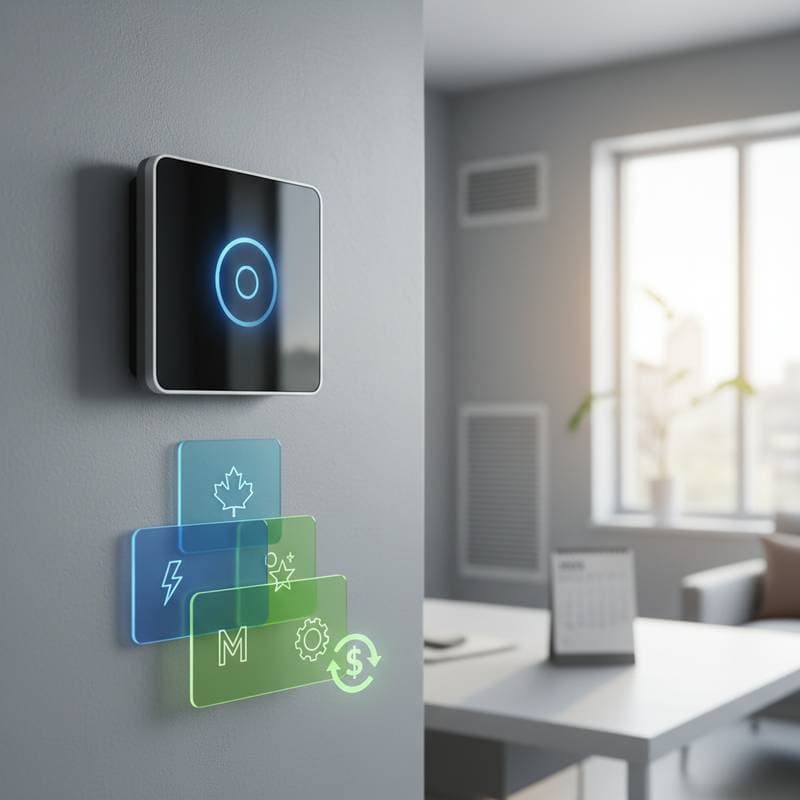
Maximize Savings: Stacking Smart Thermostat Rebates in 2025
A smart thermostat upgrade lowers heating and cooling expenses while enhancing comfort and energy efficiency. Homeowners often overlook the initial cost, unaware of rebate programs that can eliminate it entirely through strategic combinations. This guide details the process of stacking smart thermostat rebates, application timing, and expectations from utilities or state energy offices.
Reasons Smart Thermostats Earn Rebates
Smart thermostats adapt to household routines by automatically adjusting heating or cooling. They link to Wi-Fi and employ sensors to monitor occupancy and external temperatures, minimizing energy waste. Utilities and governments encourage adoption to ease peak demand on grids.
Rebate programs typically demand ENERGY STAR certification or inclusion on the Air-Conditioning, Heating, and Refrigeration Institute (AHRI) list. These standards verify energy-saving performance. Incentives apply exclusively to new devices, excluding used or refurbished units.
Installation Safety Essentials
Replacing a thermostat involves connection to high-voltage HVAC circuits, demanding caution. Shut off power at the main breaker prior to removal, and employ a non-contact voltage tester to verify deactivation.
Individuals may handle low-voltage thermostat swaps if the new unit aligns with the current setup. Proceed with uncertainty in wiring or line-voltage systems by consulting a licensed HVAC technician or electrician. Faulty connections risk transformer shorts or control board failures.
Professional intervention becomes necessary for:
- Multi-zone or heat pump configurations
- Devices needing a common (C) wire absent in existing wiring
- Systems with boilers, radiant heating, or variable-speed components
- Wireless models that struggle with power retention
Rebate Sources for Stacking
Stacking involves layering incentives from diverse providers, such as utilities, state initiatives, and manufacturer offers. Review each program's criteria prior to purchase to ensure compatibility.
Utility Provider Incentives
Electric and gas utilities frequently provide rebates for smart thermostats. Certain programs deliver immediate discounts via partnered retailers, while others necessitate receipt submission and installation verification. Rebate values often cover partial to complete device expenses.
Providers favor models integrable with demand response or efficiency initiatives. Enrollment permits minor temperature shifts during peak usage, yielding additional bill credits or lump-sum rewards for participants.
State and Regional Programs
State energy offices allocate funds for residential efficiency measures, often augmenting utility rebates. These target low-income households or high-demand areas, with some offering matching contributions.
Assess qualification based on primary heating fuel; restrictions may apply to electric or gas systems only. Retain purchase records, model details, and installation timestamps. Incomplete documentation frequently delays reimbursements.
Manufacturer and Retail Offers
Thermostat brands periodically issue combinable rebates, such as mail-in refunds or digital credits post-registration. Visit manufacturer websites for active deals before committing to a buy.
Retailers may include discounted installation or warranties in packages. Thoughtful integration of these can further diminish upfront expenditures.
Strategies to Optimize Rebate Benefits
- Research applicable programs via utility rebate sections and state energy sites.
- Confirm model compliance, prioritizing ENERGY STAR approval.
- Acquire through designated vendors to qualify for specific incentives.
- Document thoroughly: retain receipts, packaging, serial numbers, and installation photos.
- Submit applications within deadlines, favoring online methods for efficiency.
- Monitor progress with confirmation details and claim identifiers.
Resolving Frequent Challenges
Should connectivity or control issues arise post-installation, inspect:
- Secure common wire attachment for consistent power supply
- Untripped HVAC breaker status
- Updated thermostat firmware
- Reliable Wi-Fi at the mounting site
A blank display signals a possible blown transformer fuse, requiring expert repair. Avoid fuse alterations or wiring changes, as they invalidate warranties and pose fire risks.
Extending Savings Post-Installation
Leverage scheduling and occupancy features for optimal efficiency. Set lower winter and higher summer temperatures during absences. Integrated reports track monthly consumption patterns.
Combine with insulation enhancements or duct repairs for amplified results. The U.S. Department of Energy projects up to 30 percent reductions in heating and cooling costs through precise HVAC management, varying by equipment and residence scale.
Indicators for Professional Help
Opt for experts in homes with dated HVAC or unlabeled wiring to guarantee safety. Licensed electricians perform:
- Voltage and compatibility assessments
- Conductor or connector replacements
- Grounding and polarity validations
- Load-testing of operations
Action Plan for Upgrades
Examine rebate conditions thoroughly before purchasing. Reach out to utility efficiency teams for stacking confirmations. For intricate or aged systems, arrange pre-replacement evaluations.
Secure installations of smart thermostats yield lasting comfort and financial gains. Layered incentives from utilities, states, and brands enable full investment recovery, fostering sustained efficiency improvements.