
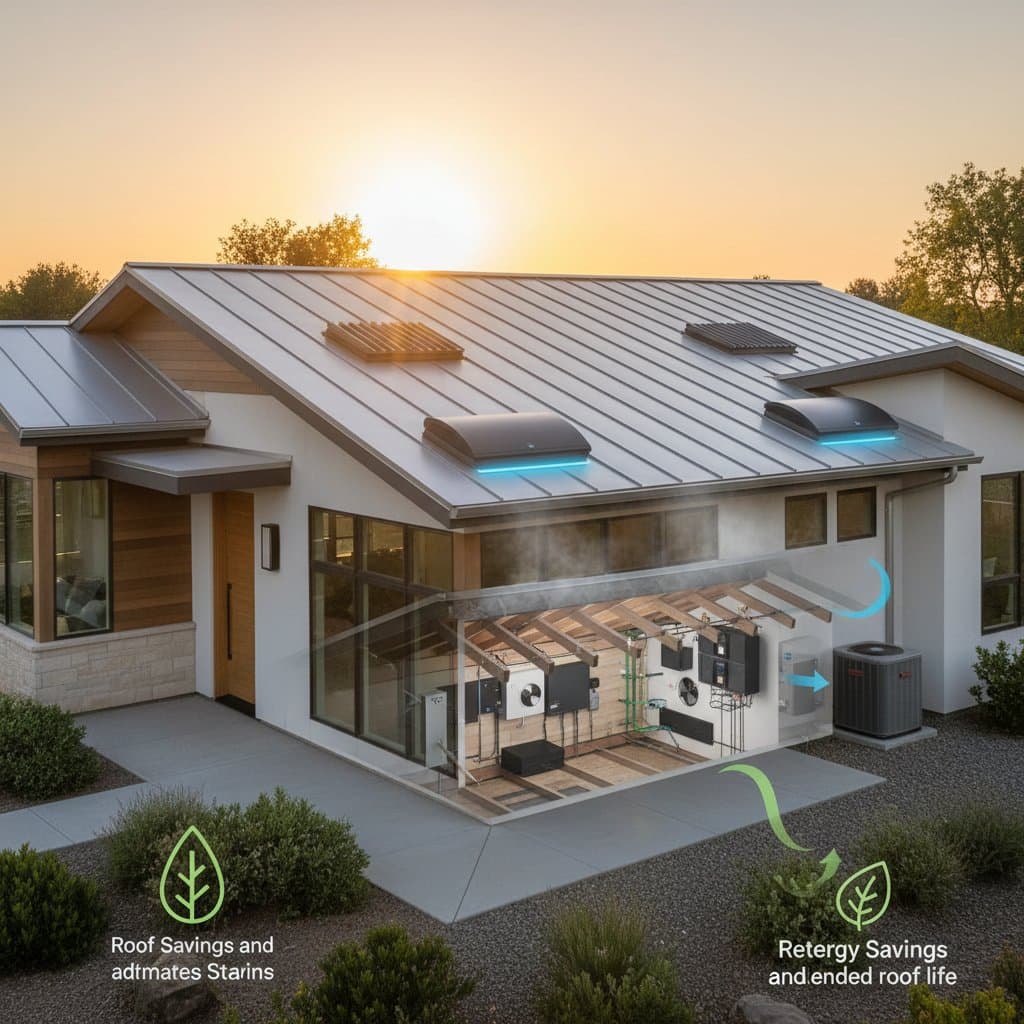
Slash Summer AC Costs by 40 Percent with Smart Roof Vents
Homeowners often face rising cooling expenses during extended summer heat waves. Air conditioners operate continuously to maintain comfortable indoor environments, but much of this effort proves ineffective when attics retain excessive heat. Roofs absorb intense sunlight, causing attic temperatures to exceed 120 degrees Fahrenheit on ordinary afternoons. This accumulated heat transfers through ceilings, compelling air conditioners to function longer and consume more energy. Smart roof ventilation alters this dynamic by expelling trapped hot air before it infiltrates living areas.
Homeowners achieve cooling cost reductions of up to 40 percent as roof and attic temperatures align closely with outdoor levels. These smart vents employ sensors, fans, and adaptive controls that react to current environmental conditions. Ventilation becomes automated, efficient, and reliable, eliminating the need for manual intervention.
Why Smart Ventilation Matters
Conventional attic vents depend on passive airflow driven by wind or convection. Performance diminishes in calm conditions or high humidity, allowing heat to accumulate. Smart systems incorporate powered fans alongside sensors for temperature and humidity monitoring. Fans engage precisely when required, extracting hot air and excess moisture, then deactivate once conditions normalize.
Benefits extend further than immediate cooling. Reduced attic temperatures alleviate stress on insulation, shingles, and roof structures. Stored belongings receive protection from moisture-related deterioration. Consistent attic airflow mitigates ice dams during winter and promotes uniform indoor temperatures throughout the year.
How Smart Roof Vents Work
Each smart vent features a compact motorized fan governed by an integrated controller. Sensors monitor attic temperature, humidity, and occasionally carbon dioxide or air pressure. Upon surpassing predefined thresholds, the fan activates. Hot air escapes via the vent, while replacement air enters through soffits or designated intake vents.
Certain models link to home Wi-Fi for remote access. Users monitor operational data and customize settings via a dedicated mobile application. Advanced units integrate with comprehensive home energy management systems, connecting to solar panels or battery storage for independent power supply.
In essence, these vents prevent attics from becoming thermal reservoirs. Consequently, radiant heat transfer to occupied spaces decreases significantly.
The Cost and Payback Analysis
A standard smart roof vent installation ranges from $400 to $900, varying by unit size, power capacity, and smart features. Most residences require two to three units for optimal airflow distribution. Total expenses for a typical medium-sized home approach $1,500, encompassing professional labor.
Consider the potential savings. For a monthly summer electric bill of $250, a 40 percent reduction in air conditioning usage yields $100 in monthly savings. Across four peak cooling months, this accumulates to $400 per season. Systems recoup initial costs within under four years, with quicker returns amid escalating utility rates or solar integration.
Performance Factors
Outcomes vary based on attic dimensions, roof slope, surrounding shade, insulation quality, and regional climate. A vent rated at 1,200 cubic feet per minute typically lowers attic temperatures by 20 to 30 degrees Fahrenheit. Reducing attic air from 120 degrees to 90 degrees substantially diminishes ceiling heat gain. Air conditioners then cycle less frequently, conserving energy.
In solar-equipped homes, smart vents synchronize with photovoltaic output to align during peak sunlight periods. They harness surplus solar energy precisely when attic heat peaks, enhancing overall renewable utilization.
Installation and Maintenance
Professional installation generally requires half a day. Technicians create an opening near the roof ridge and secure the vent beneath weatherproof flashing to avert leaks. Wiring connects to existing attic electrical systems or, for solar variants, a compact rooftop panel.
Maintenance remains straightforward. Annually clean fan blades and sensors using a soft brush or compressed air. Ensure soffit vents stay unobstructed by insulation or debris. Integrated apps notify users of reduced airflow or irregular motor current, indicating potential servicing needs.
Additional Benefits
Smart ventilation enhances daily comfort through understated improvements. Spaces beneath the attic maintain steadier temperatures as ceilings remain cooler. Air conditioners operate less frequently, resulting in quieter environments. Reduced demand during peak hours supports broader grid stability.
Effective moisture management provides further value. Expelling humid air minimizes mold hazards and safeguards structural elements. Sustained lower humidity preserves insulation effectiveness, ensuring reliable energy performance over time.
Integrating with Efficiency Enhancements
Smart vents yield maximum results within a comprehensive energy strategy. Pair them with these targeted upgrades for amplified outcomes:
- Enhanced attic insulation. Upgrade to R-49 or higher to minimize conductive heat loss.
- Radiant barriers. Install reflective sheeting beneath the roof deck to reflect solar heat and prolong shingle durability.
- Airtight duct sealing. Eliminate leaks that waste conditioned air into the attic.
- Programmable thermostats. Synchronize cooling cycles with ventilation activation for precise control.
- Renewable energy systems. Link vents to solar arrays or batteries to offset operational power from clean sources.
For budget-conscious approaches, incorporate smart vents alongside LED bulb replacements, weatherstripping around gaps, and routine air filter maintenance. Cumulative adjustments foster sustained comfort and efficiency gains.
Addressing Key Concerns
Homeowners frequently express apprehension regarding roof integrity and potential leaks. Contemporary vents employ robust flashing and sealing gaskets that withstand stringent waterproofing evaluations. Certified roofing or HVAC professionals guarantee leak-free setups. Noise levels concern others, yet modern units generate approximately 40 decibels, comparable to a subdued household fan.
In temperate climates, smart vents regulate humidity and avert condensation issues. They contribute to roof preservation by maintaining drier conditions year-round.
Practical Steps for Implementation
Begin by reviewing 12 months of utility statements to establish current consumption patterns. Arrange a professional energy audit or attic evaluation next. Request a solar viability assessment if renewable integration interests you. Obtain bids from at least two contractors, specifying uniform parameters for airflow capacity, power options, and controls.
Post-installation, track attic temperatures via the app for several weeks. Fine-tune activation thresholds to optimize between energy savings and operational duration. Document electricity usage to confirm realized efficiencies over subsequent seasons.
Smart roof ventilation represents a strategic enhancement, not an extravagance. It maximizes energy utilization, lowers environmental impact, eases grid demands, and elevates home livability amid seasonal extremes.
FAQ
How much electricity does a smart roof vent consume?
Most models use 20 to 80 watts during operation. They typically run only a few hours daily, incurring less than $10 in seasonal energy expenses.
Can homeowners install a smart vent independently?
Experienced individuals may attempt DIY installation, though professionals ensure secure weatherproofing and compliant electrical integration.
Do smart vents function overnight?
Yes, activation occurs if attic temperature or humidity surpasses limits, regardless of time. Select models offer a subdued night mode to minimize sound.