
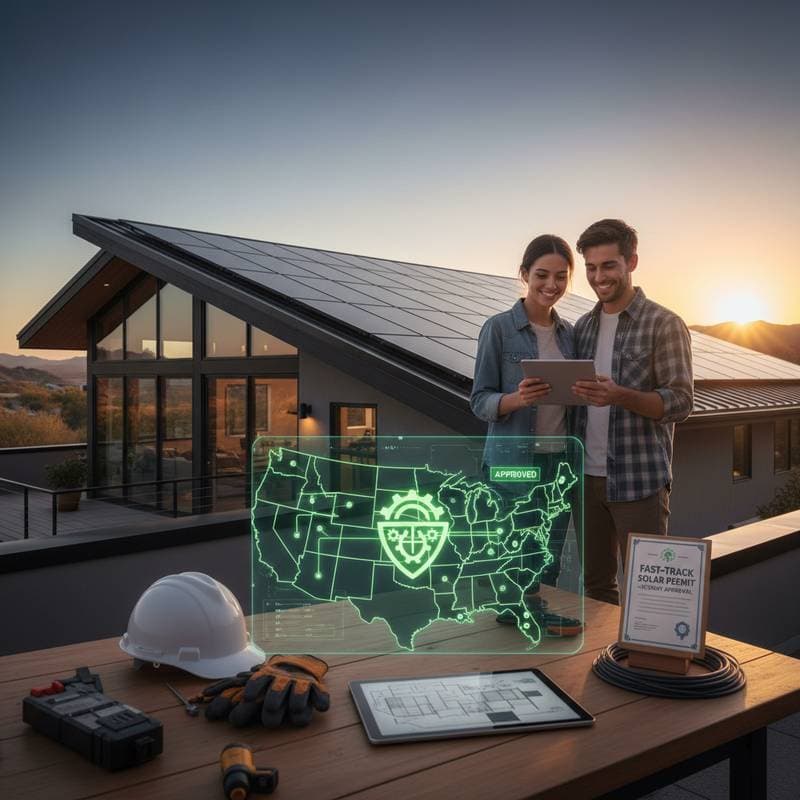
Streamlined Solar Permitting Eases DIY Installations in 12 States
Homeowners interested in installing solar panels themselves frequently encounter bureaucratic hurdles that overshadow the technical aspects of the project. Lengthy permit processes, varying local regulations, and extended wait times can transform a straightforward endeavor into a prolonged ordeal. Twelve states have implemented fast-track permitting programs to address these issues, enabling safer and more efficient DIY solar setups.
These programs maintain rigorous safety protocols while enhancing efficiency and consistency. Homeowners must recognize the boundaries of self-installation and the scenarios that necessitate licensed professionals.
Understanding Fast-Track Permitting
Fast-track permits leverage digital platforms to automate compliance verification for solar system designs. Users input details including inverter specifications, panel quantities, roof characteristics, and wiring configurations. Systems cross-reference this information against established safety codes, issuing approvals as quickly as one day if all criteria align.
Many jurisdictions adopt a standardized national framework, adaptable to local needs, which draws from the National Electrical Code and residential structural guidelines. The platform assesses equipment certifications, wire dimensions, and grounding practices. Approved designs proceed to on-site inspections that prioritize installation quality over preliminary paperwork.
Automation preserves code adherence by eliminating repetitive manual reviews. Participants remain obligated to adhere precisely to requirements for labeling, conduit installation, and electrical connections.
Operational Details of Fast-Track Programs
These initiatives employ uniform templates and algorithmic validation to scrutinize key elements: structural integrity, electrical setup, and component certifications.
-
Structural Assessment
The application requires details on roof composition, pitch, and construction. Software computes capacity for wind, snow, and added weight. Designs surpassing predefined thresholds trigger manual evaluation by authorities. -
Electrical Configuration Validation
Inputs cover panel output in watts, inverter capacity, conductor thickness, and circuit breaker specifications. Integrated tools ensure alignments with National Electrical Code parameters for current handling and protection. -
Component Certification Check
All elements, from panels to inverters, require certification from accredited laboratories. Uncertified items disqualify applications from expedited processing.
Upon validation, the system produces a formal permit and a customized inspection guide. Field inspectors then confirm aspects such as connection integrity, accessibility of shutoffs, and mounting stability.
Maintaining Code Compliance and Safety
Streamlined processes uphold identical standards to conventional methods, covering grounding techniques, conductor capacities, and fault protection mechanisms. The primary innovation involves digital efficiency and streamlined records.
Inspectors conduct thorough examinations of:
- Terminal connection tightness using calibrated torque tools
- Conduit attachment security against environmental stresses
- Visibility and accuracy of labels on disconnects and metering points
- Implementation of ground-fault and arc-fault interrupters in mandated locations
- Inverter input polarity and output voltage consistency
Such measures prevent expedited approvals from compromising installation reliability. Local authorities retain full oversight and may invalidate permits for any deviations from submitted plans.
Addressing Frequent Challenges
Automated systems occasionally reject submissions due to issues like obsolete certifications or insufficient structural inputs. To minimize setbacks:
- Select equipment with up-to-date laboratory approvals
- Validate inverter suitability within the platform's database
- Assess roof load-bearing potential through professional consultation if uncertain
- Submit high-resolution images and precise schematics
Projects involving ground arrays, energy storage integration, or electrical service expansions typically require standard permitting paths, as they exceed simplified guidelines.
Preparing for DIY Solar Success
Residents in participating states should access their local building department's portal to verify program availability and personal qualifications. Complete the digital pre-application review to identify potential gaps early.
Essential practices include:
- Withholding system activation until post-inspection clearance
- Ensuring all terminations receive proper insulation and identification
- Guaranteeing unobstructed access to emergency disconnects
Benefits of Accelerated Solar Adoption
Fast-track permitting not only shortens timelines but also democratizes solar energy by reducing financial and administrative burdens. Homeowners achieve quicker returns on investments through energy savings, while communities advance sustainability goals with broader participation. These reforms signal a maturing solar landscape, where innovation supports safe, accessible renewable energy for all.