
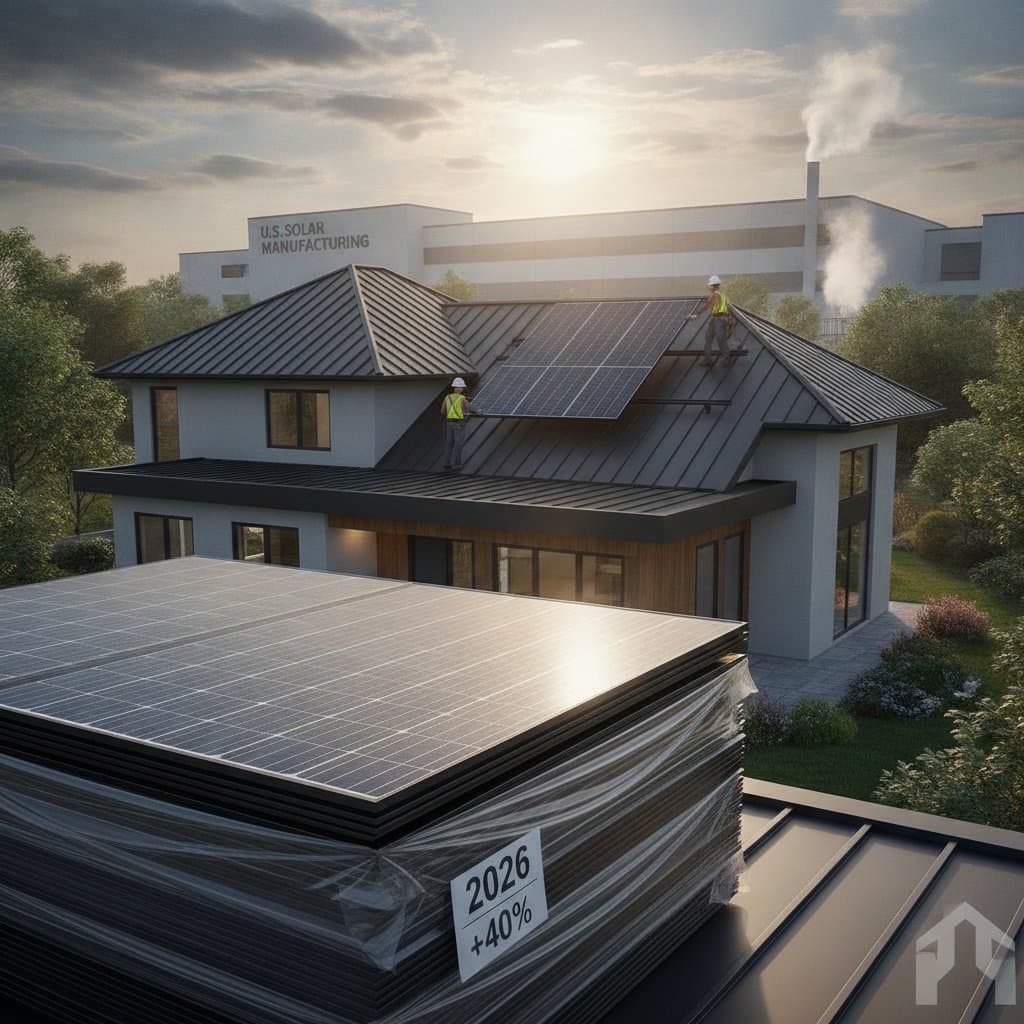
2026 Tariffs Set to Increase Solar Panel Prices by 40 Percent
Homeowners planning solar installations face a new challenge. Federal trade officials have confirmed that upcoming tariffs on imported photovoltaic modules and cells will raise equipment costs by about 40 percent. This change directly affects system pricing, installation timing, and long-term savings.
Why Tariffs Affect Solar Projects
Tariffs function as taxes on imported goods. In this case they target solar panels and related components produced overseas. The policy goal centers on protecting domestic manufacturing and encouraging local production. While that may strengthen supply chains over time, it raises near-term costs for consumers and installers who rely on imported modules.
A licensed solar contractor in Philadelphia noted that wholesalers adjust prices within weeks and project bids reflect those increases immediately. Industry data shows material costs make up roughly 40 to 50 percent of total solar installation pricing. Any increase in panel cost therefore influences payback periods and financing terms.
Projected Price Changes
Analysts project a cost increase of 30 to 40 percent for panels imported from major Asian suppliers. Domestic manufacturers may also raise prices because of reduced competition. Homeowners could see average system quotes rise by several thousand dollars depending on system size and configuration.
A 10-kilowatt residential system that previously cost about 20,000 dollars could rise to 28,000 dollars or more. Larger systems used for small businesses could face even sharper jumps. Contractors may respond by offering smaller systems or partial upgrades to manage budgets.
Growth in Domestic Manufacturing
Several companies in the United States are expanding production capacity to offset import limits. Federal and state programs provide tax credits for producing cells and modules domestically. This growth can eventually stabilize prices, though new lines require time to reach full output.
Local production also requires investments in workforce training, quality assurance, and safety compliance. Facilities must meet Underwriters Laboratories listing standards and follow National Electrical Code requirements for equipment labeling and grounding. Consumers should verify that any new domestic product carries proper listings and approvals.
Supply Chain Adjustments for Installers
Installers will face tight supply conditions during the transition. Some distributors are already stockpiling panels ahead of tariff enforcement. Homeowners should request itemized quotes that show panel model, inverter type, and labor cost. Transparent documentation helps compare offers and confirm warranty terms.
If a quoted panel model becomes unavailable, contractors may substitute equipment of similar wattage. Always confirm that substitutes are listed and approved for grid-tied use. A mismatch between inverter and panel specifications can reduce efficiency or violate local code requirements.
Financing and Incentive Updates
Higher equipment costs influence both cash and financed purchases. Lenders may adjust loan terms as project values climb. Some state incentive programs cap rebates by system cost, which could limit eligibility if prices exceed certain thresholds. Homeowners should review updated incentive tables through their state energy office.
Tax credits for solar installations remain available and apply to total system cost. The higher the cost, the larger the credit in absolute terms, yet the payback period may still lengthen. Financial advisors recommend running new projections before signing a contract.
Professional Installation Requirements
Tariff changes might tempt some homeowners to buy panels directly and attempt self-installation. This approach carries serious risks. Electrical connections must be properly torqued and grounded. Only licensed electricians and certified solar contractors should perform system wiring, interconnection, and inspection coordination.
DIY work can void manufacturer warranties or utility interconnection approvals. Always check with your utility and local building department before purchasing equipment. Only a licensed professional can confirm compliance with National Electrical Code Article 690 requirements.
Safety Verification Steps
Even with rising costs, safety cannot be compromised. Make sure your contractor uses listed wire connectors and properly rated overcurrent devices. The contractor must install ground-fault and arc-fault protection where required and verify correct torque on all terminal connections with a calibrated torque screwdriver. Documentation of inspection sign-offs from the local authority having jurisdiction should be provided.
If inverter error codes, ground fault warnings, or temperature spikes appear, call a licensed technician immediately. These symptoms can indicate wiring faults or component failure unrelated to tariffs but critical to system safety.
Timing Decisions Before Tariffs Take Effect
Those planning to install solar should consider acting before tariff-related price increases reach full effect. Early orders may still qualify for pre-tariff pricing depending on supplier inventory. Request confirmation that panels are already imported and in stock. Ask contractors about lead times, delivery schedules, and equipment origin.
If immediate installation is not possible, monitor domestic production announcements. Local factories may release competitively priced panels within the next supply cycle. In the meantime, improve roof condition, upgrade electrical service panels, and gather required permits.
Preparing for Long-Term Industry Shifts
The tariff policy aims to build a self-sustaining domestic solar industry. Over time this could reduce reliance on overseas supply chains and create stable employment in manufacturing and installation. For homeowners the near-term challenge involves managing cost increases without delaying clean energy adoption.
Recommended Actions Before Purchase
Request at least three itemized quotes. Confirm license status of each contractor. Review warranty coverage in writing. Always involve a certified electrician for electrical tie-ins and inspections. Solar remains a strong investment in energy independence when these steps are followed.