
Introduction
Solar energy systems continue to evolve with technology that maximizes energy harvest and financial returns. Microinverters and power optimizers represent two leading approaches to module-level power conversion. Each option carries distinct implications for system performance, upfront costs, and long-term savings through 2026 and beyond.
Homeowners and businesses evaluating solar investments need clear data on return on investment. This comparison examines efficiency rates, installation requirements, maintenance demands, and regional performance variables. The analysis focuses on practical outcomes rather than marketing claims.
How Microinverters Operate
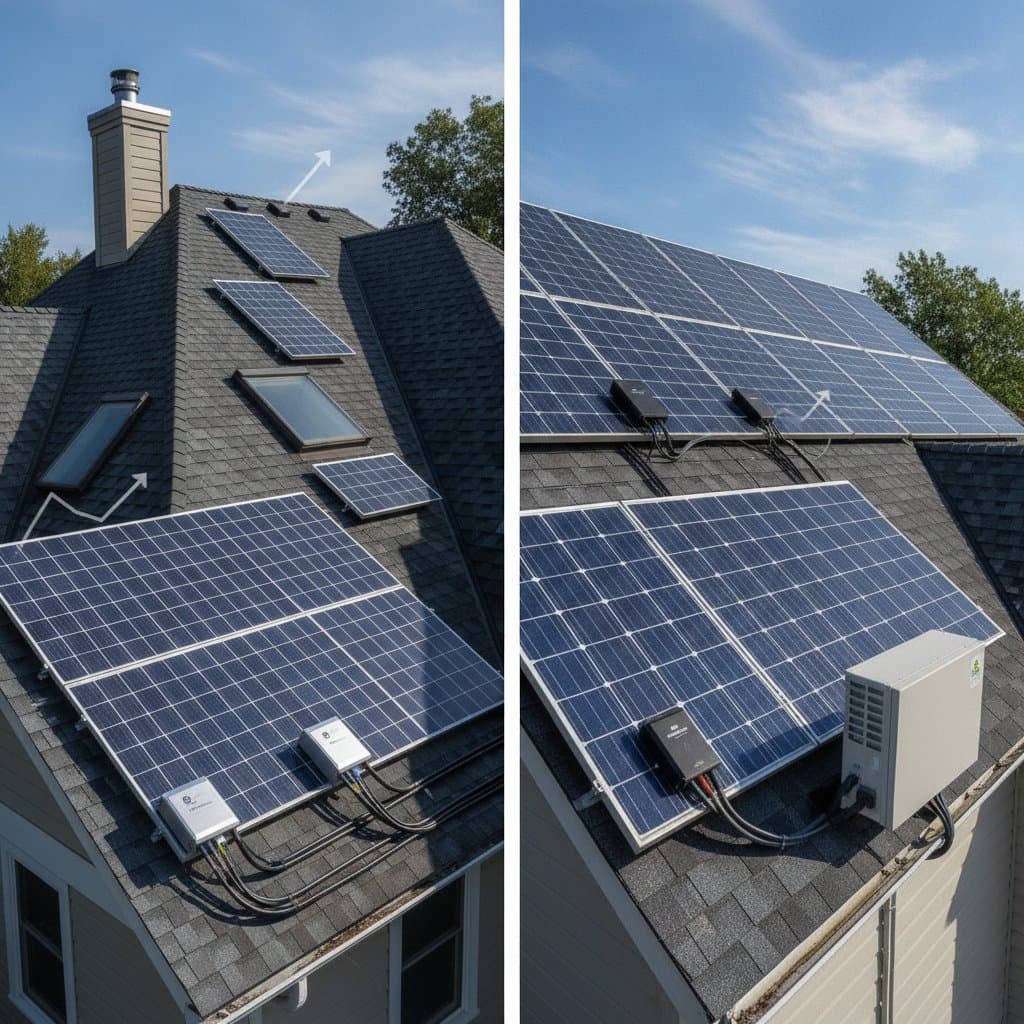
Microinverters attach to individual solar panels and convert direct current to alternating current at the source. This design allows each panel to function independently. Shading on one panel does not reduce output from the remaining array.
Systems using microinverters often achieve higher energy yields in complex roof layouts. They also provide granular monitoring data for each module. Initial equipment costs remain higher than string inverter configurations.
How Power Optimizers Function
Power optimizers attach to panels and condition direct current before it reaches a central inverter. They mitigate mismatch losses caused by shading, soiling, or panel degradation. The central inverter then performs the final conversion to alternating current.
This architecture delivers strong performance at a lower component cost than microinverters. Monitoring occurs at the panel level, yet the system relies on a single inverter unit. Replacement of that inverter represents a future maintenance consideration.
Cost and Efficiency Comparison
Microinverter systems typically carry a 15 to 25 percent higher upfront price than optimizer setups of similar capacity. Efficiency ratings for both technologies now exceed 97 percent under standard test conditions. Real-world output differences appear most clearly in partially shaded installations.
Optimizers paired with a string inverter often produce competitive annual energy figures at reduced initial expense. Over a 25-year system life, the total cost of ownership depends on local electricity rates and available incentives. Labor expenses for installation remain comparable between the two approaches.
Reliability and Maintenance Factors
Microinverters demonstrate strong reliability records, with many manufacturers offering 25-year warranties. Failure of one unit affects only its attached panel. Replacement requires roof access but does not shut down the entire system.
Optimizer systems concentrate risk in the central inverter, which usually carries a 10 to 12 year warranty. Warranty extensions add cost but improve long-term protection. Both technologies require minimal routine maintenance beyond periodic panel cleaning.
Regional Performance Variables
Climate, roof orientation, and shading patterns influence which technology delivers superior returns. Northern installations with frequent snow cover benefit from the independent operation of microinverters. Southern sites with consistent full sun may see smaller differences in annual production.
Local utility rate structures and net metering policies further shape financial outcomes. Properties with complex roof planes or multiple orientations gain measurable advantages from module-level electronics. Simple, south-facing arrays may achieve acceptable returns with either solution.
Decision Framework for 2026
Evaluate roof complexity and shading first. Properties with significant obstructions favor microinverters for maximum energy capture. Open sites with minimal shade can prioritize the lower installed cost of optimizer systems.
Calculate payback periods using current equipment pricing and local incentives. Review warranty terms and projected inverter replacement costs. Consult production estimatesdesign software rather than generic averages.
Selecting the Appropriate Technology
Review detailed proposals from qualified installers that model both options side by side. Compare total lifetime energy production against cumulative ownership costs. Factor in monitoring preferences and long-term service availability in your area.
The technology that aligns with your specific roof conditions and financial timeline will deliver the stronger return through 2026 and the following decades.