
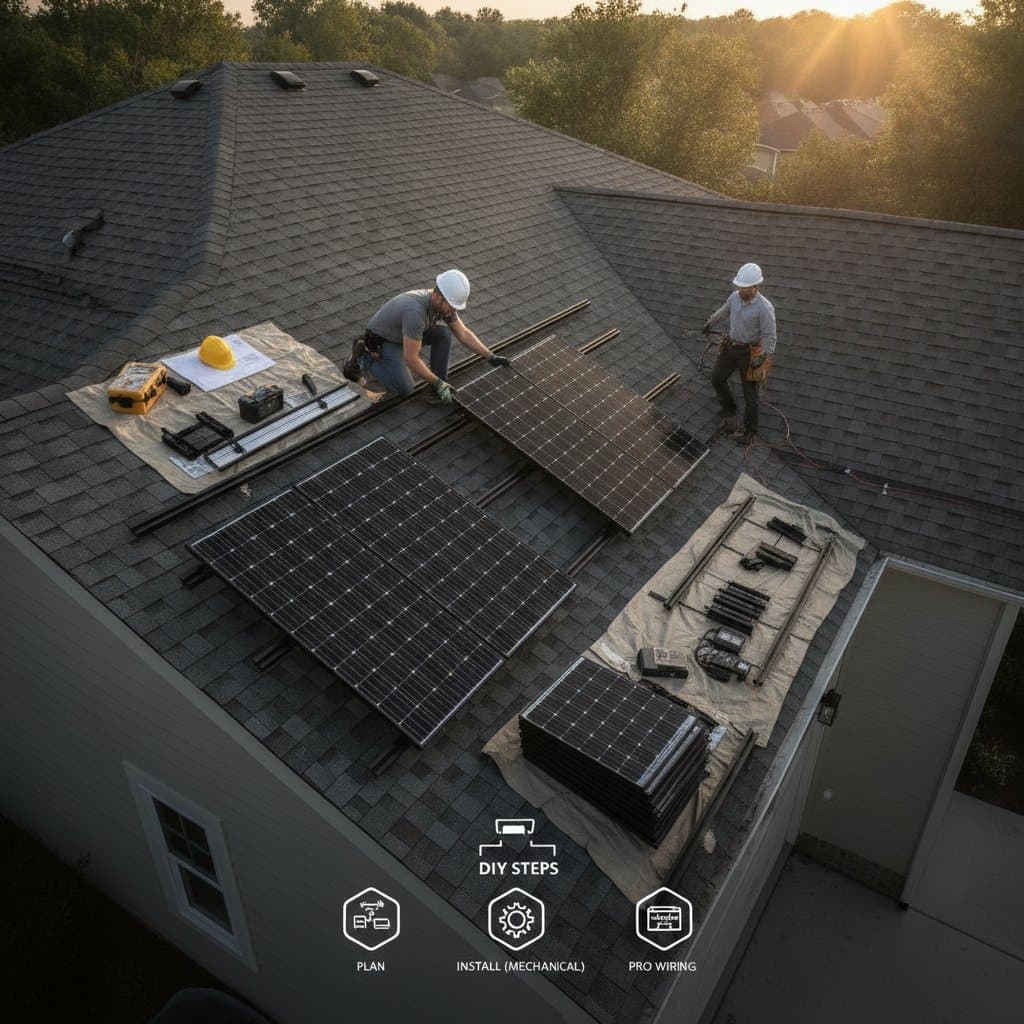
Install Solar Yourself for $8K and Still Get Rebates
Rooftop solar has become accessible to homeowners who plan carefully. With the right equipment and attention to safety codes, a self-installed system can cost around eight thousand dollars while preserving rebate eligibility. Success depends on distinguishing tasks that homeowners can complete from those reserved for licensed professionals.
This guide outlines the process for planning, mounting, and connecting a grid-tied solar array that satisfies inspections and incentive requirements. Every recommendation emphasizes compliance over speed.
Plan Your System and Budget
A budget near eight thousand dollars supports a modest yet functional grid-tied array when materials are purchased directly and most labor is performed by the owner.
Example Budget Breakdown
- Solar panels: three thousand to three thousand five hundred dollars for roughly four kilowatts
- Microinverters or string inverter: one thousand to one thousand five hundred dollars
- Mounting hardware and racking: one thousand two hundred to one thousand five hundred dollars
- Wiring, conduit, disconnects, and hardware: eight hundred dollars
- Permit and inspection fees: three hundred dollars
- Electrician for final connections and testing: five hundred to eight hundred dollars
Costs vary with roof type and local fees.
Verify Incentive Eligibility
State and utility programs frequently extend rebates to owner-installed systems. Qualification requires that the array serve a primary residence, incorporate UL-listed components meeting National Electrical Code standards, pass inspection by the authority having jurisdiction, and connect to the grid through a licensed electrician. Retain all receipts and photographs to document compliance.
Evaluate the Site
Begin with a thorough roof assessment. Identify cracked shingles, sagging rafters, or deteriorated flashing. Panels remain in place for decades, so the supporting structure must remain sound throughout that period.
Critical Site Factors
- South-facing orientation maximizes annual production.
- Roof pitch should align with local latitude for optimal output.
- Minimal shading from trees or vents preserves energy yield.
- Rafters must support an added load of three to four pounds per square foot.
Structural deficiencies require professional repair before any mounting begins.
Reserve Certain Tasks for Licensed Electricians
Only a licensed electrician may install the AC disconnect and conduit to the service panel, complete final inverter connections, perform voltage and insulation testing, and submit the utility interconnection application. These steps involve energized circuits and formal approvals that demand proper credentials.
Maintain the Array Over Time
Solar systems need minimal upkeep, yet regular inspections protect performance and safety.
Recommended Maintenance Steps
- Clean panels periodically with water and a soft brush.
- Examine wiring each year for damage or pest interference.
- Compare monitoring data against expected production levels.
- Tighten accessible fasteners according to manufacturer guidance.
Signs of arcing, corrosion, or damaged insulation require immediate shutdown and professional attention.
Determine When Owner Installation Is Appropriate
Self-installation suits single-story homes with uncomplicated rooflines, owners experienced with ladders and basic tools, arrays under six kilowatts, and projects that allow the owner to manage permits. Steep, shaded, or intricate roofs, as well as battery storage additions, call for full-service contractors who can perform load calculations and utility coordination.
Begin Your Solar Project
Confirm structural readiness with a qualified inspector. Identify applicable incentive programs through local utilities. Acquire listed equipment from established suppliers. Secure necessary permits. Complete permitted mounting work. Engage an electrician for final wiring. Submit documentation after inspection to claim any available rebates. A properly executed eight-thousand-dollar system can deliver decades of reliable power while satisfying all regulatory and financial requirements.