
Join Community Solar in 2026: No Rooftop Panels Needed
Many people in Philadelphia want lower electric bills and cleaner energy. Renters, condo owners, and those with shaded or small roofs often feel left out of the solar movement. Community solar changes that situation. It lets subscribers join a shared solar project and receive credits on utility bills for the clean power produced.
Why Community Solar Matters for Philadelphia
Community solar opens solar savings to everyone. It supports local clean energy jobs, reduces emissions, and keeps money in the community. A larger solar array serves many subscribers instead of one household owning all panels. Each participant receives a share of the output as a credit on the monthly electric bill.
This model helps overcome barriers that have slowed solar adoption in the Philadelphia region. Rowhomes with limited roof space, historic buildings, and shaded neighborhoods can now benefit. Subscribers support renewable energy without construction or maintenance on their property.
How It Works
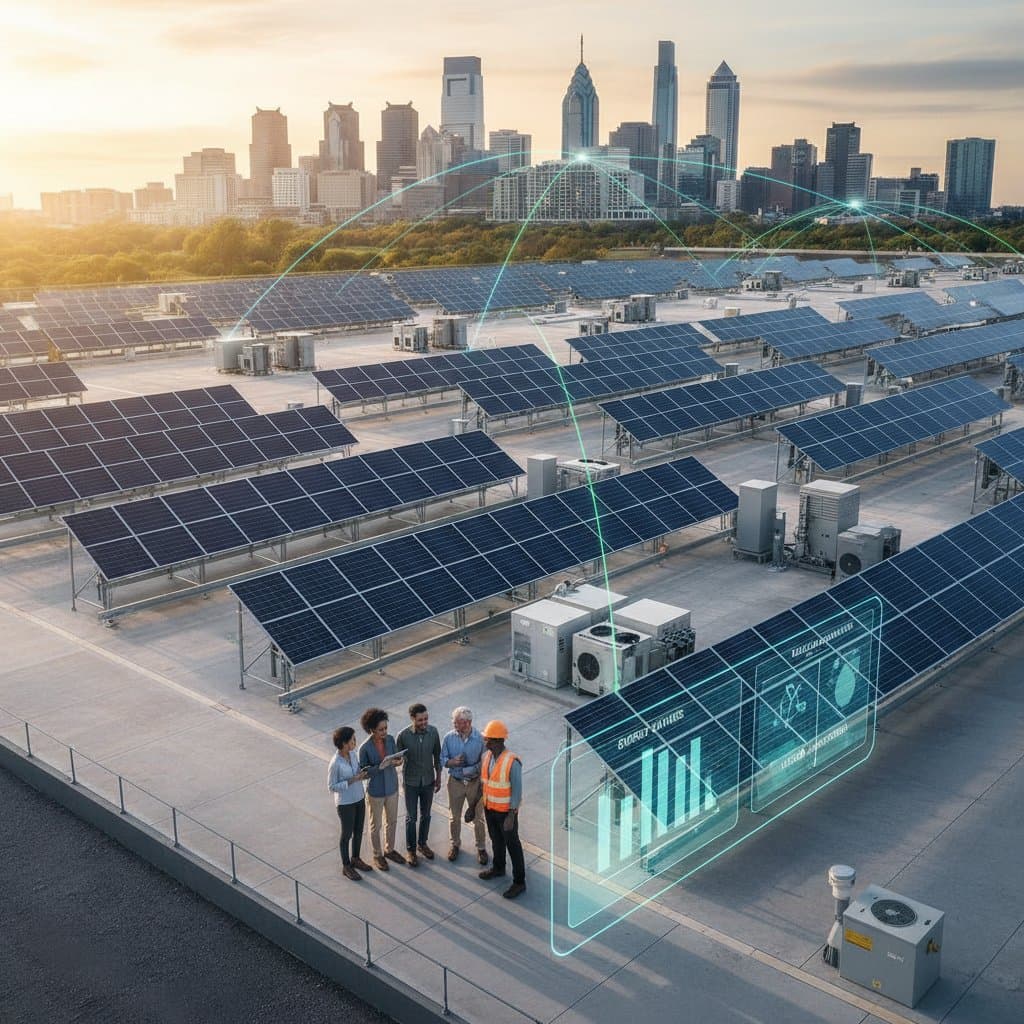
A solar developer builds and operates a medium or large project, often on a warehouse roof or open land near the grid. Electricity flows into the local utility system. The utility tracks project production and applies proportional bill credits to each subscriber.
For example, a 5-kilowatt share in a project that produces 1,300 kilowatt-hours per kilowatt each year generates about 6,500 kilowatt-hours annually. At a utility rate of 24 cents per kilowatt-hour, that offsets roughly 1,560 dollars on the electric bill before fixed fees. Exact savings depend on subscription size, usage, and project performance.
Costs and Savings
Most community solar programs use a subscription model. Subscribers pay for the power their share produces, usually at a rate below current utility cost. Some projects offer guaranteed savings of 10 to 15 percent off total electricity charges. There are no upfront installation costs, and cancellation with notice is often possible.
An average household using 9,000 kilowatt-hours per year might subscribe to cover about 80 percent of usage. At a subscription rate of 20 cents per kilowatt-hour versus a utility rate of 24 cents, that household could save about 360 dollars per year.
Incentives and Policy Support
Community solar programs rely on supportive policies that allow crediting and fair value for shared generation. State energy offices and utilities create frameworks for transparent savings and smooth grid connections. Local incentives may include low-income participation options or priority for projects on brownfields.
Federal and state tax incentives flow to developers. These lower project costs and allow savings to pass to subscribers. The incentives encourage new construction and stabilize long-term prices.
Installation and Maintenance
Community solar requires nothing to install at home. The developer handles design, permits, interconnection, and maintenance. Subscribers receive bill credits each month. The developer monitors production and manages the system.
Subscribers track output through an online dashboard or app. This transparency shows clean energy produced and savings achieved.
Pairing With Other Energy Habits
Community solar pairs well with efficient appliance use, LED lighting, and adjusted thermostat settings. Load shifting, such as running laundry during off-peak hours, stretches savings further. Reduced overall electricity use lets solar credits cover a larger bill portion.
Experience with community solar prepares households for later steps like rooftop systems or electric vehicles.
High, Medium, and Low Impact Actions
- High impact: Subscribe to community solar, consider a heat pump for heating and cooling, and explore a heat pump water heater.
- Medium impact: Use a smart thermostat, upgrade attic insulation, and seal air leaks.
- Low cost starters: Change air filters regularly, wash clothes in cold water, and unplug idle electronics.
Each action adds up. Community solar provides an immediate way to cut emissions.
Hidden Benefits
Environmental gains extend beyond the utility bill. Community solar projects that replace fossil fuel generation improve local air quality. Large arrays create steady construction and maintenance jobs. Many projects reserve capacity for low- and moderate-income households.
Participation supports energy resilience. Distributed solar generation reduces grid strain during peak demand. More local generation means fewer outages and voltage fluctuations.
Getting Started
Gather the last 12 months of electric bills to understand usage. Decide how much to offset, usually between 50 and 100 percent. Compare subscription offers from approved providers. Look for clear contract terms, savings guarantees, and cancellation options.
Renters can ask landlords or property managers about promoting participation. Many programs allow individual subscriptions even without property owner involvement. After signup, receive updates on project completion and when credits begin.
Ongoing Participation
Review monthly statements and confirm savings. Adjust subscription size if household electricity use changes. Keep contact information current with the provider. Most subscribers find that community solar runs quietly in the background while delivering consistent savings.
Long-term participation supports steady growth of local renewable energy. Each subscriber helps developers plan more projects and expands access for others.