
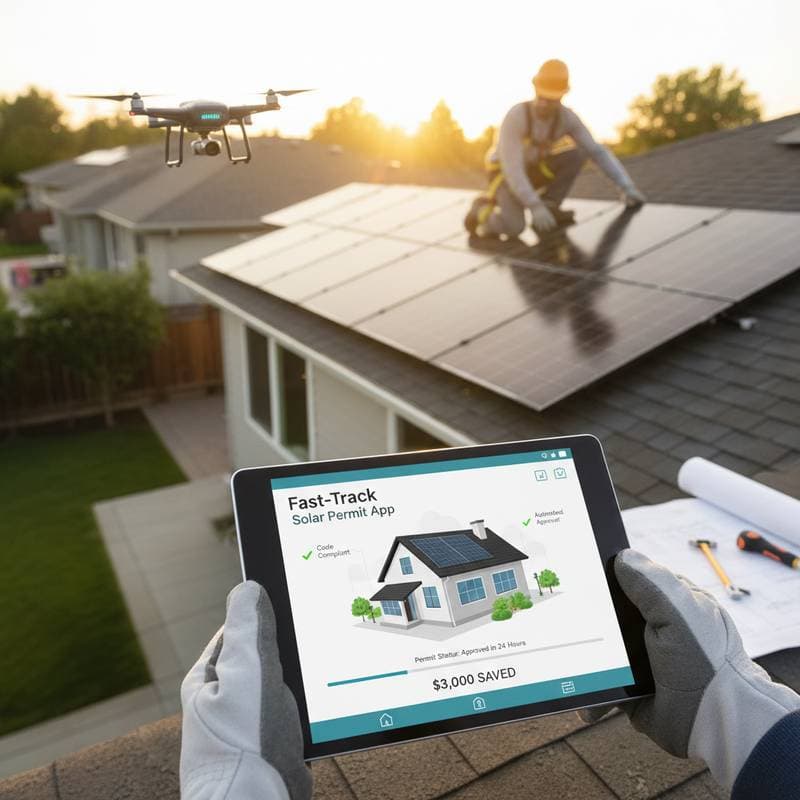
Fast-Track Apps Save $3K on DIY Solar Permits
Homeowners who install their own solar panels encounter a significant obstacle before mounting the first panel. The permit process often stretches for weeks and adds thousands of dollars in review fees, engineering stamps, and plan submissions. Digital fast-track applications now automate many of these steps while preserving safety and code compliance.
Homeowners who use verified fast-track platforms report average permit cost reductions near three thousand dollars. Success depends on knowing which tasks remain suitable for do-it-yourself work and which steps require a licensed professional.
Safety Comes First
Solar systems connect directly to the home electrical service equipment. Any error can produce shock, fire, or damage to the utility grid. Review these critical safety requirements before starting a DIY solar installation.
- Never work on live circuits. Always verify the power is off with a non-contact voltage tester.
- Stop and call a licensed electrician if you are unsure about grounding, bonding, or conductor sizing.
- Follow local code requirements. The authority having jurisdiction must review and approve all electrical work tied to the service panel.
- Use listed components only. Every connector, wire, and breaker must carry a recognized listing mark such as UL or ETL.
Fast-track apps simplify paperwork. They do not relax technical or safety standards.
How Fast-Track Solar Permitting Works
Digital permitting platforms rely on standardized templates and automated code checks. Users enter system details such as module type, inverter rating, and mounting method instead of submitting custom drawings. The software then generates compliant documentation for local review.
The process follows these steps.
- Create a system layout. Enter the number of panels, inverter type, and roof configuration.
- Upload manufacturer data sheets. The platform confirms voltage and current limits.
- Run code validation. The software checks compliance with the National Electrical Code and local ordinances.
- Pay the permit fee through integrated online payment systems.
- Receive approval. Many jurisdictions issue the permit electronically within hours.
Automation removes the need for multiple revisions and professional engineering stamps. Pre-approved templates already meet code requirements.
Tasks Homeowners Can Handle
A capable homeowner can complete several installation steps when code is followed and proper tools are used. Typical DIY tasks include mounting racking systems to the roof structure with listed flashing kits, securing panels, and running wiring within the array under de-energized conditions. Conduit runs from the array to a disconnect or junction box can also be installed.
Keep array wiring separate from active circuits. Never open the main service equipment without confirming the line side is disconnected. A licensed electrician must perform any work that involves connecting to the main panel, setting the inverter output breaker, or modifying grounding conductors.
Code Requirements and Inspections
Every jurisdiction maintains authority over electrical permits. In Philadelphia the Department of Licenses and Inspections reviews residential solar projects under state-adopted National Electrical Code standards. Fast-track apps accelerate submittal and review. They do not replace code enforcement or inspection.
Permits remain mandatory. Homeowners must schedule a final inspection to confirm proper conductor sizing and termination, continuous grounding and bonding paths, correct labeling of disconnects and rapid-shutdown devices, and the absence of roof or structural violations. Skipping inspection can void insurance coverage and utility interconnection agreements.
Cost and Time Comparison
Traditional residential solar permits often cost between three and four thousand dollars when plan review, design verification, and multiple site visits are included. Fast-track systems reduce that total by roughly three thousand dollars because they eliminate most manual engineering review. Same-day approval also helps homeowners meet incentive program deadlines.
Expert Perspective
Automated permitting allows homeowners and inspectors to focus on safety rather than paperwork. Standardization reduces errors and improves compliance with National Electrical Code grounding and rapid-shutdown rules. These programs help authorities manage higher permit volumes without lowering quality.
Preparing Your Installation
Gather manufacturer installation manuals, roof load calculations or structural letters if required, access to a fast-track permitting portal recognized by your local authority, and contact information for a licensed electrician. Confirm that homeowner insurance covers solar additions and retain all permit documents, inspection reports, and serial numbers. A professional consultation remains essential for any system that ties into existing electrical infrastructure.