
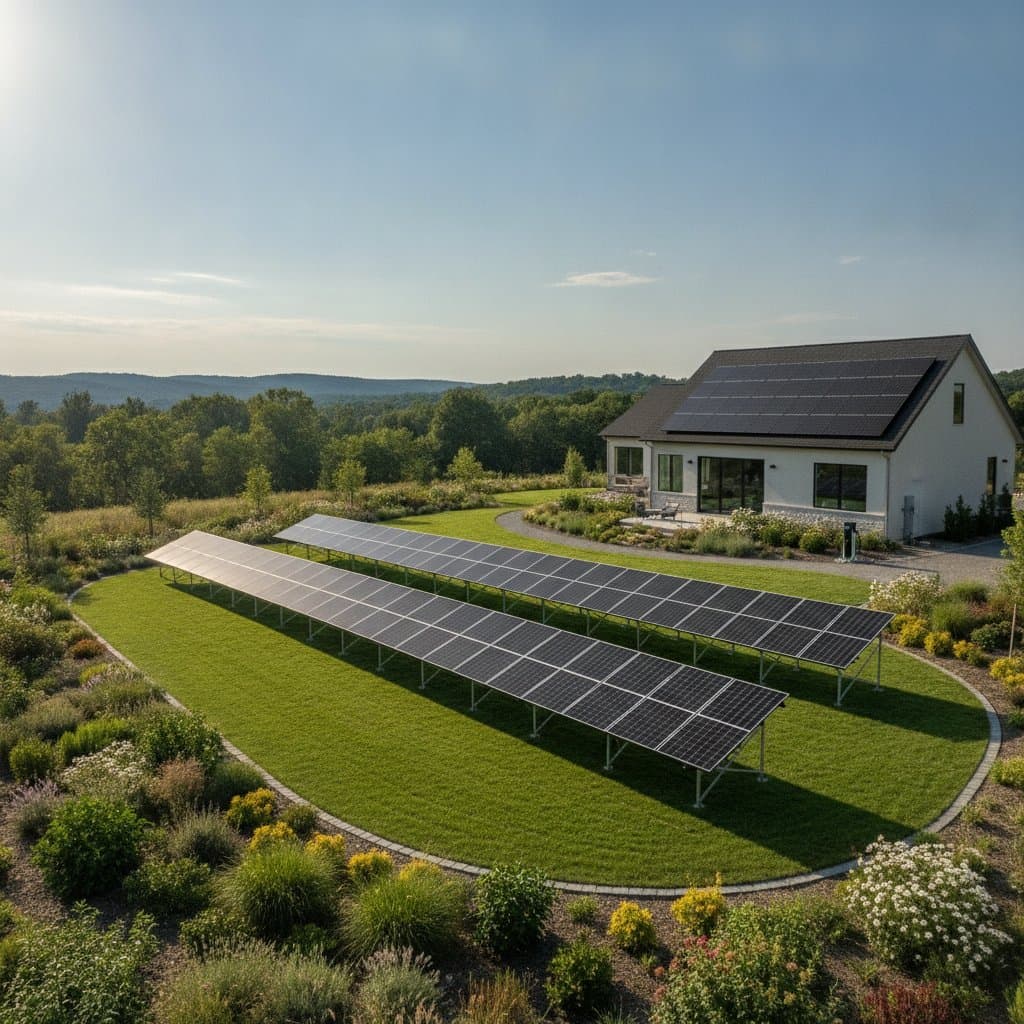
Why Homeowners Choose Ground-Mount Solar Over Rooftop Systems in 2026
Solar decisions require careful evaluation of site conditions and long-term performance. Many property owners begin with the assumption that rooftop panels represent the only option. Ground-mount systems have gained substantial ground as costs decline and output data improves. These installations deliver measurable advantages in energy production, maintenance access, and design adaptability for homes with available land.
Performance differences become clear when comparing annual yields. Roof-mounted arrays depend on existing roof pitch, compass orientation, and nearby obstructions. Ground-mounted frames allow precise angling toward true south at the optimal tilt for each latitude.
Limitations of Rooftop Installations
Rooftop systems face inherent constraints. East- or west-facing roofs reduce yearly output by 15 to 25 percent compared with south-facing placements. Chimneys, vents, and adjacent trees create shading that further lowers production.
A standard 7-kilowatt rooftop array generates roughly 9,100 kilowatt-hours annually under favorable conditions. Suboptimal roof geometry can reduce that figure by several hundred dollars in lost utility value each year. Roof age adds another complication. Shingle replacement before the panels reach 25 years of service requires temporary removal and reinstallation at added expense.
Mechanics of Ground-Mount Systems
Ground-mount structures consist of steel or aluminum racking anchored in concrete footings or driven piles. Panels attach at fixed angles or on single-axis trackers that follow the sun across the sky. Fixed racks already outperform most roof arrays because installers can set exact orientation without roof limitations.
Trackers add another 20 to 30 percent in annual production. The same 7-kilowatt ground array can reach 10,500 to 11,500 kilowatt-hours per year. At an average rate of 18 cents per kilowatt-hour, the additional output translates to 250 to 400 dollars in yearly savings.
Upfront Costs and Long-Term Payback
Ground-mount installations now cost only 15 to 20 percent more than comparable roof systems. Easier ground-level labor reduces the previous price gap. A 20,000-dollar rooftop project typically expands to 23,000 or 24,000 dollars when moved to the yard. Federal tax credits and state rebates apply equally to both configurations.
Higher output shortens the break-even period by one to two years over a 25-year lifespan. Reduced downtime from roof work further improves net returns.
Placement Options and Visual Integration
Homeowners control exact positioning. Arrays can sit behind landscaping, along fence lines, or integrated with garden beds. Low-profile racks or elevated designs keep panels unobtrusive while preserving yard function.
Ideal tilt angles become achievable regardless of roof geometry. Black frames and matching racking finishes create a cohesive appearance when combined with simple screening plantings.
Simplified Upkeep and Extended Service Life
Ground-level access eliminates ladder work and reduces cleaning time to minutes. Snow clearing occurs safely from the ground. Free airflow around the panels lowers operating temperatures and improves hot-weather output.
Racking materials resist corrosion for decades. Panels remain independent of roof cycles, allowing reuse across multiple roof replacements or future battery additions.
Site Requirements and Local Rules
Suitable locations need roughly 500 square feet of unshaded, level or gently sloped ground for a 7-kilowatt system. Setback distances from property lines follow local zoning. Interconnection procedures and net-metering policies remain identical to rooftop installations.
Installers locate underground utilities before trenching to protect wells, septic fields, and existing lines.
Expansion Potential and Property Value
Ground systems accommodate future load growth such as electric-vehicle chargers or heat pumps without major reconfiguration. Visible, accessible equipment supports higher resale confidence among buyers who can inspect condition directly.
Steps to Evaluate a Ground-Mount Project
- Schedule a site visit that models both roof and ground scenarios with production estimates.
- Request a full shading study for the proposed yard area.
- Compare fixed versus tracker options against local weather data.
- Verify permit timelines and utility interconnection requirements before ordering equipment.
- Establish a maintenance schedule that includes seasonal cleaning and vegetation control.
Ongoing monitoring through the system inverter confirms performance and flags issues early. With routine care, output remains above 90 percent of original capacity for the full service life.