
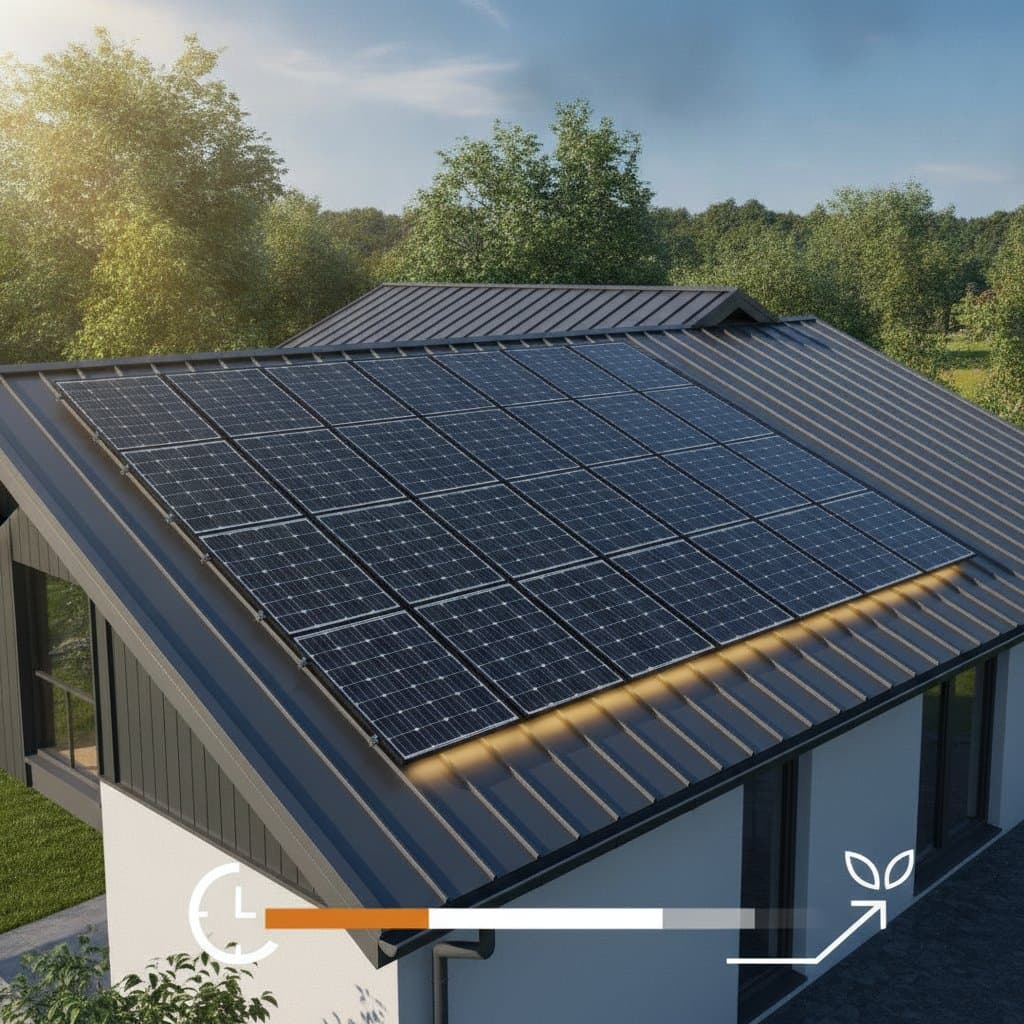
Why Metal Roofs Pair Well with Solar Panels
Many homeowners consider solar panels yet wonder which roof material supports the best long term results. Roof lifespan, structural demands, and maintenance needs all affect system performance. Metal roofing has gained favor among solar adopters because it outlasts asphalt shingles, simplifies mounting, and improves overall energy performance.
Understanding the differences helps owners avoid repeated roof work and protect their solar investment. The right choice reduces future expenses and keeps panels operating without interruption.
Durability and Lifespan Comparison
Service Life
Asphalt shingles typically last 15 to 20 years before granule loss and cracking appear. Standing seam metal roofs endure 40 to 70 years with routine inspections. A solar array mounted on metal can therefore remain in place for its entire expected life.
Asphalt degrades under heat and allows moisture to enter once seals fail. Metal maintains its surface integrity around mounting points, which lowers leak risk.
Weather Performance
Metal sheds snow, rain, and ice effectively and resists mold growth. In regions with freeze thaw cycles it expands and contracts less than asphalt, preserving fastener tightness. This stability protects wiring and flashings beneath the panels.
Weight Considerations
Metal roofing weighs roughly 1.5 pounds per square foot compared with 2.5 to 3 pounds for asphalt. The reduced load eases attachment of racking systems and places less stress on rafters over decades.
Cost Analysis Over Time
Upfront and Replacement Costs
A 2,000 square foot asphalt roof costs about 10,000 dollars installed. A comparable metal roof costs about 20,000 dollars. After 20 years an asphalt roof usually requires replacement, adding removal and reinstallation of the solar array at roughly 1,500 dollars. Total asphalt expense then reaches 21,500 dollars while the metal roof continues without replacement.
Energy Savings Context
A 7 kW solar system that produces 9,100 kWh annually at 0.24 dollars per kWh offsets about 2,180 dollars in utility costs each year. Avoiding one roof replacement during the system life preserves that annual offset without downtime.
Energy and Environmental Advantages
Cooling Efficiency
Metal reflects sunlight and dissipates heat rapidly, cutting summer cooling loads by 10 to 25 percent. Panels mounted above the surface add shade that further lowers attic temperatures and reduces air conditioning demand.
Material Sustainability
Metal roofs contain 25 to 35 percent recycled content and can be fully recycled at end of life. Asphalt shingles commonly enter landfills. The metal choice therefore supports material reuse and reduces replacement waste.
Interior Comfort
Properly installed metal roofs with solid sheathing and insulation transmit sound at levels comparable to asphalt. Homeowners often notice steadier indoor temperatures after the upgrade.
Maintenance Requirements
Metal roofs need only periodic cleaning of valleys and gutters plus fastener checks. Solar modules require occasional washing and output monitoring. Asphalt roofs demand more frequent attention to lifted flashing, resealed penetrations, and granule buildup that can affect drainage under panels.
Practical Steps for Homeowners
High Impact Actions
- Install a standing seam metal roof before adding solar when the existing asphalt roof approaches replacement age.
- Select a cool roof rated finish to maximize reflection.
- Integrate battery storage or a heat pump to increase energy independence.
Medium Impact Actions
- Apply reflective coating to an existing metal roof.
- Improve attic insulation and air sealing.
- Program a smart thermostat to align cooling with peak solar production.
Low Cost Actions
- Clean panels regularly to sustain output.
- Seal minor air leaks around openings.
- Convert to LED lighting to lower evening demand.
Planning Your Project
Inspect roof age and condition first. Request a shade analysis and structural review before system sizing. Compare installer proposals using identical assumptions for size, rates, and incentives. Verify attachment methods suited to metal seams and confirm 30 to 40 year material warranties alongside 25 year panel coverage.
A durable roof matched to solar goals lowers energy expenses, supports home value, and maintains reliable performance for decades.