
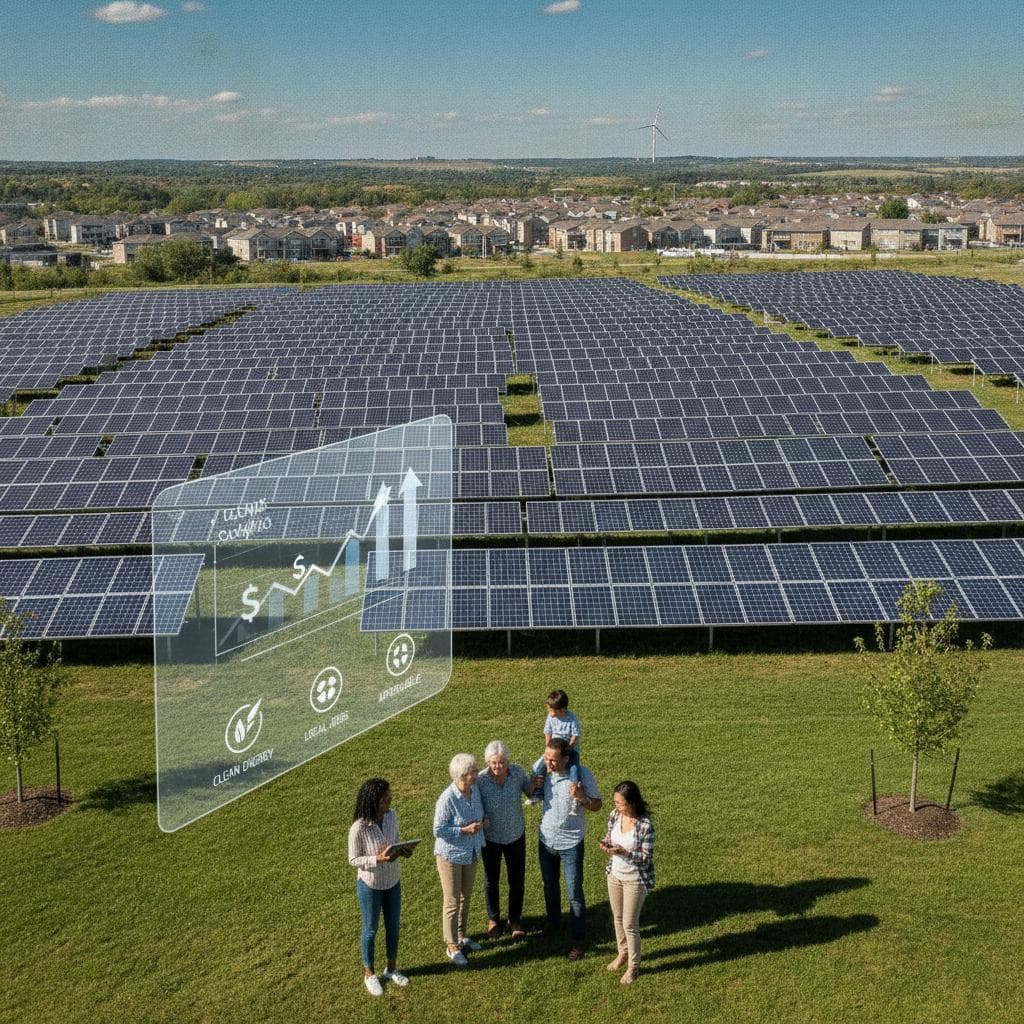
Community Solar Boom: Access Clean Energy Without Roof Panels
Many residents want to lower energy bills and live more sustainably. Yet not everyone can install solar panels on their property. Renters, condo owners, and those with shaded or older roofs often feel excluded from solar programs. Community solar changes that by offering clean energy access without rooftop panels or home installation.
Community solar, sometimes called shared solar, brings the benefits of renewable energy to anyone who pays a utility bill. You subscribe to a share of a larger solar project located off site, often on unused land or a commercial rooftop. The electricity from that project feeds into the local grid. Your account then receives bill credits for your share of the power.
Why Community Solar Matters
Electricity costs continue to rise and strain household budgets. At the same time more people want energy choices that reduce emissions and support local jobs. Community solar fits both goals. Participants can cut utility bills by 5 to 20 percent depending on project design and rate structure.
Beyond personal savings, shared solar helps balance the grid with clean generation close to where energy is used. That reduces line losses, supports resilience, and keeps investment local. For cities aiming for cleaner energy, community solar expands participation beyond homeowners with ideal roofs.
How It Works
A solar developer builds and operates a mid sized solar array, often between 500 kilowatts and 5 megawatts. Residents, small businesses, or organizations subscribe to a portion of that system. The utility measures how much energy the project produces and applies proportional credits to each subscriber bill.
Subscriptions can often be adjusted or canceled with notice. This offers flexibility for renters or those planning to move. You pay the community solar provider a subscription fee that is slightly lower than the value of your credits. This arrangement creates savings each month.
Costs and Incentives
Unlike rooftop solar, community solar requires no upfront payment for panels, wiring, or inverters. Most programs operate on a pay as you go model. You pay for the electricity share at a fixed discount, typically between 10 and 15 percent below the utility rate.
Some states and utilities offer additional incentives such as low income participation bonuses or guaranteed savings contracts. These programs ensure fair access and community benefit. By pooling demand, developers can secure financing at lower cost. This keeps subscription prices stable.
It remains important to compare offers. Review contract terms, cancellation policies, and estimated savings. Ask if the project carries performance guarantees or community ownership options.
Installation and Management
One of the biggest advantages of community solar is that you do not need to install or maintain anything. The developer handles design, permitting, construction, and connection to the grid. Utility coordination is built into the program. Subscribers simply see a new credit line on their bill and a smaller payment to the solar provider.
Most projects include online dashboards that track output and savings. These tools make it easy to understand how much clean energy your share is producing.
Environmental and Economic Gains
Beyond cost savings, shared solar supports cleaner air and improved public health. Every thousand kilowatt hours of solar generation avoids roughly 700 pounds of carbon dioxide compared to fossil generation. A community project serving 500 households can offset thousands of tons of emissions across its lifetime.
Participation also helps stabilize local grids. Distributed generation reduces peak demand and transmission strain. Projects often use local contractors and maintenance crews. This creates skilled jobs and retains energy spending within the region.
Steps to Join
- Confirm your utility supports community solar billing. Most large utilities now have approved programs.
- Review available community solar providers. Compare subscription size, contract length, and cancellation options.
- Use your past 12 months of utility bills to size your subscription. Aim to match 80 to 100 percent of your typical annual usage.
- Providers usually handle enrollment online. No home visit is needed.
- Once credits appear on your bill, monitor your savings and adjust your share if your usage changes.
Participants can start small and expand later. Even a partial subscription supports clean generation and community investment.
Sustaining Participation Over Time
Community solar requires no homeowner maintenance. You can check project updates periodically through provider communications about performance and rate adjustments. If you move within the same utility area, you can often transfer your subscription to your new address.
For those planning future home upgrades, community solar can serve as a bridge. It delivers immediate environmental impact while you plan for efficiency improvements or rooftop systems later. Each subscription adds clean capacity to the grid and reduces reliance on fossil fuels.