
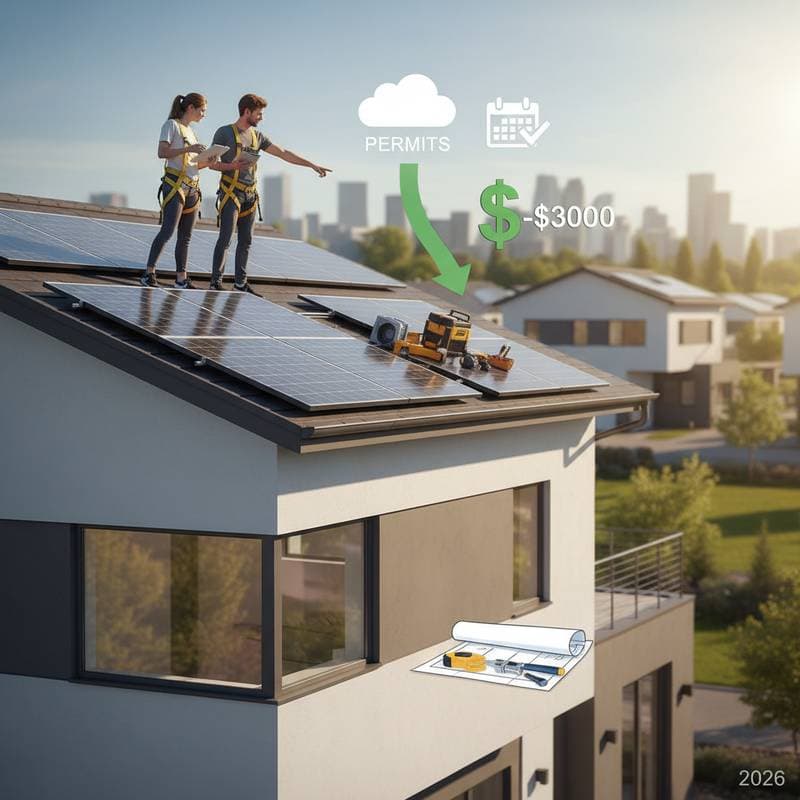
Save $3,000 on DIY Solar with Fast-Track Permits
Solar research may feel overwhelming at first. Homeowners face decisions on equipment, utility regulations, and local permits, which often lead to questions about the value of a do-it-yourself installation. New fast-track permitting programs address these challenges by streamlining paperwork and reducing approval times, which saves DIY installers approximately $3,000 in fees and delays.
Why Permitting Matters for DIY Solar
Every solar project requires adherence to local safety and electrical codes, regardless of scale. Permitting verifies that the system integrates correctly with the grid and complies with fire, structural, and electrical standards. Professionals handle this process routinely, but for homeowners, it can prove confusing and costly without proper guidance.
Traditional permitting involves multiple plan reviews, site inspections, and engineer sign-offs. Each stage increases both time and expense. Numerous cities now implement fast-track or instant permitting systems that approve standard designs in days rather than weeks. These initiatives receive backing from national clean energy programs and local building authorities aiming to eliminate procedural obstacles.
How the Fast-Track Process Works
Fast-track permitting depends on standardized design templates and lists of certified equipment. Homeowners begin with pre-approved layouts that satisfy code requirements for typical roof configurations. After uploading the design and supporting documents, automated systems verify compliance. In many instances, permits issue electronically, allowing immediate progression to installation.
Consider a 6-kilowatt rooftop system comprising 15 panels rated at 400 watts each. A conventional review might demand three to four weeks for approval, plus $500 to $1,000 in fees and engineering expenses. Fast-track options reduce this timeline to under one week, with fees dropping below $200. These efficiencies translate to direct savings on the project budget.
Calculating the DIY Savings
Examine a straightforward example. A 6-kilowatt system generates approximately 1,300 kilowatt-hours per kilowatt annually, yielding about 7,800 kilowatt-hours per year. At a utility rate of $0.18 per kilowatt-hour, this offsets roughly $1,400 in annual electricity expenses. Over a decade, the total reaches $14,000 in avoided utility payments.
Professional installation for such a system typically costs $16,000 prior to incentives. A DIY approach with comparable equipment often totals around $10,000, covering permits, hardware, and tools. Fast-track permitting subtracts $3,000 in fees and delays, bringing the investment near $7,000. Combined with $1,400 in yearly savings, the payback period shortens to five years or fewer.
Key Considerations Before You Apply
Fast-track permits suit standard single-family homes featuring simple roof designs and grid-tied systems below specified sizes. Roofs with varied pitches, significant shading, or necessary structural modifications may require conventional reviews. Consult the local building department website or online portal to confirm eligibility criteria.
Applicants must submit a precise electrical diagram, product specification sheets, and evidence of safety certifications for all equipment. DIY solar kit suppliers frequently provide complete documentation packages, which streamline the application process.
Getting the Most from Your DIY Project
With permit approval secured, plan installation for favorable weather conditions and adhere strictly to safety protocols. Engage a licensed electrician for final wiring and grid interconnection. Following inspection and activation, use the inverter monitoring application to track energy production and verify performance levels.
Retain all relevant records, such as the permit approval, inspection summaries, and equipment warranties. These materials prove essential for home sales or future warranty claims.
Next Steps for Long-Term Performance
Schedule panel cleaning at least twice annually and inspect mounting hardware for secure attachment. Review energy production data each month to identify any performance declines promptly. Systems typically experience 0.5 percent efficiency loss per year, rendering minor reductions expected. Budget for inverter replacement after roughly ten years to sustain reliable output and enhance property value.
FAQ
How much can a homeowner save with a DIY solar installation?
Savings generally range from 30 to 50 percent relative to professional installation, varying by labor, permit, and equipment expenses.
What is a fast-track solar permit?
This refers to an online or streamlined approval method that employs standard system designs and pre-vetted equipment to minimize review duration and expenses.