
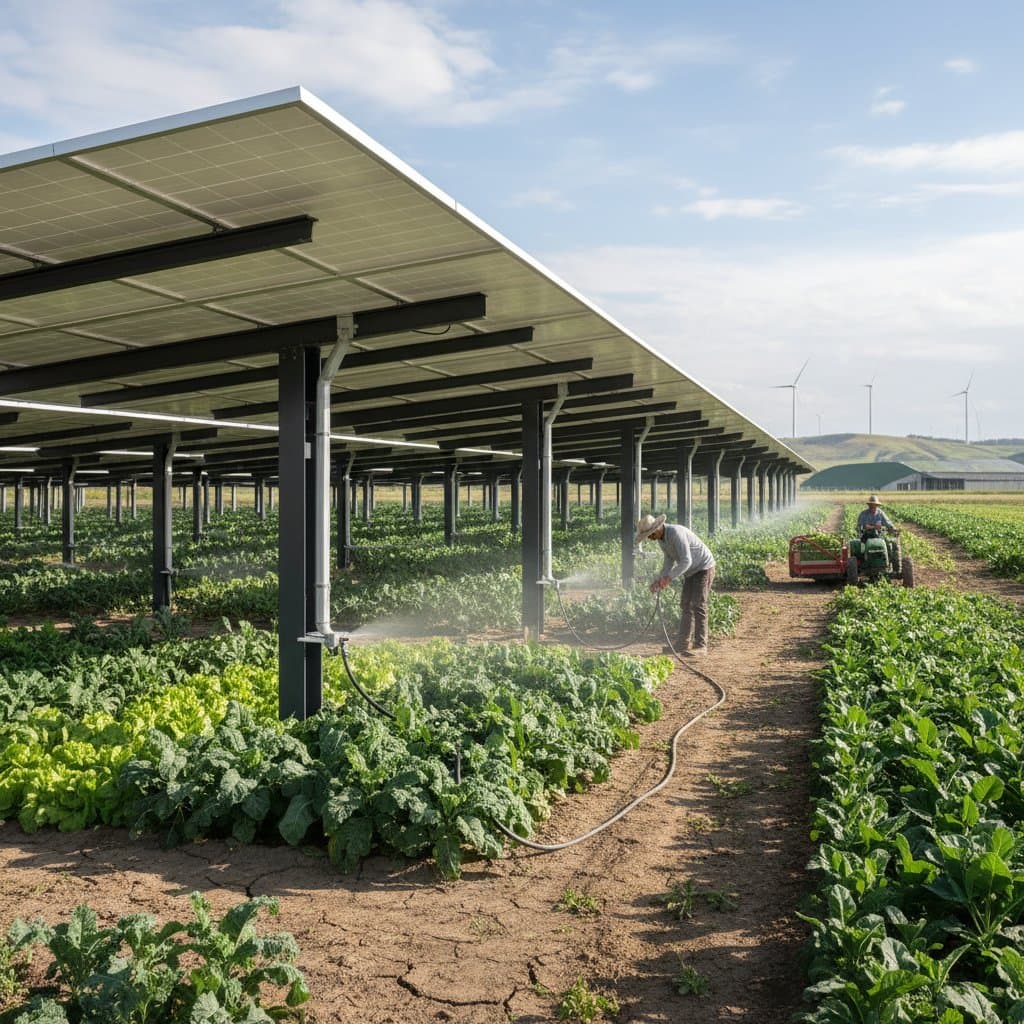
Crops and Solar Power: The Rise of Agrivoltaics by 2026
Farmers and landowners increasingly seek methods to harmonize food production with clean energy generation. Escalating energy costs and erratic weather patterns intensify this need. Agrivoltaics, or dual-use solar farming, enables the cultivation of crops alongside sunlight harvesting on identical terrain. Although the concept appears intricate, its principle remains straightforward: solar panels mount at greater heights or with wider spacing to permit sunlight and precipitation to access underlying crops. This arrangement fosters a symbiotic environment where vegetation and electricity generation thrive in unison.
Why Agrivoltaics Matters
Conventional solar installations frequently vie with farming for available land, potentially hindering renewable energy expansion in agrarian regions. Agrivoltaics eliminates this rivalry by yielding electricity while preserving soil fertility. Farmers secure an additional revenue source through power sales, while communities benefit from proximate renewable energy without forfeiting arable land. In areas prioritizing both food security and environmental stewardship, this framework integrates seamlessly.
One acre equipped with solar panels may produce approximately 400,000 kilowatt-hours of electricity annually, contingent on solar irradiance and panel performance. Valued at 12 cents per kilowatt-hour, this output equates to roughly 48,000 dollars in gross energy revenue. When combined with viable crop yields, the same acre can generate thousands more in agricultural income. Such multifaceted returns reshape land utilization economics.
How It Works
Agrivoltaic setups employ elevated or configurable panels that permit light penetration through intervals. Certain panels pivot to follow solar movement, optimizing shade distribution to suit plant requirements. Shade-tolerant crops, including lettuce, spinach, berries, and herbs, typically excel beneath these structures. Partial shading alleviates thermal stress and transpiration, aiding plant endurance in elevated temperatures.
The panels further diminish soil evaporation by moderating ground temperatures. Research indicates that shaded soils retain 10 to 20 percent more moisture. Consequently, irrigation demands decrease, along with associated expenses. Cooler conditions under panels may prolong growing periods for select crops, enabling trials with sun-sensitive cultivars.
Costs and Incentives
Agrivoltaic deployments incur higher expenses than standard ground-mounted solar arrays due to elevated mounting frameworks and intricate configurations. A typical large-scale solar installation costs around 1.20 dollars per watt. Agrivoltaic variants range from 1.60 to 2.00 dollars per watt. Nevertheless, financial supports bridge this disparity: federal tax credits, state subsidies, and renewable energy certificates can cover 30 to 50 percent of initial investments. Certain utilities offer premiums for initiatives maintaining agricultural functionality.
Long-term, combined revenues yield robust returns. A 500-kilowatt installation spanning two acres might generate 650,000 kilowatt-hours yearly. At 12 cents per kilowatt-hour, this translates to 78,000 dollars in annual energy proceeds. With supplementary crop earnings beneath the panels, total recoupment could occur in eight to ten years, influenced by available incentives and upkeep expenditures.
Installation and Maintenance
Initiating an agrivoltaic venture commences with comprehensive site evaluation. Factors such as soil composition, crop choices, and solar access dictate system architecture. Panels typically affix to posts rising 8 to 12 feet, accommodating small machinery or manual implements. Electrical components, including wiring and inverters, require safeguards against particulates and humidity, while ensuring ease of access for repairs.
Upkeep encompasses routine solar panel cleansing and examinations, augmented by ongoing agronomic practices. Vegetation control via mowing or livestock grazing occurs between panel rows. Sheep prove ideal companions, as they trim foliage without harming infrastructure. Integrated monitoring evaluates energy production and agronomic variables. Advanced farmers deploy sensors to modulate irrigation according to subsurface moisture and subsurface illumination.
Lifestyle and Community Benefits
Beyond monetary gains, agrivoltaics bolsters durable local economies by sustaining active farmland alongside clean energy output. It generates employment in construction, operations, and oversight roles. In peri-urban settings with constrained and costly land, dual-use solar agriculture exemplifies prudent coexistence of renewables and cultivation.
Environmental advantages prove evident. Each solar kilowatt-hour supplants fossil fuel-derived electricity. A 500-kilowatt agrivoltaic array offsets approximately 450 metric tons of carbon dioxide annually, varying by regional grid composition. This reduction mirrors emissions from about 100 vehicles. Across the system's lifespan, cumulative emission savings amplify substantially.
Getting Started
Prospective adopters, from homeowners to modest farmers, should first assess solar viability at their location. Conduct a shading analysis to determine optimal panel arrangements. Compile 12 months of utility statements to establish energy savings benchmarks. Solicit bids from installers, verifying uniform parameters like insolation estimates, array inclinations, and prevailing tariffs. Inquire regarding applicable incentives, guarantees, and enduring maintenance protocols.
Consider modest commencements: a quarter-acre trial yields insights prior to broader implementation. Engage local agricultural extension services or renewable energy initiatives for guidance. Universities frequently operate showcase facilities, permitting firsthand observation of operational systems.
Building Sustainable Futures with Agrivoltaics
Agrivoltaics promotes a philosophy of mutual prosperity, honoring harvests that nourish populations and currents that energize dwellings. Each endeavor contributes to an expanding tapestry of eco-conscious land stewardship.
FAQ
What crops work best under solar panels?
Leafy greens, herbs, and berries generally prosper in partial shade. Root vegetables such as carrots and beets also adapt effectively.
Does agrivoltaics reduce crop yield?
Full-sun dependent crops may experience minor yield declines, yet shade-adapted species often enhance output. Overall, integrated crop and energy revenues elevate net profitability.
Can livestock graze under panels?
Affirmative. Sheep represent the preferred option, navigating low clearances while minimizing mowing requirements.