
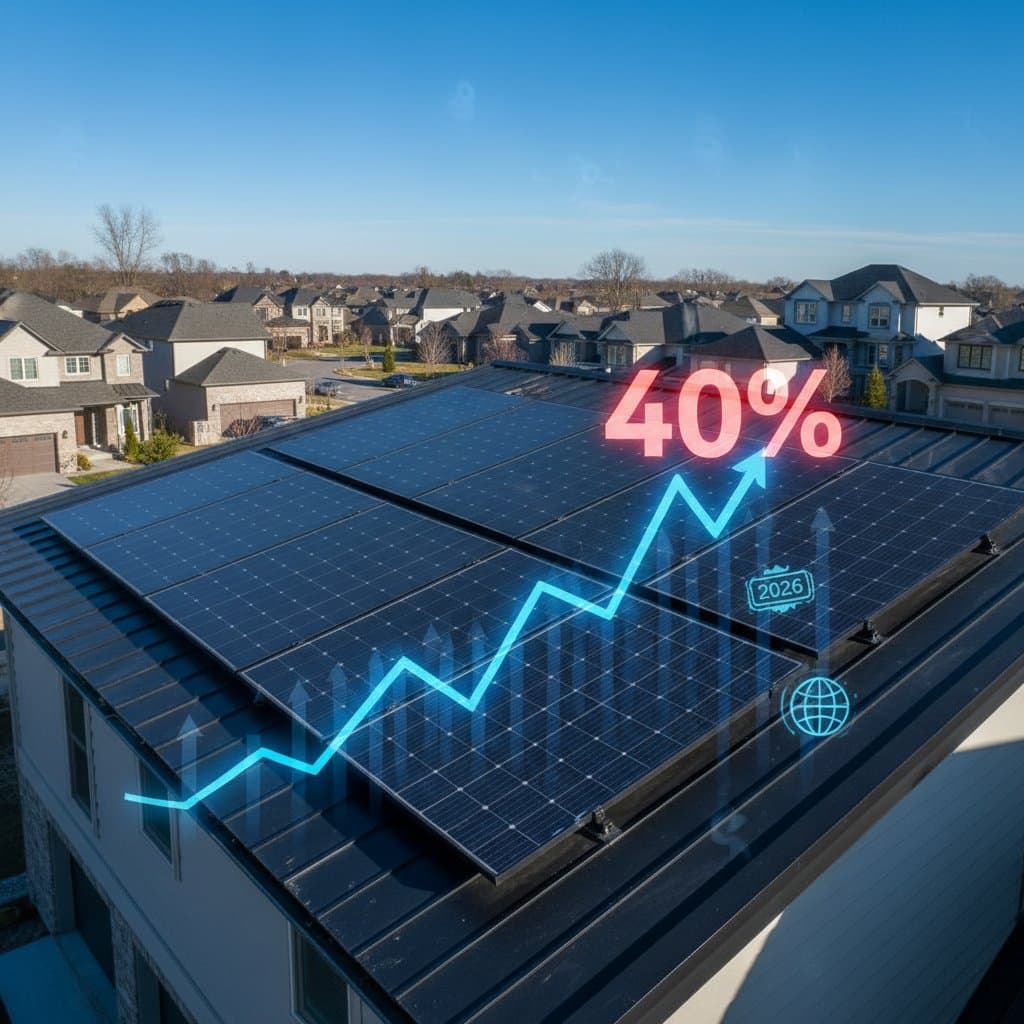
Why 2026 Tariffs Will Raise Solar Costs 40%
Solar research often feels overwhelming. Panels, permits, and financing present complexities, and import tariffs now add another layer. Homeowners hear that new trade rules will increase solar prices by nearly 40 percent. This figure derives from solid calculations. Grasping the reasons for these tariffs and their impact on system pricing enables informed planning before installation quotes escalate.
What Solar Tariffs Are and Why They Exist
A tariff functions as a tax on imported goods. Governments impose them to safeguard domestic industries or address trade disputes. In the solar sector, tariffs typically target panels, cells, and inverters produced overseas. The objective is to promote local manufacturing, though the short-term result involves elevated equipment costs for installers and homeowners.
Most solar panels installed in the United States originate from Asia. Even brands with a domestic appearance frequently source cells and wafers from foreign suppliers. When a new tariff affects those imports, the supply chain responds accordingly. Distributors incur higher costs per watt, installers transfer those increases to customers, and overall project expenses rise.
How Tariffs Translate to System Prices
Consider how a tariff leads to a 40 percent increase through a straightforward example. Envision a standard 7-kilowatt rooftop system suitable for an average home with moderate energy consumption.
- Base equipment cost: Panels, inverters, racking, and wiring total approximately $1.10 per watt. For 7,000 watts, this amounts to $7,700.
- Labor and permitting: These elements add about $0.80 per watt, or $5,600.
- Total before tariff: The system reaches $13,300.
- Tariff impact: A 40 percent rise in imported panel costs elevates the equipment portion from $7,700 to $10,780.
- New total system cost: Equipment at $10,780 plus labor at $5,600 equals $16,380.
This calculation reveals an additional $3,000 for a typical residential setup. Installers might apply further markups to mitigate inventory risks, potentially increasing final quotes beyond this estimate.
Why Tariffs Affect Solar More Than Other Sectors
Solar systems rely heavily on materials. Each watt requires refined silicon, aluminum frames, glass, and specialized electronics. These components traverse multiple countries before installation. A tariff at any stage amplifies costs throughout the chain.
Domestic production capacity stays constrained. Although new factories are in development, U.S. panel output satisfies only a fraction of national demand. Tariffs that inflate import prices constrain supply. Installers then vie for scarce stock, prompting temporary price surges.
The Broader Market Response
Rising tariffs prompt manufacturers to relocate production to unaffected countries. Such shifts demand significant time and investment. New facilities require adherence to quality standards and establishment of supply contracts. In the interim, distributors encounter elevated acquisition expenses.
Installers often refrain from stocking inventory to sidestep premiums on panels that might later decrease in price. This restraint reduces project volumes temporarily. Homeowners who postpone installation in anticipation of stabilization forgo potential savings for several months.
How Homeowners Can Plan Ahead
Timing serves as the primary strategy to counter tariff risks. Solar expenses remain below utility rates in regions like Philadelphia. A well-sized system offsets most electricity bills. Delaying until tariffs activate may result in thousands more for identical equipment.
Installers recommend securing contracts promptly. A signed agreement locks in panel prices prior to tariff implementation. Certain suppliers provide price protection programs that assure delivery at prevailing rates.
The Role of Incentives and Tax Credits
Federal and state incentives mitigate tariff-induced hikes. The 30 percent federal tax credit covers the entire system cost, encompassing tariff-related additions. In the $16,380 example, this credit lowers the net expense by approximately $4,900, reducing the total to about $11,480.
Philadelphia residents may access local rebates or renewable energy certificates. These initiatives offset several hundred dollars annually. Despite elevated initial costs, sustained savings ensure a favorable return.
Understanding the Payback Window
Solar systems recoup costs via diminished electric bills. Apply basic calculations to assess tariff effects on the break-even timeline.
- Production: A 7-kilowatt system in Philadelphia generates roughly 1,300 kilowatt-hours per kilowatt yearly, totaling about 9,100 kilowatt-hours annually.
- Utility rate: At $0.18 per kilowatt-hour, this production saves approximately $1,640 per year.
- Base payback: For a $13,300 system, payback occurs in about 8 years prior to incentives.
- Tariff-adjusted payback: The $16,380 price extends this to roughly 10 years before incentives. Post-30 percent tax credit, it contracts to around 7 years.
Tariffs notwithstanding, solar delivers enduring value. Panels generate energy for 25 years or longer, providing decades of savings beyond the initial outlay.
How Tariffs Influence Local Jobs and Supply Chains
Tariff advocates claim they foster domestic manufacturing and employment. Elevated import costs theoretically enhance local production competitiveness. In the long run, this strengthens supply chains.
The adjustment phase proves challenging. Installers risk workforce reductions if project numbers decline. Smaller firms lacking bulk buying leverage face heightened difficulties during price fluctuations. Manufacturing job gains emerge gradually, whereas installation slowdowns occur swiftly.
Equipment Quality and Availability Concerns
Tariffs that interrupt supply paths allow obscure brands to emerge. Homeowners must exercise caution with panels or inverters lacking proven histories. Warranties and support services gain importance amid market shifts.
Seek certifications from accredited testing laboratories. Inquire with installers about part availability for replacements. Reputable providers favor manufacturers with reliable U.S. distribution.
Long-Term Effects on Solar Adoption
A 40 percent cost escalation may temporarily hinder adoption. Yet the momentum toward solar persists. Increasing utility rates render self-generation compelling. As domestic output expands, prices could normalize.
Advancements in energy storage, microinverters, and monitoring systems proceed unabated. These innovations boost efficiency and accelerate payback. Enhanced performance counters panel price rises to some extent.
Practical Steps to Protect Your Budget
Homeowners eyeing solar within the coming years should implement these measures:
- Obtain multiple quotes. Evaluate system designs, panel brands, and warranties.
- Inquire about inventory timing. Certain installers hold pre-purchased panels at current rates.
- Assess financing options early. Securing a loan or lease pre-tariff preserves lower costs.
- Explore hybrid systems. Incorporating storage enhances utility rate independence.
- Track incentive deadlines. Early applications safeguard eligibility amid potential changes.
These steps facilitate acquisition under advantageous conditions before tariffs alter pricing.
Maintenance and System Care
Post-installation, upkeep proves straightforward. Clear panels of debris and verify monitoring data against projections. Arrange inspections every few years to ensure secure wiring and connectors. Clean panels using water and a soft brush to address dust or pollen that impairs output. Diligent care safeguards the investment regardless of market variations.
FAQ
Why are new tariffs being introduced?
They form part of trade policies aimed at bolstering domestic solar manufacturing and lessening import reliance.
How much could my project cost increase?
Projections indicate residential solar prices may climb about 40 percent upon tariff enforcement, varying by equipment sourcing.
Can I avoid the tariffs by buying now?
Yes. Executing a contract pre-tariff locks current panel prices via installer-supplier pacts.
Will U.S. manufacturers fill the gap quickly?
Unlikely in the immediate term. Factory construction and supply chain development require time, leaving imports dominant temporarily.
Do tariffs affect battery storage systems?
Certain tariffs apply to storage components, though primary increases stem from solar panels.
Are there any incentives that offset these higher prices?
Federal tax credits, state rebates, and renewable energy certificates diminish net costs and expedite payback.
Is it still worth going solar after tariffs?
Yes. Elevated upfront expenses yield substantial long-term savings and property value appreciation.
How do tariffs influence installation timelines?
Panel shipment delays may prompt installers to postpone projects. Early orders ensure equipment and scheduling precedence.
What happens if tariffs are later removed?
Prices might decline, but adjustments occur progressively among manufacturers and distributors.
What should I ask my installer right now?
Query supply chain origins, inventory status, and pricing assurances pre-tariff. Transparent responses inform decisions.
Strategic awareness of tariff impacts empowers homeowners to navigate clean energy opportunities effectively. Thoughtful timing and preparation maximize benefits in the evolving solar landscape.