
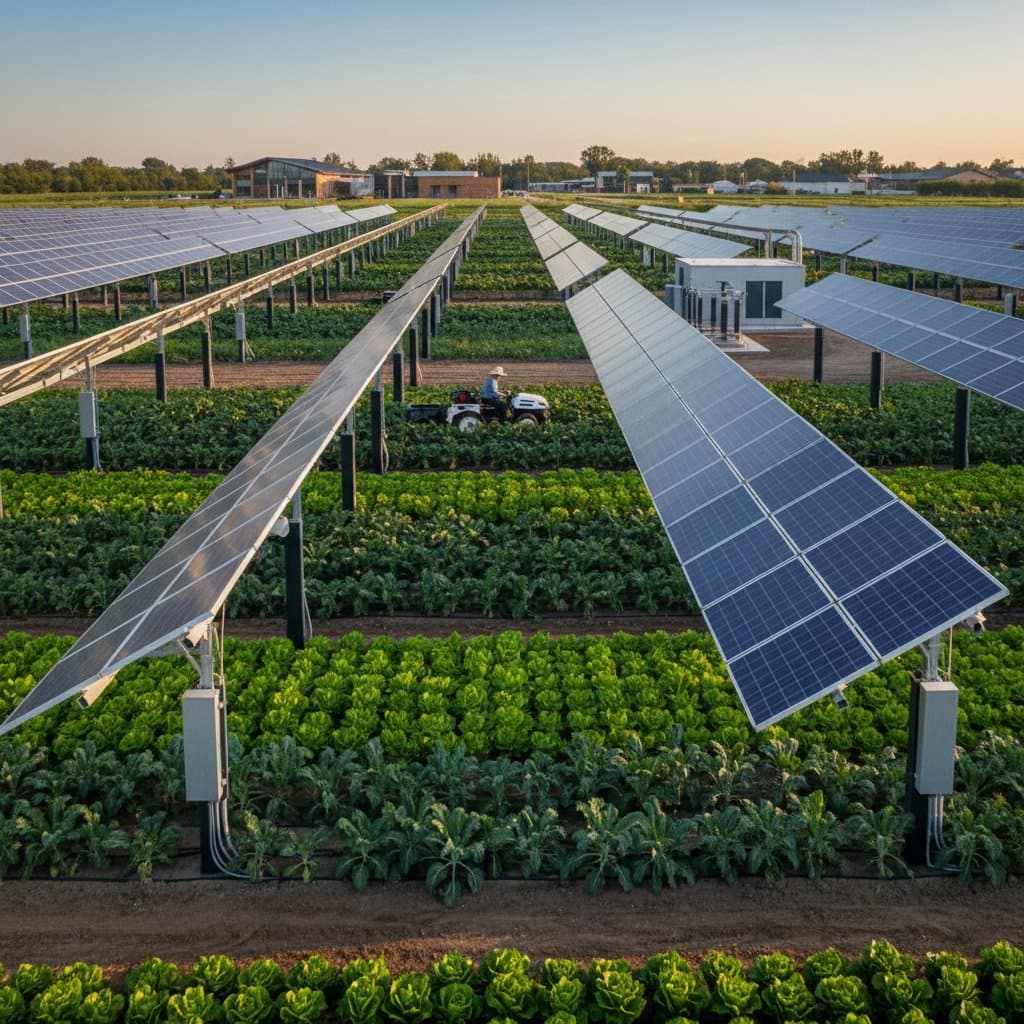
Agrivoltaics: Integrating Solar Power with Crop Production
Solar power expands rapidly, and farmland plays a key role in this development. Farmers nationwide integrate solar installations with active crop growth. This method, known as agrivoltaics or dual-use solar, transforms perspectives on renewable energy and agriculture. It enables clean energy production while keeping farmland productive.
What Is Dual-Use Solar?
Dual-use solar employs the same land for agriculture and electricity generation. Installers position panels at elevated heights or with sufficient spacing to allow crops to thrive below or alongside them. This configuration optimizes sunlight for both plant photosynthesis and panel efficiency.
Studies demonstrate that the partial shade from panels decreases soil evaporation and shields sensitive crops from excessive heat. In various climates, this setup enhances yields for shade-tolerant varieties such as lettuce, spinach, and berries. Farmers benefit from dual income sources: proceeds from harvests and revenue from solar leases or energy sales.
Prioritizing Safety and Electrical Protocols on Farms
Integrating electricity into expansive farmland demands rigorous safety measures. Solar arrays incorporate high-voltage cables and inverters that transform direct current into alternating current. Workers must regard all components as energized electrical systems.
Essential protocols for farm personnel and contractors include:
- Conduct tests with a non-contact voltage tester on any metal surfaces prior to contact.
- Refrain from operations in wet weather or during storms.
- Locate buried electrical lines precisely before any digging or trenching activities.
- Position livestock and irrigation tools clear of enclosures and wiring.
- Restrict access to junction boxes, fuse replacements, or conduit modifications to licensed electricians only.
The National Electrical Code mandates that solar installations on agricultural sites feature listed and labeled equipment, installed per local regulations. Building authorities often conduct pre-grid-connection inspections. Maintain inspection documentation readily available and ensure grounding and bonding integrity through regular checks.
Implementing Agrivoltaics Effectively
Effective dual-use systems start with thorough site evaluations. Professionals assess soil composition, suitable crops, and terrain gradients. Engineers then simulate sunlight patterns with specialized software to forecast solar output and crop viability.
Key design components encompass:
- Elevated mounting structures that position panels several feet above ground level, accommodating tractor passage and worker access.
- Variable tilt mechanisms to distribute light evenly over cultivation zones.
- Precision irrigation systems like drip lines to regulate hydration in shaded areas.
- Secure perimeters with signage to manage entry and highlight electrical risks.
Route cables via buried conduits or mounted overhead to avoid impacts from machinery or wildlife. Employ sealed connectors and weatherproof fittings at all junctions for durability in outdoor conditions.
Upon activation, certified electricians confirm grounding effectiveness, voltage stability, and inverter performance. Provide farmers with comprehensive manuals covering system shutdowns, monitoring protocols, and urgent response contacts.
Advantages Extending to Environment and Economy
Agrivoltaics advances objectives for local food security and sustainable energy. It buffers farm revenues against volatile weather and prices. Electricity generation cuts operational expenses and diminishes dependence on non-renewable sources.
Panel-induced shade moderates temperatures around crops, easing labor during peak seasons. In arid areas, lower evaporation rates slash irrigation demands by as much as 50 percent. Enhanced soil moisture fosters robust plant growth, while nearby greenery cools panels to marginally increase their efficiency.
Broader community impacts include preservation of scenic rural landscapes alongside progress toward energy goals. Projects incorporating native flora under panels create vital habitats for pollinators.
Addressing Potential Obstacles
Certain crops prove incompatible with overhead panels due to height requirements or root expansions that threaten buried infrastructure. Conduct pilot tests on limited areas before full-scale deployment.
Anticipated issues and countermeasures:
- Limited equipment maneuverability. Opt for smaller machinery or manual implements.
- Routine panel upkeep. Schedule cleanings and inspections that minimize crop disruption.
- Animal interference. Install protective barriers around wiring and shading elements.
- Comprehensive insurance. Secure policies covering agricultural operations and electrical components.
Technical innovations and procedural safeguards resolve most concerns when integrated early. Optimal outcomes arise from interdisciplinary teams including farmers, electricians, soil scientists, and solar specialists.
Ensuring Regulatory Adherence and Expert Guidance
Dual-use installations comply with intersecting electrical and farming regulations. The local authority having jurisdiction oversees permits for electrical setups, grounding tests, and racking structural integrity. Several states publish specific agrivoltaic standards outlining clearance minima and soil safeguards.
Licensed electricians alone validate code conformity for electrical tasks. Farmers avoid unauthorized interventions like wire splicing, breaker resets, or inverter diagnostics. Immediate power isolation and professional intervention follow any recurring trips or heat indications in circuits.
Prospects for Agrivoltaics Expansion
Researchers at academic institutions and agricultural research centers predict agrivoltaics will redefine land use in rural areas. Current investigations quantify effects of panel elevation, array density, and crop varieties on productivity metrics. Findings indicate balanced shading sustains strong energy yields while enhancing soil quality.
Practical Guidance for Homeowners and Small-Scale Farmers
Initiation steps:
- Consult local building officials to identify necessary permits.
- Select shade-adapted crop species.
- Engage a licensed electrician for system sizing, wiring installation, and grounding certification.
- Secure and label all electrical apparatus.
- Arrange yearly maintenance for panel cleaning and connection integrity checks.
Strengthening Sustainable Practices Through Collaboration
Agrivoltaics addresses escalating demands for energy and nourishment by optimizing land as a multifaceted asset. It sustains communities through reliable food supplies and renewable electricity. Grounded in safety protocols and regulatory alignment, these systems fortify agricultural resilience, bolster economic stability in rural regions, and broaden access to eco-friendly power sources. Collaborative efforts among farmers, electrical professionals, and regulators pave the way for enduring dual-purpose land innovations.