
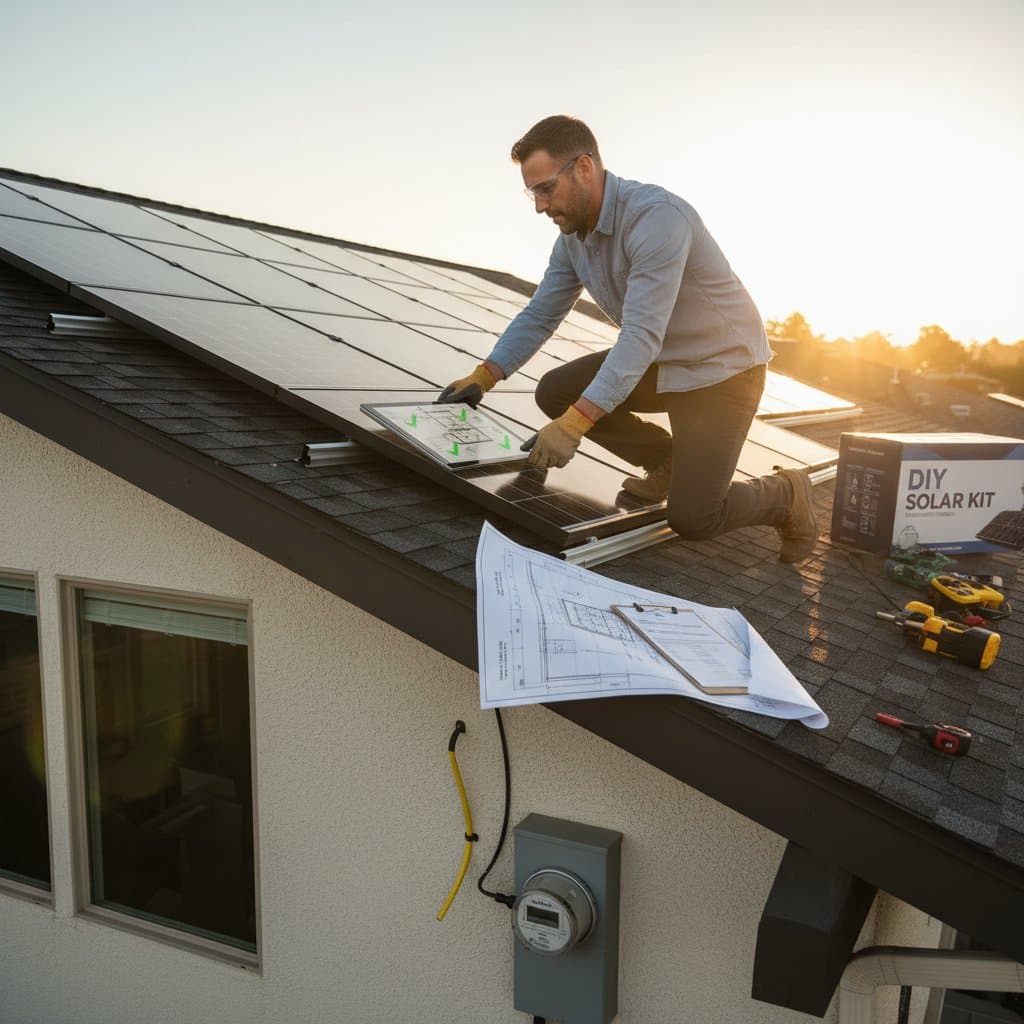
DIY Solar: $15K Savings or Permit Pitfalls?
Solar energy research often overwhelms homeowners with options for equipment, compliance with building codes, and available incentives. Many individuals question whether a do-it-yourself installation delivers substantial financial benefits or invites expensive setbacks. The prospect of eliminating labor expenses to save $15,000 proves attractive, yet outcomes hinge on thorough preparation, adherence to permits, and meticulous execution.
Understanding DIY Solar Installation
A typical DIY solar project starts with acquiring a pre-engineered kit that supplies solar panels, an inverter, mounting hardware, and necessary wiring components. The homeowner performs the physical installation, followed by submission of documentation for official inspection and approval for grid interconnection. While the process appears simple in theory, minor errors during setup can lead to significant complications.
Solar panels capture sunlight and convert it into direct current electricity. The inverter then transforms this energy into alternating current suitable for household appliances and the electrical grid. Consider a 7-kilowatt system equipped with high-efficiency panels that generate approximately 1,300 kilowatt-hours per kilowatt annually. Such a setup produces about 9,100 kilowatt-hours each year. At an average utility rate of 18 cents per kilowatt-hour, this output offsets roughly $1,640 in annual electricity expenses.
To maximize production, position panels at an optimal tilt angle based on your location's latitude, typically between 25 and 35 degrees for most U.S. regions. Ensure the mounting surface, whether roof or ground, supports the weight and withstands wind loads up to 110 miles per hour, as specified in kit guidelines.
Calculating Savings and Payback Periods
Professional installation for a 7-kilowatt system generally totals around $25,000 prior to any rebates or tax credits. In contrast, a DIY kit for the same capacity costs approximately $10,000 for materials alone. This $15,000 gap accounts for avoided labor and markup fees. However, several overlooked expenses can erode these gains.
- Permitting fees and engineering reviews range from $500 to $2,000, depending on local ordinances.
- Specialized tools, including insulated ladders and grounding testers, add $500 to $1,000.
- Necessary electrical panel upgrades or code-compliant modifications may exceed $3,000.
- Failed inspections often incur rework costs and additional fees of $200 to $500 per visit.
With successful implementation, payback occurs within six to eight years through reduced utility bills and potential incentives like the federal solar investment tax credit, which covers 30 percent of qualified expenses. A single inspection failure or equipment malfunction, however, extends this timeline by years, diminishing overall returns.
Factor in long-term maintenance: panels require cleaning twice yearly to remove debris, and inverters need replacement every 10 to 15 years at a cost of $1,000 to $2,000. These elements ensure sustained performance and protect the investment.
Navigating Permits and Utility Requirements
Local governments impose distinct regulations for solar installations. Certain areas permit homeowner-led projects only if the installer possesses a valid electrical license. Other jurisdictions mandate that a licensed professional certify the interconnection agreement. Utilities typically demand detailed engineering schematics, load calculations, and evidence of adherence to national electrical codes before granting grid-tie permission.
Incomplete documentation or flawed wiring schematics delay approvals by several weeks. In extreme instances, utilities refuse grid connection until a certified expert validates the system, resulting in idle equipment and mounting costs for removal or storage. To avoid this, review your area's specific guidelines early; for example, urban centers like Philadelphia require submission of structural engineering reports for roof-mounted arrays.
Prepare by gathering site plans, panel specifications, and one-line electrical diagrams. Submit these to the building department at least 30 days before installation to allow for review cycles.
Ideal Scenarios for DIY Solar
Individuals with prior electrical training, hands-on construction expertise, and dedication to researching regulations find DIY solar particularly viable. Off-grid applications, such as powering remote cabins or RVs, align well with this method since they bypass utility interconnections. For standard residential setups, consider a hybrid strategy: install the racking and panels independently, then engage a licensed electrician for final wiring, grounding, and permit sign-off. This balances cost savings with regulatory compliance.
Assess your roof's condition beforehand; hire a structural engineer if the building exceeds 20 years old to confirm load-bearing capacity. For ground-mounted systems, verify zoning allowances and setback distances from property lines.
Steps to Execute a Successful Project
Contact your local building department first to identify required permits and confirm eligibility for self-installation. Evaluate multiple kit providers, ensuring all components carry UL listings and meet Interstate Renewable Energy Council standards. Obtain your utility's interconnection application packet prior to any purchases to understand submission deadlines and technical specifications.
During installation, follow a sequenced approach: secure the racking system with corrosion-resistant hardware, attach panels using torque settings of 10 to 12 foot-pounds, and route wiring through conduit to prevent exposure. Capture photographs of each phase for warranty claims and future property transactions.
Post-installation, schedule professional inspections promptly and monitor system output via integrated apps or meters. Perform routine tasks like annual panel inspections for microcracks and inverter firmware updates to optimize efficiency and extend system lifespan.
Benefits of a Well-Planned Solar Investment
A compliant DIY solar setup not only cuts energy costs by thousands annually but also enhances home value by up to 4 percent, according to industry assessments. Homeowners gain energy independence, reduced carbon footprints, and protection against rising utility rates. With diligent execution, this project delivers reliable returns and peace of mind for decades.
FAQ
Can individuals install solar panels independently in Philadelphia?
Homeowners may proceed with installation provided they adhere to municipal permit protocols and utility stipulations. Verify current rules through the city's planning office before acquiring materials.
Do DIY solar kits qualify for federal tax incentives?
Qualified systems that satisfy performance certifications and property ownership criteria remain eligible for the 30 percent investment tax credit.
What essential tools support a DIY installation?
Assemble a kit including insulated screwdrivers, a digital multimeter for voltage checks, roof harnesses for safety, a torque wrench for secure fastening, and conduit cutters for wiring management.
What follows a failed inspection?
Corrections to wiring configurations or labeling often necessitate hiring a licensed electrician, followed by a rescheduled evaluation.
Is grid connection possible for DIY systems?
Approval occurs only after the utility reviews and inspects the interconnection setup, confirming safety and compliance standards.