
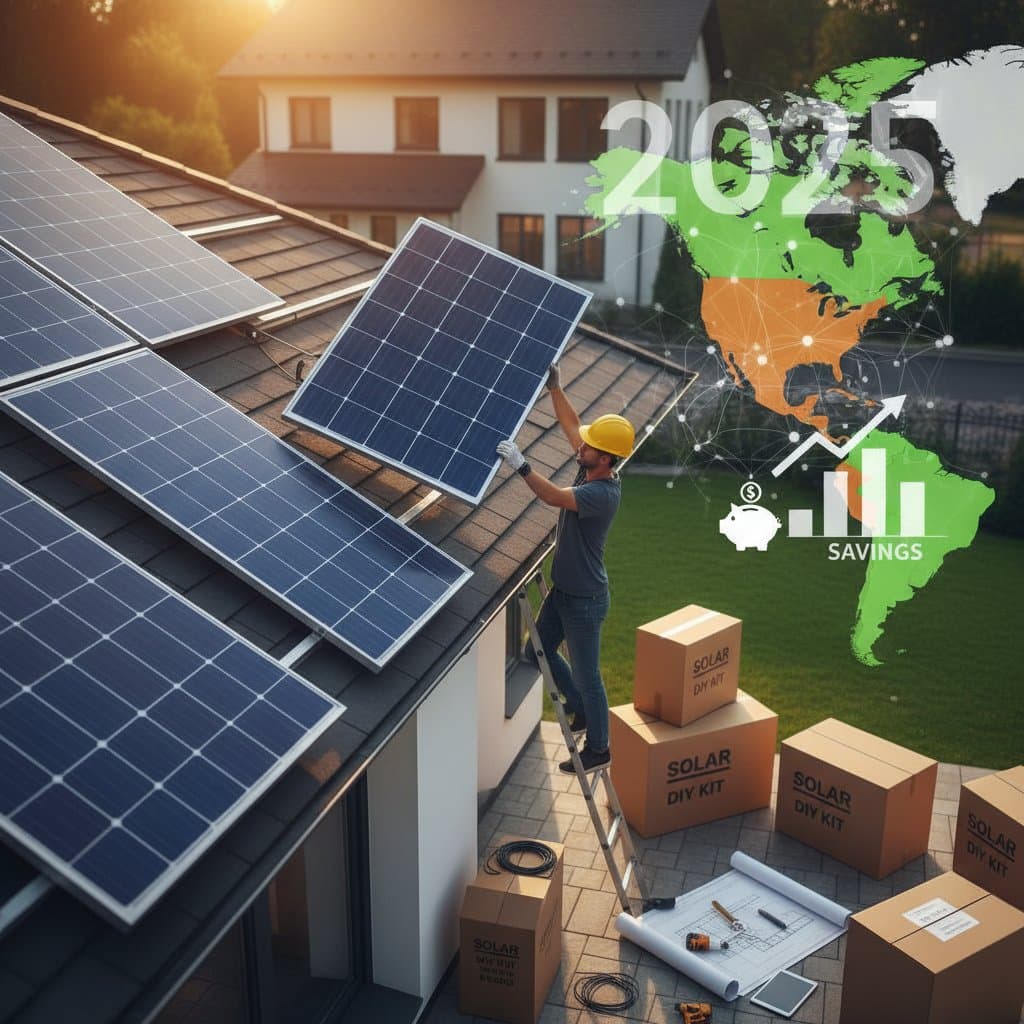
Introduction to DIY Solar Power
DIY solar kits offer homeowners an accessible entry into renewable energy without the high costs of professional installations. These systems typically generate enough power for essential household needs, such as lighting, small appliances, or off-grid setups. In 2025, advancements in panel efficiency and battery storage make these kits more viable than ever, provided users understand local regulations.
Budget constraints often limit projects to under $5,000, focusing on scalable designs that prioritize reliability. This approach empowers individuals to reduce reliance on utility grids while contributing to environmental goals. Success depends on careful planning, from selecting components to verifying legal compliance.
Key Components of a Sub-$5,000 DIY Solar Kit
A basic DIY solar kit includes photovoltaic panels, an inverter, charge controller, and batteries. Panels convert sunlight into electricity, with high-efficiency models producing 300 to 400 watts each; three to five units fit within budget limits. Inverters transform direct current from panels into usable alternating current for home devices.
Batteries store excess energy for nighttime or cloudy days, with lithium-ion options offering better longevity than lead-acid alternatives. Charge controllers regulate power flow to prevent overcharging, ensuring system safety. Wiring, mounting hardware, and fuses complete the setup, often sourced from reputable suppliers for quality assurance.
Total costs range from $2,500 to $4,800, depending on capacity. For example, a 1,200-watt system might cost $3,200, covering panels, a 1,000-watt inverter, and 100 amp-hour batteries. Users should verify component compatibility to avoid inefficiencies.
Potential Savings and Payback Periods
DIY solar kits can significantly lower energy bills by offsetting grid usage. A typical setup under $5,000 generates 1,000 to 2,000 kilowatt-hours annually, depending on location and sunlight exposure. In sunny regions, this translates to $150 to $300 in yearly savings at average electricity rates of 15 cents per kilowatt-hour.
Payback periods vary from 8 to 15 years, influenced by incentives and maintenance costs. Federal tax credits, such as the 30 percent solar investment credit, reduce upfront expenses substantially. State rebates further accelerate returns, making these systems financially attractive over time.
Long-term benefits include energy independence and protection against rising utility rates. Regular cleaning and inspections keep efficiency high, extending the system's 20- to 25-year lifespan. Calculate personal payback by assessing local rates and sunlight hours for precise projections.
Understanding State Legality for DIY Solar in 2025
Solar regulations differ across states, but most permit DIY installations for systems under 10 kilowatts. Homeowners must obtain building permits in nearly all jurisdictions to ensure electrical safety and grid compatibility. In 2025, updated national standards emphasize fire safety and interconnection protocols.
California leads with supportive policies, allowing DIY setups without professional oversight for small systems, though net metering requires utility approval. Permits cost $100 to $500, and inspections verify code adherence. Texas offers flexibility for off-grid installations, but grid-tied systems need engineer stamps for larger arrays.
In the Northeast, Pennsylvania requires township permits and compliance with the Uniform Construction Code; DIY projects under 50 volts DC often qualify for exemptions. New York mandates licensed electricians for grid connections, but standalone systems face fewer hurdles. Always consult local building departments for 2025-specific updates, as incentives like solar renewable energy certificates enhance viability.
Florida and other sunny states streamline approvals through online portals, focusing on wind load standards for mounting. Midwest regions, such as Illinois, tie legality to zoning laws, prohibiting installations in historic districts. Nationwide, the Interstate Renewable Energy Council provides model codes that influence state rules, promoting uniformity.
Step-by-Step Installation Guide
Begin by assessing your site's solar potential using online irradiance maps to confirm adequate sunlight. Select a south-facing, unshaded roof or ground area for mounting panels at a 20- to 40-degree angle based on latitude. Secure racking systems with corrosion-resistant materials to withstand weather.
Connect panels in series or parallel to the charge controller, following manufacturer diagrams to match voltage ratings. Install the inverter near your electrical panel, incorporating a disconnect switch for safety. Wire batteries last, using fuses to protect against shorts.
Test the system incrementally: first, panels to controller; then, add inverter and loads. Document all connections for permit inspections. Professional consultation proves valuable for complex wiring, even in DIY projects.
Ensuring Safety and Compliance
Safety starts with grounding all components to prevent shocks, adhering to National Electrical Code standards. Use insulated tools and wear protective gear during installation. Avoid working in wet conditions or alone to minimize risks.
Compliance involves submitting plans to authorities before starting, including site diagrams and equipment specs. Post-installation, schedule inspections to certify the system. Insurance providers may require proof of adherence to maintain coverage.
Monitor performance with built-in meters or apps to detect issues early. Annual checks ensure connections remain secure and batteries function optimally. These practices not only safeguard users but also preserve warranties on components.
Maximizing Your Solar Investment
To optimize returns, integrate smart energy management by prioritizing high-use appliances during peak production. Pair the system with energy-efficient devices to amplify savings. Explore community solar programs if DIY limits scale.
Track incentives through state energy offices, as 2025 brings expanded rebates for residential projects. Educate yourself on maintenance routines to sustain output. Ultimately, these kits foster sustainable living, yielding financial and ecological rewards for years ahead.