
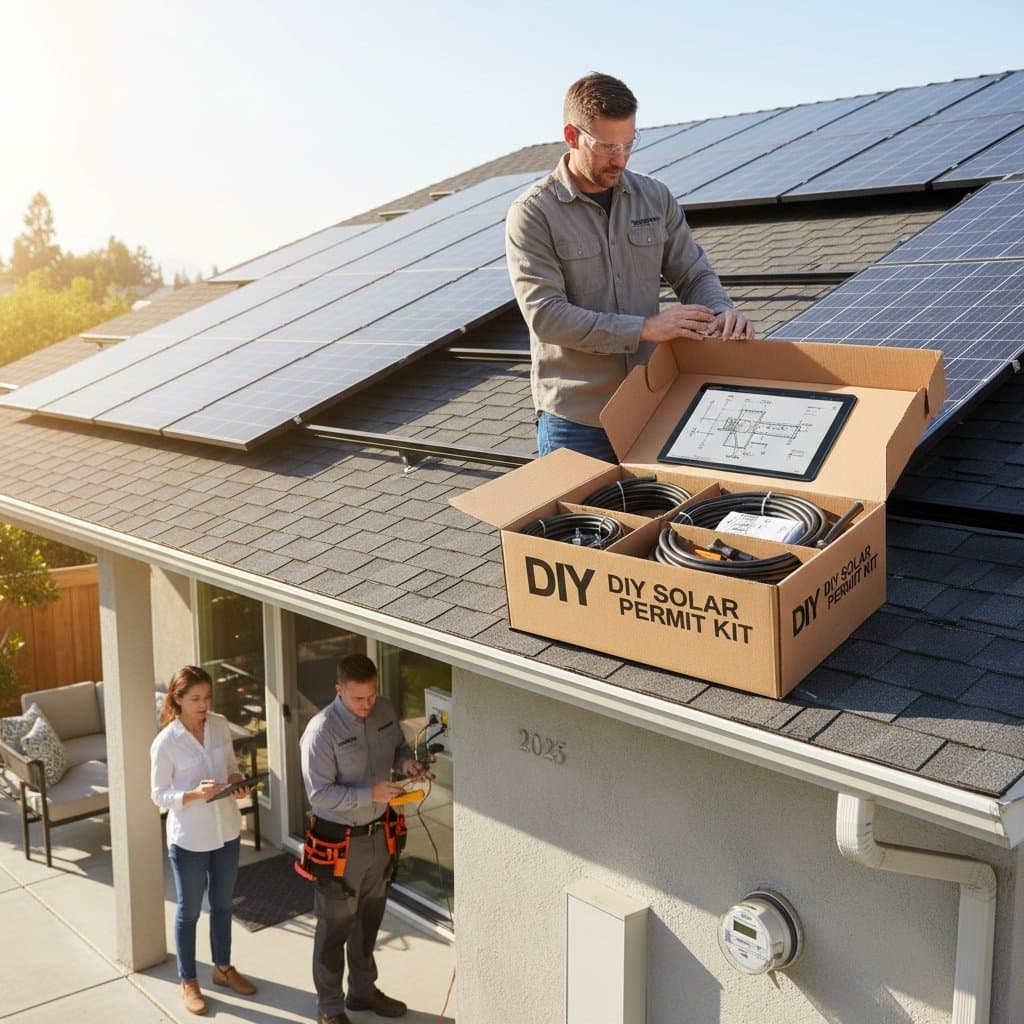
DIY Solar Permit Kits: The Surge in Self-Installations for 2025
Homeowners nationwide seek methods to manage energy expenses and reduce reliance on utility grids. Many now select DIY solar permit kits as an accessible starting point. These kits deliver pre-engineered blueprints, detailed equipment inventories, and documentation aligned with local codes, which simplifies the permit application process without the need for a complete professional installation service.
The advantages become evident when installations proceed with care and precision. Self-managed projects can decrease expenses significantly while satisfying electrical standards and passing required inspections. However, challenges exist. A solar setup functions as an active electrical network linked to household wiring and the public grid. Faulty work risks fires, electrical shocks, or violations of building regulations.
Homeowners must first identify tasks suitable for independent completion and those demanding expertise from a licensed electrician or certified solar professional.
Defining Safety Limits: Know When Professionals Intervene
Solar projects encompass both direct current and alternating current electrical components, each with distinct dangers. Direct current from photovoltaic panels stays energized under sunlight exposure. Consequently, a seemingly isolated system can still transmit hazardous levels of voltage.
Engage a licensed electrician without delay in these scenarios:
- Uncertainty exists regarding safe de-energization of electrical circuits.
- The residence features aluminum wiring, knob-and-tube setups, or obsolete circuit breakers.
- Modifications to the service panel or primary breaker become necessary.
- The inverter demands secure integration into a subpanel.
- Questions arise about grounding or bonding configurations.
Professionals bear responsibility for all terminal connections to the home's electrical framework. They confirm proper torque on fasteners, test grounding integrity, and ensure adherence to the National Electrical Code.
Drivers Behind the Popularity of Self-Installations
Several key elements fuel the increasing adoption of DIY solar permit kits among homeowners.
1. Substantial Reductions in Project Expenses
Full-service solar setups incorporate labor charges, administrative costs, warranty administration, and promotional expenses. Homeowners who manage the physical assembly often achieve savings of 20 to 40 percent on the overall system price. These reductions stem from eliminating intermediary fees while procuring components directly through kit providers.
2. Enhanced Quality and Clarity in Kit Designs
Contemporary kits incorporate engineering that mirrors professional-grade specifications. They feature explicit references to the National Electrical Code and precise details on components, information previously challenging for individuals to access independently. Such transparency aids in preparing submissions to local authorities having jurisdiction.
3. Accessible Learning Resources and Community Support
Online platforms offer extensive video guides, remote inspection options, and forums for peer advice. These tools demystify procedures like establishing grounds, selecting conductor sizes, and setting up inverters. Solar manufacturers and cooperative networks supply no-cost materials that break down technical concepts into straightforward explanations, empowering confident progress.
Pitfalls to Avoid: Spotting Issues Early
Even skilled individuals encounter setbacks in solar assembly. Early detection of problems averts equipment harm and facilitates smoother approvals from inspectors.
Monitor for these potential concerns:
- Conductors that loosen or lock washers absent at inverter connections.
- Conduit sections bent excessively, leading to insulation wear.
- MC4 connectors installed with reversed polarity.
- Circuit breakers that activate repeatedly upon inverter initialization.
- Disconnect switches lacking proper labels.
Upon observing any indicator, refrain from activating the system. Isolate all relevant circuits and summon qualified assistance promptly.
Integrating Professional Expertise for Optimal Results
DIY solar permit kits thrive most effectively through collaboration between homeowners and specialists. Professionals provide invaluable verification at critical stages, such as pre-installation assessments and post-assembly testing. Their involvement not only mitigates risks but also accelerates permitting by demonstrating thorough compliance.
Electricians ensure that interconnections align with utility protocols, including anti-islanding features that prevent backfeeding during outages. This partnership yields systems that operate efficiently, qualify for incentives, and deliver long-term reliability. Homeowners gain confidence knowing their investments support sustainable energy goals without compromising safety.
Practical Steps to Launch Your DIY Solar Project
- Investigate specific building and electrical permitting criteria in your locality prior to purchasing a kit.
- Confirm that all kit elements carry UL certifications and that plans cite the National Electrical Code.
- Book an evaluation with a licensed electrician to assess your current service panel and grounding infrastructure.
- Maintain detailed records of the work, including high-resolution photographs, to support inspection reviews.
- Secure a comprehensive final review from a qualified expert before introducing power to the array.
Realizing Benefits Through Informed Action
Embracing a DIY solar permit kit positions homeowners to harness renewable energy affordably and independently. With diligent preparation and strategic professional input, these projects convert enthusiasm into enduring assets. Systems installed correctly lower utility bills, enhance property value, and contribute to broader environmental objectives, fostering a resilient energy future for your household.