
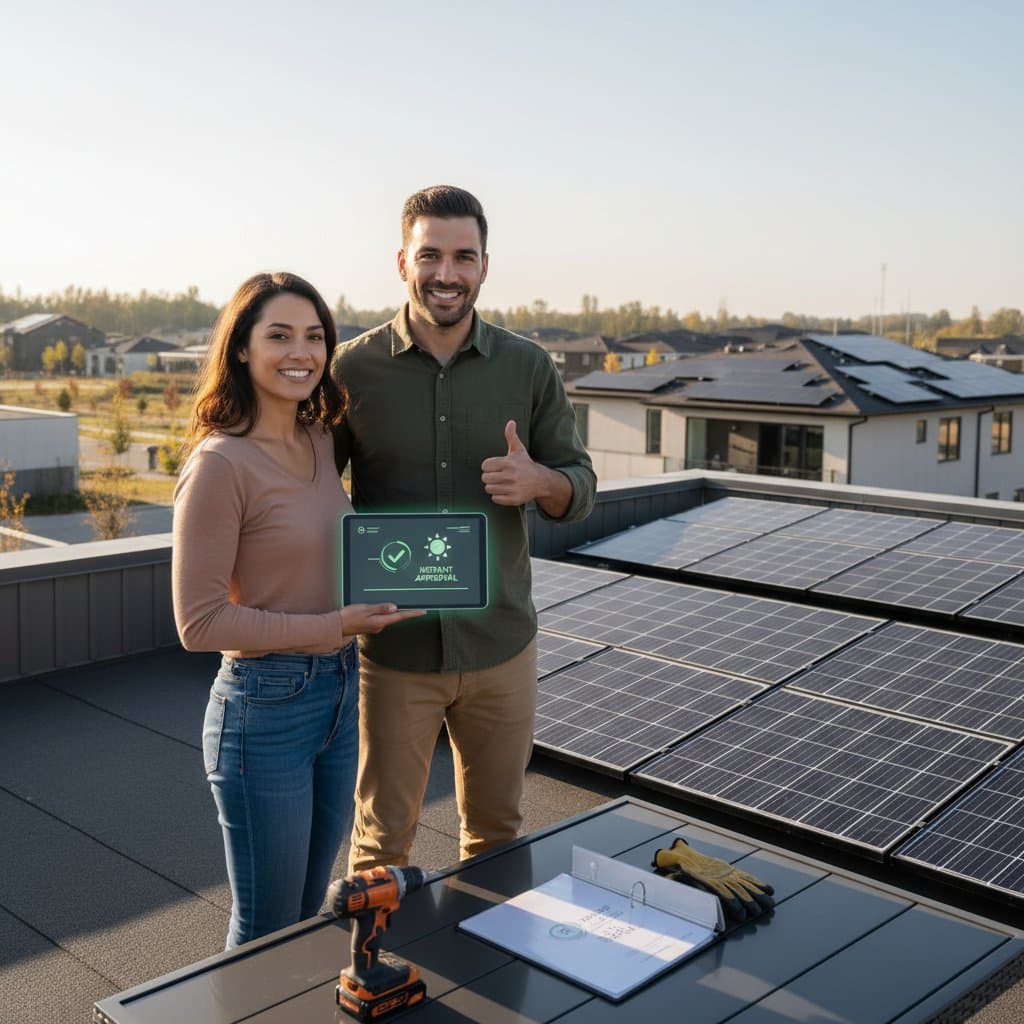
Fast-Track DIY Solar Permits: 2025 Rules Revealed
Homeowners often express interest in installing solar panels independently, yet they encounter challenges with permits and documentation. The 2025 fast-track permit regulations streamline this procedure for do-it-yourself solar initiatives, rendering it more affordable and efficient. These enhancements encourage broader participation in renewable energy adoption while upholding rigorous safety and performance standards.
Why the New Rules Matter
Delays in permitting have historically hindered numerous modest solar endeavors. The fast-track mechanism streamlines authorization for residential setups limited to a designated capacity, generally ranging from 10 to 15 kilowatts. Eligible homeowners submit a uniform online application, thereby bypassing extended periods of manual blueprint evaluations. The primary objective involves shortening the permit duration from multiple weeks to merely a few days.
Expedited approvals facilitate prompt installations and accelerate reductions in electricity expenses. In the Philadelphia area, a standard 6-kilowatt array generates approximately 7,800 kilowatt-hours annually. With an average electricity rate of 24 cents per kilowatt-hour, this output translates to about 1,870 dollars in yearly savings on utility charges, excluding fixed service costs.
These regulations also align with broader environmental goals. By enabling quicker transitions to solar power, they contribute to decreased reliance on fossil fuels and enhanced energy independence for communities. Homeowners benefit from immediate financial returns, while local grids experience reduced peak demand during high-usage periods.
How the Fast-Track Process Works
The updated guidelines incorporate a digital interface that evaluates system configurations against municipal regulations. Participants upload details such as panel layout, wiring schematics, and component specifications. Should the design conform to established safety protocols, authorization proceeds with minimal human intervention. This approach depends on vetted inventories of components, including certified mounting hardware and cabling that adhere to national benchmarks.
Eligibility requires a rooftop with unobstructed solar exposure and conventional structural features. Alternative configurations, such as ground-based arrays or intricate architectural integrations, typically require conventional assessment procedures. Following approval, individuals may commence assembly, arrange for on-site verification, and initiate grid interconnection.
To navigate the platform effectively, begin by registering an account on the designated municipal portal. Prepare digital files in standard formats like PDF or JPEG for seamless submission. The system provides real-time feedback on any discrepancies, allowing corrections before final review. This iterative process ensures compliance without prolonged correspondence.
Costs and Savings
Application charges for compact solar installations vary from 100 to 300 dollars, influenced by jurisdiction-specific policies. Under the fast-track initiative, municipalities anticipate a 30 percent decline in processing expenses, which often offsets portions of material procurement or verification costs.
Consider a 12,000-dollar system post-incentives that yields 1,870 dollars in annual savings. The return on investment occurs in approximately six and a half years. Thereafter, electricity generation remains cost-free, barring minor upkeep expenditures like inverter replacements every 10 to 15 years.
Additional financial advantages include eligibility for federal tax credits, which cover 30 percent of qualified expenses through 2032. Local rebates in Philadelphia may further diminish upfront investments. Over the system's 25-year lifespan, cumulative savings could exceed 46,000 dollars, factoring in modest rate escalations.
Steps for Homeowners to Take Next
Prior to submission, review your utility statements from the past year to estimate energy needs accurately. Assess rooftop integrity, as panels endure for about 25 years; consult a structural engineer if the surface exceeds 15 years in age. Conduct a shading analysis with accessible online tools, such as satellite imagery applications, to identify optimal placement.
Solicit proposals from at least two certified suppliers, specifying uniform array capacities and performance projections. For self-installation, confirm that selected inverters and modules appear on the sanctioned equipment registry, available via state energy department websites. Assemble a comprehensive file including property deeds and structural drawings.
Post-installation, maintain meticulous documentation of approvals, examinations, and manufacturer guarantees. Plan routine maintenance, such as panel washing biannually to mitigate dust accumulation. Monitor system performance through integrated applications; most inverters notify users of deviations exceeding 5 percent from anticipated yields.
Building a Sustainable Future
The fast-track permit framework empowers homeowners to oversee their renewable energy transitions effectively. Modest installations collectively alleviate strain on infrastructure, diminish carbon footprints, and fortify regional energy security. By familiarizing yourself with these provisions and initiating preparations promptly, you position yourself to embrace solar power with assurance and realize enduring economic and ecological gains.
FAQ
1. Who qualifies for fast-track solar permits?
Homeowners undertaking small residential installations that align with predefined design criteria.
2. Can I install panels myself?
Yes, provided adherence to electrical standards and completion of mandatory inspections.
3. How long does approval take?
Complete submissions typically receive evaluation within several days.
4. Are batteries included in the fast-track process?
Only those cataloged in the approved database and within capacity thresholds.
5. What documents do I need?
Site diagrams, electrical schematics, component specifications, and ownership verification.
6. Do I still need a utility interconnection?
Yes; utilities require confirmation for safe grid integration regardless of permit type.