
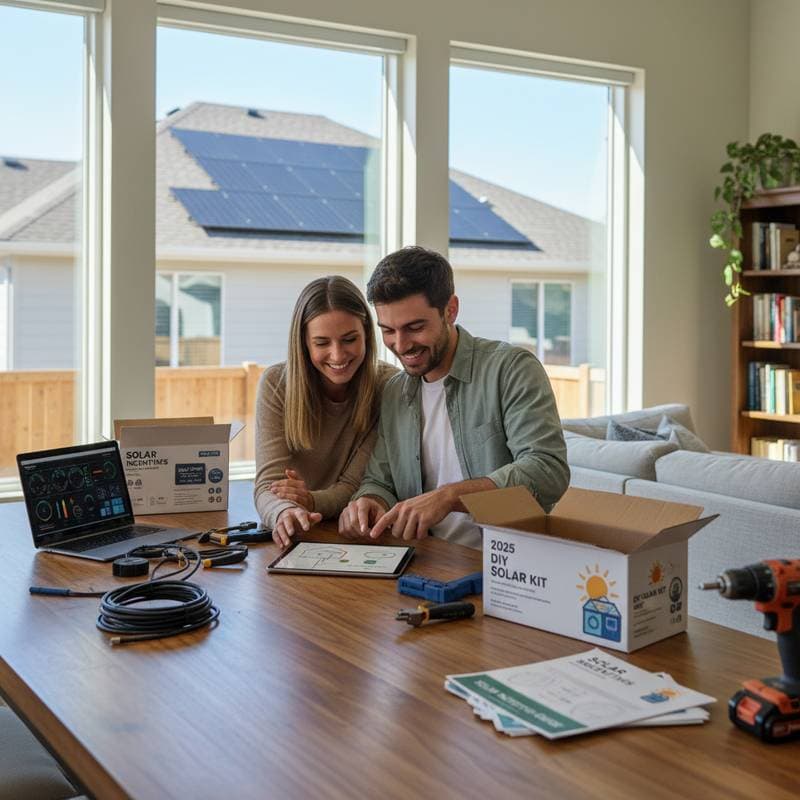
How Homeowners Can Build a $15K DIY Solar System
Homeowners often express readiness to adopt solar power, yet they encounter challenges with high costs and installation uncertainties. Professional solar systems frequently exceed the expense of major home improvements, and delays in proceeding can postpone financial benefits. An increasing number of individuals now pursue a do-it-yourself approach with quality kits priced around fifteen thousand dollars. Through careful planning, patience, and fundamental mechanical abilities, it becomes feasible to generate clean energy for the home while retaining a larger portion of the budget.
The Value of a DIY Solar Installation
Solar power lowers utility expenses, enhances resilience against power outages, and decreases household carbon emissions. In sunny locations, a standard residential system generates sufficient energy to offset a substantial portion of an average home's yearly electricity consumption. Self-installation accelerates the return on investment by eliminating labor fees. A properly sized fifteen-thousand-dollar system offsets between one hundred fifty and two hundred dollars monthly in electricity charges, based on local rates. Across ten years, this equates to approximately eighteen thousand to twenty-four thousand dollars in avoided utility costs.
Beyond financial gains, the installation process allows homeowners to select equipment, determine layouts, and monitor performance directly. It fosters skills applicable to subsequent enhancements, such as battery storage or electric vehicle chargers.
Components Included in a $15K Kit
A standard fifteen-thousand-dollar solar kit typically contains:
- Solar modules with a total capacity of seven to eight kilowatts
- String or microinverters to convert direct current into alternating current
- Racking and mounting hardware suitable for roof or ground mounting
- Wiring harnesses, junction boxes, and disconnect switches
- Monitoring software to track energy production
With seven kilowatts of installed capacity and an average yield of one thousand three hundred kilowatt-hours per kilowatt annually, the system produces nearly nine thousand one hundred kilowatt-hours each year. At a retail electricity rate of twenty-four cents per kilowatt-hour, this delivers about two thousand one hundred eighty dollars in annual value, excluding fixed fees. Actual output varies with roof orientation, shading, and regional sunlight, yet these figures offer a reliable planning foundation.
The DIY Solar Installation Process
A self-installed solar system involves mechanical and electrical work, although most participants engage a licensed electrician for the grid connection. The procedure adheres to straightforward stages.
-
Conduct site assessment and design
Evaluate roof dimensions, pitch, and azimuth. Detect shading from trees or structures. Utilize online calculators and shade analysis tools to project energy yield. -
Choose and purchase the kit
Select from trusted vendors offering pre-designed systems with instructional diagrams and customer support. Ensure compatibility with utility interconnection standards. -
Prepare the installation site
Remove debris, mend roof surfaces, and verify structural integrity. Racking distributes load evenly, but a professional roof evaluation enhances safety. -
Secure racking and solar modules
Adhere precisely to manufacturer guidelines. Seal all roof penetrations to avoid water intrusion. Fasten modules firmly and organize cabling methodically. -
Set up inverter and electrical components
Position the inverter adjacent to the main electrical panel. Install conduit neatly, label all circuits, and comply with electrical codes. -
Arrange for inspection and grid tie-in
Employ a licensed electrician to confirm grounding, bonding, and breaker specifications. Obtain utility permits and inspections prior to activation.
Numerous homeowners manage the majority of tasks independently, then seek professional assistance for electrical integration and documentation. This combined method minimizes expenses while upholding safety and regulatory adherence.
Financial Incentives and Return Timeline
Government and regional programs substantially lower the initial outlay for DIY solar projects. Federal tax credits cover a portion of material expenses, while certain utilities provide rebates or compensation for generated energy. Post-incentive, effective costs often descend below twelve thousand dollars.
With yearly savings near two thousand dollars, the investment recovers in five to seven years. Thereafter, produced electricity incurs no cost beyond routine upkeep. Panels retain approximately eighty percent efficiency after twenty years, despite gradual decline.
Advantages Extending Past Cost Savings
Solar installations transcend bill reduction. They diminish reliance on fossil fuels, shrink carbon emissions, and elevate property appeal. Prospective buyers view solar as a desirable feature akin to renovated interiors. Select insurers grant minor premium reductions for renewable setups.
Indoor living quality rises as well. Integrating solar with efficient heat pumps or induction appliances removes fossil fuel combustion, thereby improving air purity and safety. Coupled with batteries, solar ensures continuity during grid failures, powering essentials like lighting and refrigeration.
Challenges and Solutions in DIY Solar
Not every homeowner suits DIY solar. Roof access, wiring management, and permit navigation demand diligence. Common obstacles include:
- Administrative requirements: Forms for permits and interconnections may perplex. Kit suppliers frequently supply templates and guidance.
- Safety concerns: Employ fall protection gear, stable ladders, and electrical safeguards. Delegate uncertain tasks to experts.
- Jurisdictional regulations: Standards differ by locality. Verify details pre-purchase to prevent modifications.
For those hesitant about complete setups, initiate with modest projects. Ground-mounted arrays, portable units, or carport integrations offer introductory experience and incremental benefits.
Upkeep and Performance Tracking
Operational solar systems demand minimal intervention. Clean panels with water to remove accumulated dirt or pollen. Inspect connections and mounts biannually. Monitoring applications reveal production trends and anomalies promptly. Inverters typically warrant for ten years or longer, with advanced units self-diagnosing issues. Address abrupt output reductions by consulting suppliers for diagnostics.
Practices to Maximize Solar Returns
Effective energy generation pairs with strategic consumption to amplify advantages.
- Operate dishwashers and washers during peak solar hours in midday.
- Recharge electric vehicles while panels actively produce.
- Upgrade to LED lighting to optimize wattage usage.
- Adjust thermostats slightly for summer cooling or winter heating.
Such adjustments curb grid reliance and expedite financial recovery. Pairing solar with efficiency measures can halve or more of energy expenditures.
Steps to Launch Your Solar Project
- Gather twelve months of utility statements to determine average kilowatt-hour consumption.
- Perform shading evaluation to assess roof suitability.
- Evaluate three comparable solar kits focusing on capacity and inverter compatibility.
- Verify incentive qualifications via tax professionals or energy authorities.
- Assemble installation resources including tools, assistance, and safety equipment.
- Book an electrician for concluding connections and verifications.
Commence modestly if preferred. Partial systems acquaint users with procedures and pave the way for expansions. Every added kilowatt contributes enduring value and sustainable energy.
FAQ
Q1: Is self-installation of solar panels permissible?
Yes, in most jurisdictions, property owners may install solar on their premises, provided permits and inspections precede grid linkage.
Q2: What abilities does a DIY installation require?
Familiarity with tools, ladder protocols, and elementary electrical principles proves useful. Tasks resemble affixing antennas or extending home circuits.
Q3: Does self-installation affect tax credit eligibility?
No, credits apply to qualifying equipment costs if the system complies with codes and functions properly.
Q4: What is the lifespan of solar panels?
Panels feature twenty-five-year performance guarantees and continue output far longer, with minimal annual degradation.
Q5: Is future battery integration possible?
Yes, numerous inverters support batteries. Additions enable backup or optimized usage during peak rates.