
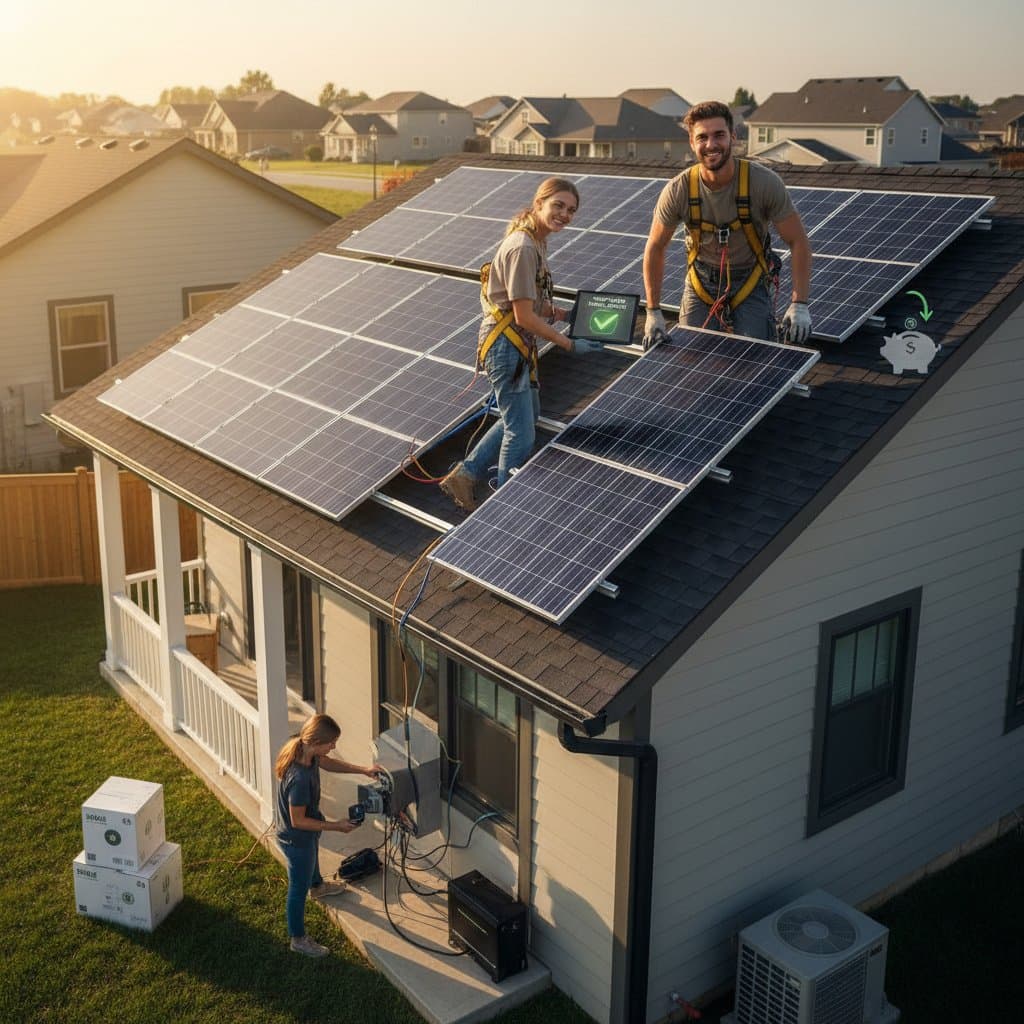
New Rules Reduce DIY Solar Costs by Up to 70%
Solar installation often intimidates homeowners due to permits, interconnection requirements, and equipment selection. Recent national and local regulations simplify these processes, making DIY projects more accessible and affordable. These changes lower total costs by up to 70 percent, turning a daunting task into a manageable endeavor for many.
Key updates include streamlined permitting, pre-approved equipment options, and efficient inspection protocols. Such measures cut administrative time and reduce reliance on hired professionals. In areas like Philadelphia, with ample sunlight and increasing electricity rates, these developments enhance the appeal of self-installation.
Implications for Homeowners
A typical residential solar system measures 7 kilowatts. Previous regulations often resulted in costs of about 3 dollars per watt, totaling around 21,000 dollars for installation. Under the updated rules, DIY enthusiasts assemble similar systems for approximately 90 cents per watt in materials and permits, equaling about 6,300 dollars.
This adjustment yields savings of nearly 15,000 dollars. Pairing it with the federal clean energy tax credit further decreases the effective expense. Payback periods shorten from ten years to about four years, varying by local rates and solar exposure.
Consider this scenario:
- A 7 kW system generates roughly 1,300 kWh per kW annually, producing 9,100 kWh yearly.
- At 18 cents per kWh from the utility, this offsets approximately 1,638 dollars in electricity costs each year.
- With a DIY total of 6,300 dollars and a federal credit of about 1,900 dollars, the net investment stands at 4,400 dollars.
- Annual savings divided into the net cost yield a payback of roughly 2.7 years.
Fixed utility fees may apply, yet the figures underscore the growing popularity of DIY solar among cost-conscious homeowners.
Planning a DIY Solar Project with Updated Regulations
Homeowners begin by assessing three essential factors before purchasing components.
-
Roof Compatibility. Select a south- or west-facing roof with limited shade for optimal energy yield. Utilize online calculators to project production based on pitch and geographic position.
-
Utility Specifications. Simplified interconnections still require a one-line diagram illustrating meter connections. Many DIY kits provide ready-made templates for this purpose.
-
Permitting Process. Access your municipality's digital portal, which walks users through structural checks and inspections.
Installation proceeds efficiently once preparations conclude. Secure rails to the roof using lag bolts or flashing brackets, then attach panels. Connect each panel to a microinverter that transforms direct current into alternating current. Link microinverters via a trunk cable to a combiner box, directing power to the breaker panel. Sunlight activates the panels, prompting electrons to flow through silicon cells and supply electricity to the home or grid.
Enhancing Property Value and Long-Term Benefits
Properties equipped with solar systems attract quicker sales and command premium prices. Appraisers assign roughly 4 dollars per watt to owned installations. For a 7 kW system, this adds nearly 28,000 dollars to home value, surpassing installation expenses.
Prospective buyers value reduced bills and protection against rate increases. DIY setups access comparable incentives to professional ones, as long as certified parts and code compliance prevail. Retain receipts and approvals for tax filings and property transactions.
Practical Actions to Launch Your Project
Examine your local permitting platform to confirm instant approval features. Evaluate DIY kits encompassing racking, inverters, and monitoring systems. Consult your utility on interconnection protocols and meter suitability.
Upon approval, allocate a weekend for assembly and enlist assistance for safe panel handling. Store inspection reports and warranties digitally. Monitor production monthly, clean panels post-pollen season, and log savings to fund future improvements such as enhanced insulation or intelligent thermostats.
Frequently Asked Questions
What savings result from self-installation?
Homeowners typically achieve 60 to 70 percent reductions compared to professional services.
Does installation require an electrician?
Professional connection to the main panel may prove necessary, though basic tools suffice for remaining tasks.
How safe is DIY solar?
Safety prevails when adhering to guidelines and employing certified gear. Microinverters maintain low voltage until grid linkage occurs.