
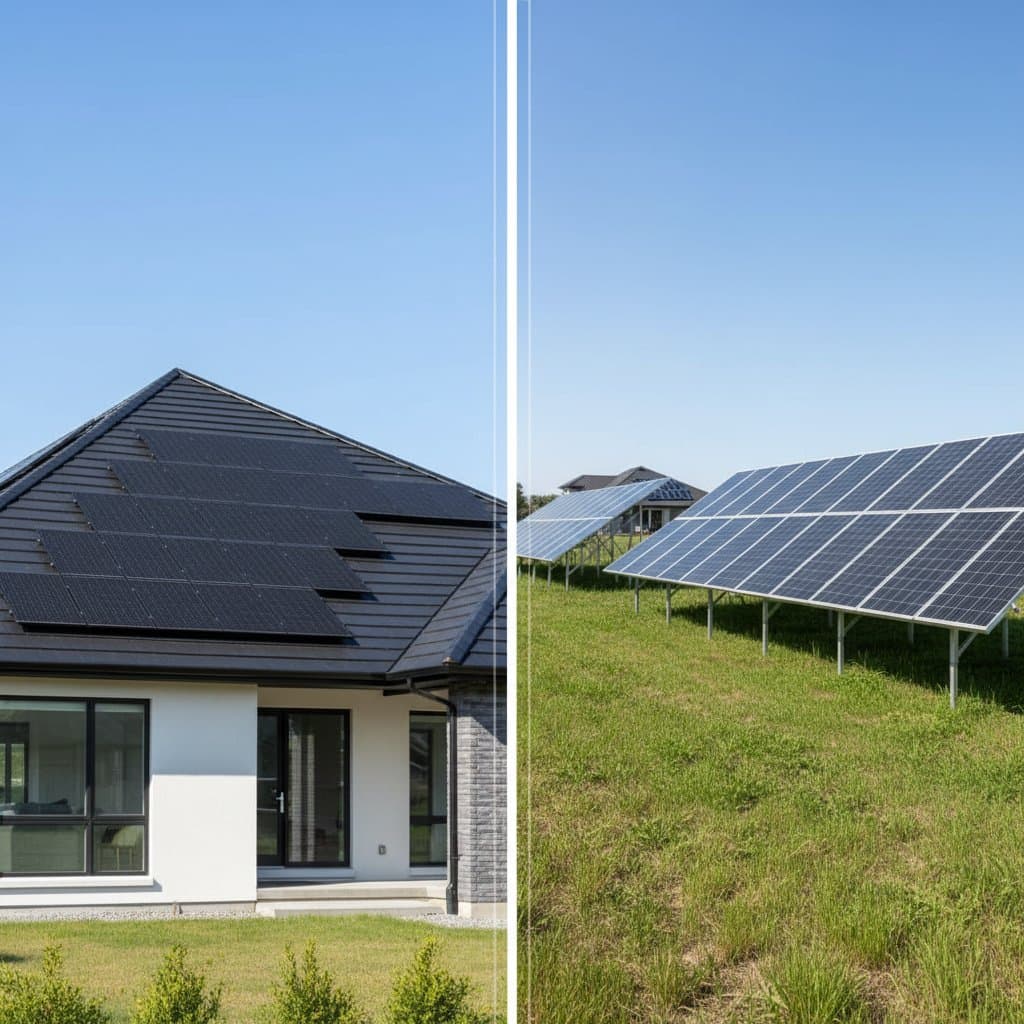
Which Solar Setup Offers Better Value in 2025: Ground-Mounted or Roof-Mounted?
Solar energy decisions can overwhelm homeowners, especially in Philadelphia where local conditions vary. Many residents debate whether a ground-mounted system or a rooftop installation provides superior returns. Both options capture sunlight and generate electricity, but they differ in installation expenses, performance levels, and ongoing care. The optimal selection hinges on available space, energy demands, and site-specific factors.
How Each System Functions
A roof-mounted solar system secures panels to the home roof via rails and brackets. Electrical wiring connects through conduits to an inverter that transforms direct current into alternating current for home appliances. Panels align with the roof pitch, so direction and potential shading impact energy generation.
A ground-mounted system positions panels on elevated racks fixed into the ground. These setups employ identical photovoltaic technology, yet allow precise tilting and orientation toward optimal sunlight exposure. Advanced versions incorporate motors for sun-tracking, which adjust angles throughout the day to enhance output.
Both configurations integrate with the home electrical panel. Surplus power returns to the utility grid via net billing, earning credits. Variations arise from labor requirements, material needs, and space utilization, all influencing overall costs and efficiency.
Installation Cost Breakdown
Consider a standard 7-kilowatt residential system. Roof-mounted installations typically cost 2.80 dollars per watt, amounting to 19,600 dollars prior to incentives. Ground-mounted alternatives average 3.30 dollars per watt, reaching 23,100 dollars for equivalent capacity. Elevated expenses stem from additional components such as steel supports, underground wiring, and perimeter fencing.
Applying the 30 percent federal investment tax credit reduces the roof system to 13,720 dollars and the ground system to 16,170 dollars. This 2,450-dollar difference influences payback periods by one to two years, based on projected energy bill reductions.
Output and Efficiency Comparison
Philadelphia receives approximately 1,300 kilowatt-hours per kilowatt annually from unshaded, south-facing installations. A 7-kilowatt system yields about 9,100 kilowatt-hours yearly under ideal conditions. East- or west-facing roofs may produce only 8,000 kilowatt-hours due to suboptimal angles.
Ground-mounted arrays, optimized for tilt, achieve 9,100 to 9,500 kilowatt-hours per year. This additional 1,000 kilowatt-hours translates to 160 dollars in annual savings at 16 cents per kilowatt-hour. Across 20 years, such gains exceed 3,000 dollars, potentially justifying the initial premium for ground systems.
Upkeep and Durability Factors
Roof installations leverage the existing structure and streamline permitting processes. However, roof maintenance becomes challenging, as panels require removal for significant repairs. Rain typically clears debris like dust or leaves, though yearly checks ensure secure connections and inverter functionality.
Ground systems facilitate access for cleaning and repairs at eye level. Snow clearance proves straightforward, and no roof penetrations occur. Vegetation control remains essential to avoid shading from weeds or overgrowth. Panels in both setups carry 25-year warranties and degrade at 0.5 percent annually.
Payback Periods and Investment Returns
With monthly electricity bills averaging 150 dollars, annual costs reach 1,800 dollars. A roof system generating 8,000 kilowatt-hours offsets 1,280 dollars yearly after fixed charges, achieving payback in 10 to 11 years. The ground system, at 9,100 kilowatt-hours, offsets 1,460 dollars annually, with payback extending to 11 to 12 years.
Over 20 years, both deliver 20,000 to 25,000 dollars in total savings, factoring in rate escalations and minor upkeep. Outcomes balance between upfront affordability and long-term optimization.
Site Evaluation and Utility Impacts
Site characteristics dictate feasibility. Roof attributes like slope, direction, and obstructions from trees or vents affect viability. Flat roofs demand added tilt mechanisms, increasing expenses modestly. Ground options require ample yard area, stable soil for anchoring, and compliance with setback rules.
Utility policies influence economics. Time-of-use rates reward peak afternoon production. Southwest-oriented ground arrays capture valuable late-day sunlight, elevating credit worth.
Selecting the Ideal Option
Opt for roof-mounted solar when the roof condition excels and faces south or west. This approach minimizes materials, utilizes vertical space, and ensures consistent savings. Choose ground-mounted if shading limits roof potential, space constrains capacity, or future scaling appeals.
Engage a certified professional for site assessment. They simulate sun paths, shading patterns, and production forecasts for both configurations. Evaluate lifetime costs per kilowatt-hour to identify the superior investment.
Optimizing System Performance
Post-installation, conduct yearly inspections of wiring, inverters, and panel integrity. Utilize monitoring software to review production trends. Maintain unobstructed sunlight by pruning nearby foliage and clearing debris.
Rinse panels with soft water and a non-abrasive brush one to two times annually if residue accumulates. These practices sustain efficiency and extend system lifespan.
Frequently Asked Questions
What options exist if roof space limits solar installation?
Ground-mounted systems serve as viable alternatives in yards with sufficient open area and low shading.
Do ground systems involve additional permitting?
They frequently necessitate zoning or land-use approvals, though most residential properties meet criteria.
Is future expansion possible?
Ground arrays accommodate additions via supplementary racks more readily than roof setups.
Do sun-tracking mechanisms justify their expense?
Single-axis trackers increase output by 15 to 25 percent in unobstructed sites, often recouping costs through enhanced production.
What is the expected panel lifespan?
Panels maintain at least 80 percent efficiency after 25 years.
How does winter affect generation?
Lower temperatures enhance cell performance, and snow melts quickly from angled surfaces.
How frequently does cleaning become necessary?
Precipitation suffices in typical weather; ground systems benefit from occasional washes during dry periods.
Can either system integrate with battery storage?
Both connect seamlessly to batteries for energy reserve and demand management.
What strategies boost return on investment?
Select high-quality Tier 1 panels, track performance regularly, and leverage regional rebates to lower initial outlays.
Which configuration suits most Philadelphia residences?
Roof systems fit well on unshaded structures; ground mounts excel for intricate or compact roofs.