
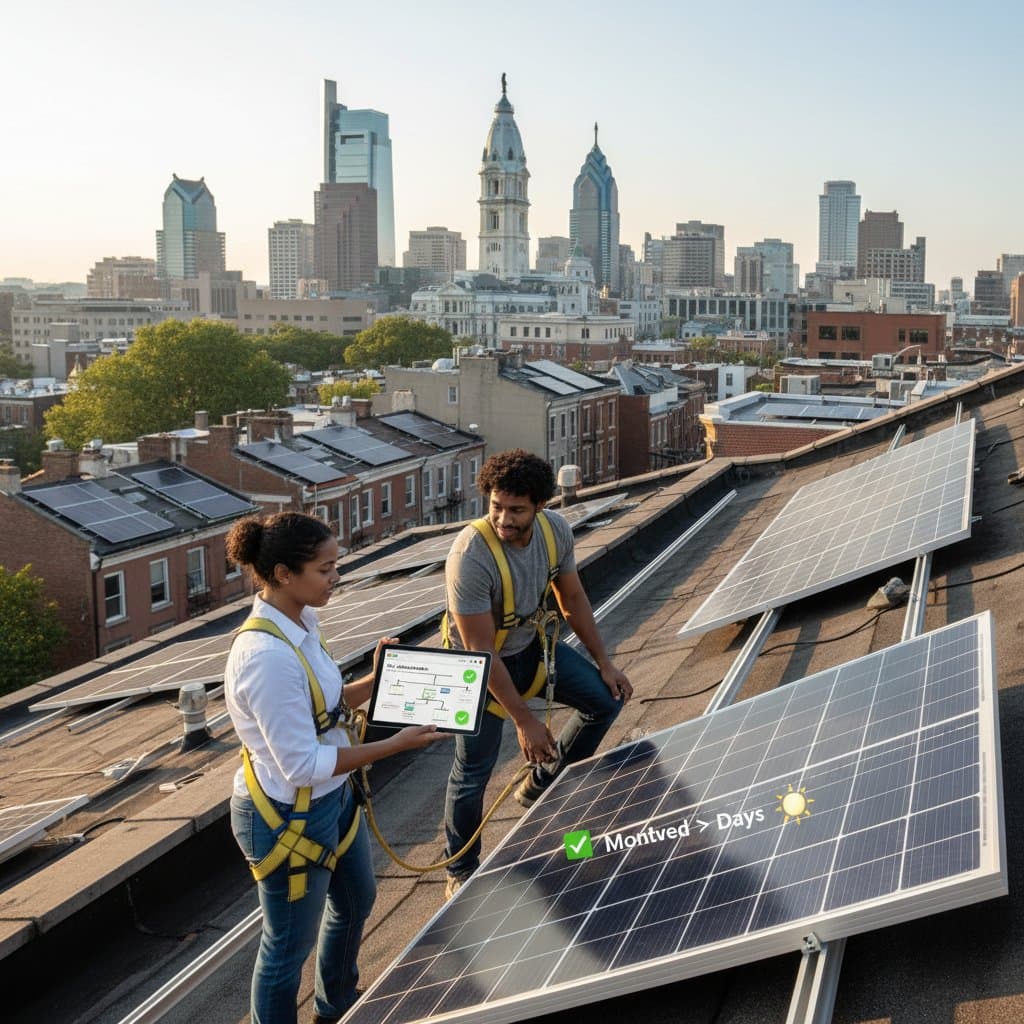
2026 Rules Accelerate DIY Solar Permits
Homeowners seek greater control over energy expenses and environmental contributions, but solar installation permits have historically involved delays and complexity. Extended approval periods, varying documentation requirements, and ambiguous inspection protocols deterred self-installations. The forthcoming federal and state-aligned solar permitting standards, effective in 2026, address these issues by simplifying procedures for homeowners, installers, and municipal authorities, particularly for modest residential setups.
Under this framework, permits for do-it-yourself solar projects receive approval in days, not months. These reforms form part of a nationwide initiative to enhance residential solar uptake and minimize administrative expenses, which have sustained elevated costs despite declining panel prices.
The Importance of Expedited Permits
Solar panels generate renewable power for decades, yet initial hurdles frequently impede progress. Prospective users encountered postponements that extended timelines by weeks, resulting in prolonged exposure to elevated utility rates and deferred savings.
Expedited permitting allows transition from planning to execution with greater speed. Energy cost reductions commence earlier, and return on investment accelerates. This efficiency also boosts confidence among potential self-installers, as regulatory uncertainty previously posed a significant deterrent.
In Philadelphia and adjacent areas, the digital permitting approach minimizes required forms, enables electronic submissions, and uniformizes evaluation criteria. Consequently, participants experience greater predictability and openness in interactions with authorities.
Mechanics of the Updated Rules
These regulations adhere to a nationwide model endorsed by renewable energy advocates and municipal code enforcers. Jurisdictions must implement an online application for compact rooftop arrays below a defined capacity limit. Designs conforming to predefined safety and electrical guidelines receive immediate or brief review approval.
Key enhancements underpin this evolution:
- Automated Design Evaluation. The platform verifies submitted plans against electrical and fire safety codes. Compliant configurations, including layouts and wiring schematics, gain instant clearance.
- Uniform Documentation Standards. A consolidated checklist replaces disparate local forms, ensuring consistency across submissions.
- Electronic Inspection Coordination. Users book site visits via the portal, eliminating traditional communication barriers.
These provisions particularly benefit systems under 15 kilowatts, encompassing the majority of Philadelphia residential installations.
Implications for Self-Installers
Self-directed solar setups attract homeowners aiming to curtail labor expenses and acquire technical proficiency. Previously, regulatory navigation overshadowed physical tasks like wiring and mounting. The revised standards clarify pathways for safe, compliant DIY endeavors.
Adherence to electrical codes and certified components remains essential, yet approval routes prove more straightforward. The interface offers instructional resources, example illustrations, and guided forms. It identifies omissions prior to finalization, preventing denials.
Individuals who once engaged professionals solely for administrative support can now self-manage, potentially saving hundreds in processing charges.
Guide to DIY Solar Permitting
The following outlines the streamlined procedure:
- Collect Usage Data. Review the prior year's utility statements to gauge consumption patterns.
- Develop System Layout. Employ manufacturer-provided tools or software. Systems of 6 to 8 kilowatts typically offset usage for Philadelphia households.
- Conduct Shade Assessment. Utilize the portal's analyzer to calculate solar exposure, accounting for obstructions like foliage or structures.
- Submit Documentation. Provide array configurations, electrical schematics, and component details.
- Receive Prompt Approval. Standard-compliant designs qualify for same-day issuance.
- Arrange Site Verification. Post-installation, initiate inspection requests digitally.
- Finalize Utility Integration. Approved records transmit automatically to the provider for grid connection.
While rigorous, the method eliminates redundant oversight for routine configurations.
Savings in Time and Expense
Prior to implementation, Philadelphia residents awaited four to six weeks for permit decisions, introducing variability and ancillary expenses. The updated system targets issuance within days. For a 7-kilowatt self-installation, overall duration may compress from eight weeks to three.
Financial benefits arise from:
- Labor Avoidance. Self-assembly bypasses installer fees, which comprise 30 to 40 percent of expenses.
- Administrative Efficiencies. Reduced fees and streamlined handling lower indirect costs.
A 7-kilowatt array yields approximately 9,100 kilowatt-hours annually. At 24 cents per kilowatt-hour, this equates to 2,180 dollars in yearly offsets. With installation costs near 12,000 dollars including equipment and fees, payback occurs in roughly six years. Accelerated approvals further diminish this timeline by averting interim expenses.
Available Incentives and Resources
Federal tax credits continue to offset substantial portions of residential solar investments. State initiatives and utility offerings provide additional rebates or output-based rewards. Uniform documentation eases eligibility confirmation for these benefits.
Philadelphia's environmental department and community organizations plan workshops to guide residents through the portal and design essentials.
Upholding Standards and Safety
Approval acceleration does not compromise rigor. Automation confirms component certifications and code-compliant wiring. On-site verifications by inspectors validate mounting, grounding, and overall integrity.
Self-installers prioritize safety by observing equipment guidelines and employing protective gear. For those uneasy with electrical tasks, licensed specialists can manage terminations while owners handle other elements.
The framework enhances warranty monitoring and equipment registration. Permits generate digital archives of identifiers and specs, aiding insurance, claims, or property transfers.
Community and Environmental Advantages
Beyond personal gains, expedited processes advance urban sustainability objectives by broadening solar accessibility. Increased adoption fortifies grid stability and curtails fossil fuel reliance.
Efficiency gains redirect efforts toward workforce development in supply, verification, and upkeep sectors, fostering economic vitality.
Preparing for Solar Adoption
Prospective installers should initiate preparations ahead of full rollout:
- Evaluate Roof Suitability. Inspect for solar access, alignment, and durability.
- Analyze Consumption. Determine offset requirements from billing records.
- Build Foundational Knowledge. Study concepts such as direct current to alternating current transformation, inverter performance, and metering protocols.
- Select Compliant Gear. Identify panels and inverters aligned with template specifications.
- Benchmark Pricing. Obtain professional estimates to inform DIY budgeting.
- Verify Rebates. Assess applicable federal, state, and local supports.
- Outline Upkeep. Plan for routine inspections and performance tracking.
Such preparation positions users for seamless execution upon system activation.
Sustaining System Performance
Solar arrays demand minimal intervention, yet periodic evaluations maintain efficacy. Biannually, examine for accumulations, soiling, or altered shading. Rinse surfaces with water and mild tools when conditions permit.
Inverter-associated applications monitor production metrics. Substantial declines warrant checks for obstructions or connections. The portal incorporates logging for upkeep entries.
If batteries integrate, conduct health assessments routinely. Units feature self-diagnostics and connectivity. Update software and ensure environmental compliance.
Retain installation records and guarantees. Digital permits streamline succession during relocations or verifications in sales.
Collective Impact of Residential Solar
Individual arrays diminish emissions and bolster local infrastructure. Modest contributions aggregate into substantial renewable integration. Participation in the accessible permitting model yields personal economies alongside advancements in Philadelphia's sustainable energy landscape.
Frequently Asked Questions
Who qualifies for expedited permitting? Owners of residential rooftop systems below capacity thresholds qualify; most single-family properties align.
Is professional installation still an option? Affirmative. Installers access the identical portal, serving both independent and contracted efforts.
How does shading or roof complexity affect processing? Automation suits conventional setups; intricate features may necessitate human oversight.
Do safety protocols change? Standards persist; verification methods evolve via automation.
How to confirm municipal adoption? Inquire with building offices or Philadelphia's sustainability division.
What submissions are required? Include schematics, datasheets, and roof capacity proofs; the portal details all.
Can batteries integrate under one permit? Yes, for compliant units within limits; guidance follows.
Does speed impact warranties? Negative; coverage follows manufacturer policies, with records aiding claims.
How are inspections arranged? Requests occur digitally post-completion, with status tracking available.