
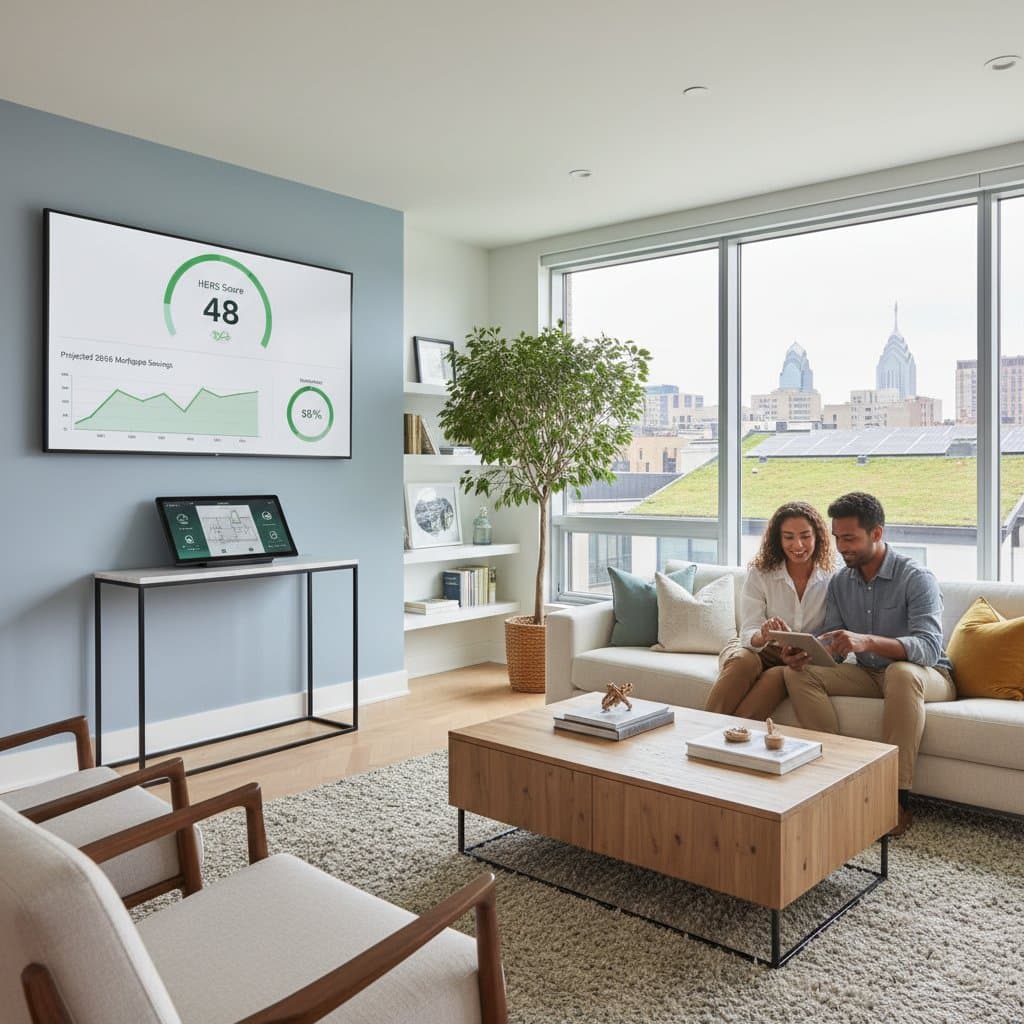
HERS Under 50: Unlock 2026 Mortgage Rate Savings
Philadelphia homeowners now have an opportunity to transform energy efficiency into tangible mortgage benefits. The Home Energy Rating System, known as HERS, provides a standardized measure of a home's energy performance. Achieving a score under 50 not only reduces utility expenses but also positions properties for lower interest rates on loans by 2026 through specialized financing programs.
Homeowners considering renovations or new builds should evaluate how these upgrades influence both immediate comfort and long-term financial outcomes. Certified assessments reveal pathways to substantial savings on energy and borrowing costs.
Understanding the HERS Index
The HERS Index serves as a national benchmark for residential energy efficiency. A newly constructed home receives a baseline score of 100, representing typical energy consumption. Scores below this indicate superior performance; a rating of 50 signifies that the home uses approximately half the energy of the reference model, while a score of zero denotes net-zero energy production.
Properties with HERS scores under 50 demonstrate exceptional efficiency, which lowers operational costs and enhances occupant comfort. Lenders increasingly view such homes as financially stable investments. Reduced energy expenditures free up household budgets, thereby decreasing the risk of loan default and justifying favorable mortgage terms.
Performance Characteristics of a HERS Under 50 Home
Homes achieving scores below 50 incorporate advanced building techniques and technologies. These include airtight building envelopes, superior insulation materials, energy-efficient heating, ventilation, and air conditioning systems, and high-performance glazing. Integration of renewable energy sources, such as solar panels, further optimizes performance.
Such configurations typically reduce annual energy consumption by 50 to 70 percent relative to standard homes. Consider a typical Philadelphia residence that uses 10,000 kilowatt-hours of electricity yearly. A home rated at HERS 45 might consume only 5,000 kilowatt-hours. With electricity rates at 24 cents per kilowatt-hour, this adjustment yields annual savings of 1,200 dollars, extending to heating and cooling with enhanced sealing and heat pump installations.
Connecting Energy Efficiency to Mortgage Advantages
Energy-efficient mortgages evaluate projected utility savings alongside traditional income metrics. Borrowers with verified reductions of 100 dollars monthly in energy costs often secure improved interest rates or larger loan approvals. The rationale rests on enhanced affordability; lower operating expenses bolster a homeowner's capacity to sustain mortgage obligations.
Homes exceeding HERS 50 enter a premium tier for lending incentives. Lenders apply rate discounts based on documented efficiency, recognizing that decreased energy demands correlate with greater financial resilience. When upgrade savings surpass additional loan costs, the investments enhance property value and livability while delivering rapid returns.
Steps to Achieve a HERS Score of 50 or Below
Professional energy audits initiate the journey to lower HERS ratings. Trained evaluators employ tools such as blower door tests and thermal imaging to identify inefficiencies in air leakage, insulation, and mechanical systems. These diagnostics inform targeted recommendations for maximum impact.
High-priority upgrades encompass:
- Heat pump systems featuring variable-speed compressors for precise temperature control
- Triple-pane windows with low-emissivity coatings to minimize heat loss
- Continuous insulation layers on exterior walls and roofs for thermal bridging reduction
- Solar photovoltaic arrays rated at 5 to 8 kilowatts, paired with smart inverters
- Duct sealing and mechanical ventilation systems for optimal airflow distribution
- ENERGY STAR-certified appliances and ubiquitous LED fixtures
Implementing a combination of these measures accelerates score improvements through synergistic effects.
Investment Costs and Return Projections
For existing homes, attaining a HERS score under 50 requires investments ranging from 15,000 to 35,000 dollars, influenced by property size and initial efficiency. New constructions incur marginal costs of 5 to 10 percent above conventional builds.
Returns materialize through energy reductions and financing perks. An outlay of 25,000 dollars yielding 1,800 dollars in yearly savings equates to a 7 percent return, excluding rebates or rate benefits. A 0.25 percent mortgage rate reduction amplifies these gains.
Incentives from federal tax credits, state programs, and utility rebates offset 20 to 40 percent of expenses. Many options integrate financing into the primary mortgage, distributing costs over extended periods.
Overcoming Challenges with Phased Approaches
Technical complexity and upfront costs deter some homeowners from pursuing HERS goals. Segmenting projects into phases simplifies the process. Begin with a baseline audit to establish the current rating, then sequence upgrades by efficiency gains per dollar invested.
Initial efforts focus on attic insulation enhancements, duct sealing, and LED retrofits. Intermediate steps address whole-home air sealing, window replacements, and programmable thermostats. Advanced phases incorporate solar systems, heat pumps, and structural insulation.
Progressive documentation by certified raters validates improvements, enabling lenders to acknowledge partial advancements toward full qualification.
Additional Advantages of High-Efficiency Homes
Beyond financial metrics, low HERS scores foster superior indoor environments. Sealed structures with controlled ventilation limit pollutant and allergen infiltration. Uniform temperatures eliminate drafts, while robust insulation attenuates external noise, promoting tranquility.
Market analyses indicate that efficient homes command premium prices and attract buyers swiftly. Prospective purchasers prioritize verifiable performance data, such as HERS ratings, to assess ongoing costs. This synergy of reduced rates, minimized bills, elevated resale potential, and enhanced comfort delivers comprehensive value.
Actionable Steps for Philadelphia Homeowners
- Schedule a HERS energy audit with a certified professional to obtain an initial score.
- Develop an upgrade strategy emphasizing high-return interventions.
- Compile 12 months of utility statements for pre- and post-improvement comparisons.
- Research applicable federal, state, and local incentives for cost reductions.
- Solicit bids from contractors using standardized specifications for accuracy.
- Consult lenders on energy-efficient mortgage products linked to HERS verification.
- Arrange re-rating post-upgrades to confirm progress and eligibility.
These measures position homeowners to capitalize on forthcoming lending expansions.
Sustaining Efficiency Over Time
High-performance homes demand routine upkeep to preserve ratings. Change air filters every one to three months and ensure vents remain unobstructed. Annually inspect seals around doors and windows. For solar-equipped properties, clean panels to remove debris. Monitor usage patterns via smart systems to detect anomalies early. Consistent practices safeguard investments and maintain access to financial incentives.