
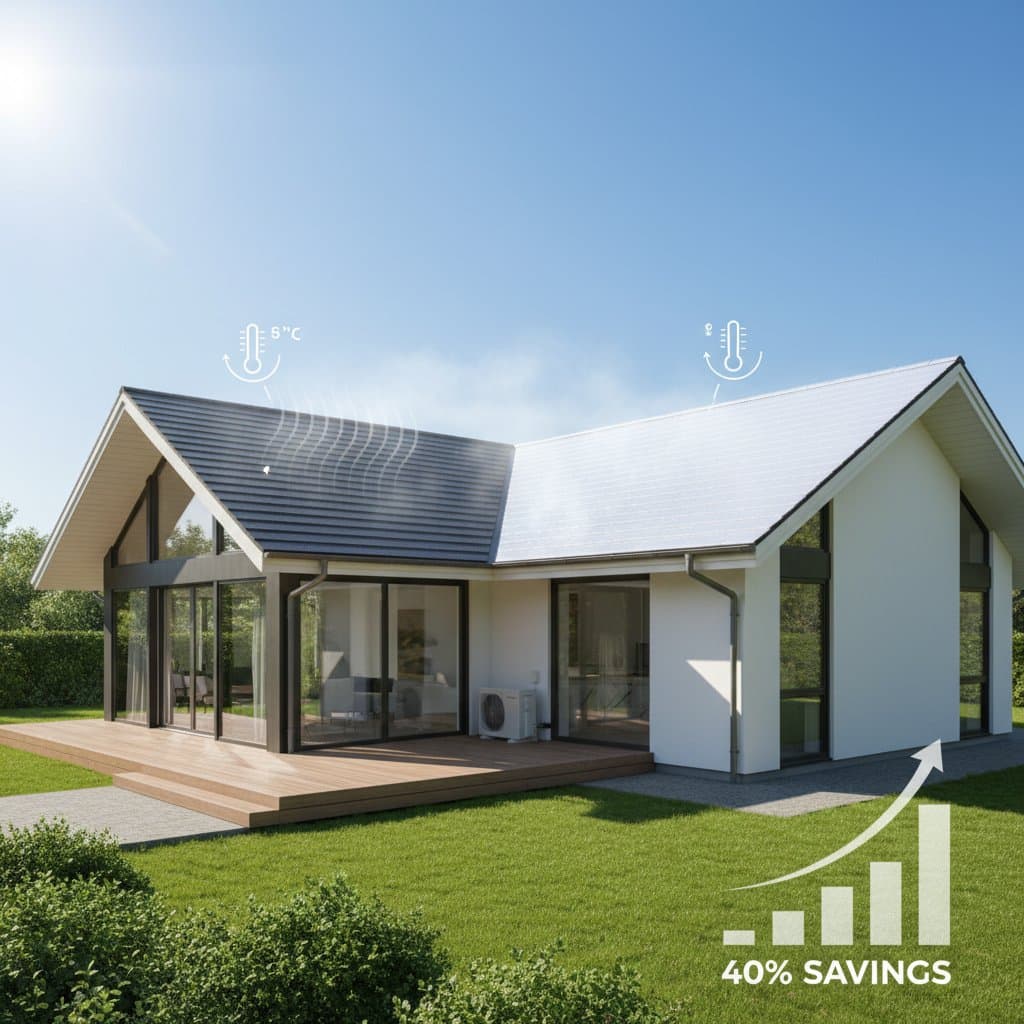
Smart Roof Coatings Reduce AC Costs by Up to 40 Percent Without Solar Panels
Homeowners often seek ways to lower cooling expenses yet hesitate to install solar panels. Smart roof coatings present a practical, budget-friendly alternative to maintain cooler interiors with reduced energy consumption. These reflective coatings deflect sunlight from the home, which lowers roof surface temperatures and decreases the workload on air conditioning units. This straightforward enhancement can reduce energy bills by as much as 40 percent, prolong roof lifespan, and improve comfort during peak summer heat.
Contemporary smart coatings come in a range of materials and colors, ensuring that high performance does not require a stark white appearance. Residents of urban row homes or suburban detached properties alike can select coatings compatible with their roof configurations and financial plans.
The Importance of Reflective Roof Coatings
A traditional dark roof may exceed 150 degrees Fahrenheit on a sunny day. This intense heat conducts through the roof structure into occupied areas, compelling air conditioning systems to operate at higher intensities. Reflective roof coatings can decrease surface temperatures by up to 50 degrees Fahrenheit. Such a reduction alleviates pressure on heating, ventilation, and air conditioning equipment while minimizing indoor heat accumulation.
By reflecting sunlight rather than absorbing it, homes remain naturally cooler. This approach yields tangible energy reductions, typically 20 to 40 percent on cooling expenses. For a family that incurs 180 dollars monthly on summer air conditioning, savings might range from 36 to 72 dollars each month. Across a five-month cooling period, the coating could recoup several hundred dollars annually.
Mechanisms of Smart Roof Coatings
Reflective coatings incorporate specialized pigments and binders designed to withstand ultraviolet radiation. Upon contact with sunlight, the majority of solar energy rebounds into the atmosphere instead of warming the roof surface. Additionally, these coatings efficiently release infrared radiation, enabling any incidental heat to dissipate rapidly.
Two primary metrics evaluate coating performance: solar reflectance and thermal emittance. Superior cool roof products attain a reflectance value of 0.70 or greater and an emittance of 0.85 or higher. This synergy maintains lower temperatures for both the coating surface and the roof substrate during the hottest parts of the day.
Varieties of Roof Coatings
- Acrylic coatings utilize water-based formulations and remain cost-effective. They perform optimally on roofs with adequate drainage in temperate regions.
- Silicone coatings withstand standing water effectively and suit flat or low-slope roofs. They preserve reflectivity over extended periods compared to acrylic options.
- Polyurethane coatings deliver robust resistance to impacts and wear, making them suitable for roofs exposed to frequent foot traffic.
- Elastomeric coatings accommodate thermal expansion and contraction, thereby preventing fractures and water infiltration.
These coatings can incorporate tints such as light gray, beige, or reflective white to match aesthetic needs. Selection hinges on roof composition, environmental conditions, and visual preferences.
Expenses and Return on Investment
Installation costs for reflective coatings generally fall between 1.50 and 3.00 dollars per square foot. For a 1,500-square-foot roof, total expenses might span 2,250 to 4,500 dollars. With annual cooling savings of 300 to 600 dollars, the investment recovers in four to seven years.
In contrast, a complete roof replacement often costs ten times as much. Coatings apply directly to existing surfaces, postponing major overhauls and conserving thousands of dollars. Certain utility providers and municipal programs extend rebates for cool roof projects, which further offset initial outlays.
Longevity of Performance
Well-maintained coatings retain elevated reflectivity for over ten years. Accumulation of dirt or organic matter may diminish effectiveness, yet routine cleaning revives substantial portions of the original properties. Manufacturers frequently extend warranties that encompass reflectivity retention and waterproof integrity.
Factors influencing degradation include regional air quality, vegetation density, and precipitation patterns. Homeowners who perform annual washing or light rinsing sustain optimal functionality and visual appeal.
Additional Advantages Beyond Cost Reductions
Reflective coatings extend the service life of the entire roof assembly by limiting extreme temperature fluctuations that induce material stress. This mitigation lowers incidences of sealant failures and leaks. Reduced roof heat also curbs attic temperature spikes, safeguarding possessions and preserving insulation efficacy.
In densely populated areas, cool roofs mitigate urban heat island phenomena. Communities experience milder ambient temperatures, decreased smog development, and heightened overall livability. Some residents note diminished interior noise levels, as the coating layer contributes subtle acoustic insulation.
Incremental and Comprehensive Efficiency Strategies
Begin with targeted applications, such as coating a single roof segment or an outbuilding, to observe concrete outcomes. For individuals contemplating future solar installations, applying a reflective coating beforehand preserves roof condition and enhances photovoltaic output, as lower surface temperatures optimize module performance.
Those pursuing substantial improvements might integrate cool roofs with enhanced attic insulation, envelope sealing, and programmable thermostats. These combined interventions can diminish yearly energy demands by 25 to 50 percent, while elevating comfort and air purity.
Application and Upkeep Procedures
Certified applicators commence by cleansing the roof, mending fissures, and then deploying the coating via roller or spray methods. Two layers ensure comprehensive protection. Completion typically requires one to two days, contingent on roof dimensions and drying parameters.
Upkeep involves simple practices. Conduct springtime assessments for accumulations or moisture retention. Clear foliage, wash away residues, and examine joints or flashings for deterioration. Reapplication becomes necessary when reflectivity or sealing properties wane, generally after ten to fifteen years.
Guidance for Homeowners
Compile your utility statements from the past year to gauge cooling expenditures. Solicit estimates from at least two or three certified coating specialists. Inquire about specified reflectance ratings, application thickness, and warranty provisions from each. Evaluate proposals using uniform criteria to discern genuine performance variances.
Address substantial shading or foundational concerns prior to coating. A pristine, sound roof base promotes strong adhesion and extended durability. Document roof status, maintenance routines, and repairs to facilitate warranty enforcement and inform subsequent enhancements.
Individual choices carry collective impact. Each cool roof eases electricity grid pressures during peak demand and curtails emissions from energy production. When adopted neighborhood-wide, these measures foster resilient, agreeable urban environments.
Frequently Asked Questions
How long does a reflective roof coating endure?
Most products persist for ten to fifteen years with regular cleaning and evaluations.
Is self-application feasible for a coating?
Application by homeowners suits minor roofs or auxiliary structures, though expert installation guarantees uniform distribution, secure bonding, and warranty eligibility.
Does a coating alter home appearance?
Current formulations offer subdued hues and neutral palettes, permitting efficiency gains without resorting to vivid white exteriors.
Do cool roofs benefit winter performance?
Indeed. Summer heat reflection pairs with sub-roof insulation to limit winter heat escape, stabilizing indoor climates throughout the year.