
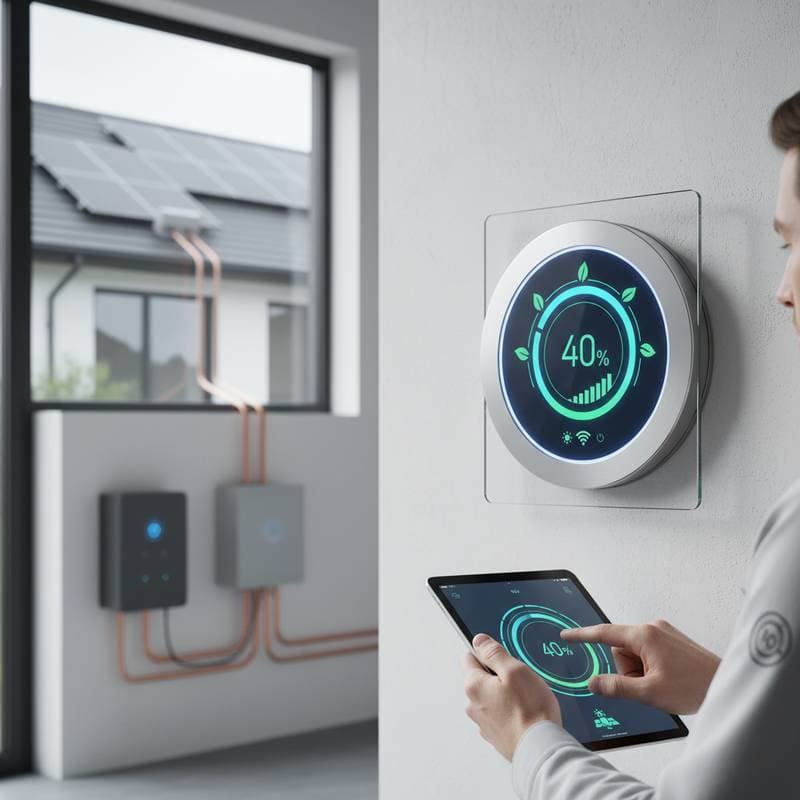
Reduce Energy Bills by Up to 40 Percent with Leading 2026 Smart Thermostats
Homeowners often seek effective methods to enhance energy efficiency without encountering intricate technologies or substantial initial expenses. Smart thermostats provide a straightforward and economical solution to minimize energy consumption and decrease utility costs. Recent advancements in these devices deliver greater accuracy, enhanced connectivity, and simplified operation, enabling reductions in heating and cooling expenses by as much as 40 percent alongside improved comfort levels.
These thermostats transcend basic functionality to serve as proactive energy overseers. They analyze user routines, automate temperature adjustments, and interface with various household systems. Integration with solar power sources or time-based electricity pricing amplifies their effectiveness in lowering costs and environmental impact.
The Mechanics of Smart Thermostats
A smart thermostat establishes a Wi-Fi connection to a smartphone or residential network. Embedded sensors monitor temperature, humidity, occupancy, and occasionally air quality metrics. Data transmission to a cloud platform facilitates pattern recognition and behavioral adaptation, resulting in autonomous setting modifications over time.
Consider a practical illustration: an air conditioning unit that typically uses 20 kilowatt-hours daily. An optimized smart thermostat might lower this to 12 kilowatt-hours. With electricity rates at 24 cents per kilowatt-hour, daily savings amount to $1.92, translating to approximately $700 annually, excluding benefits from diminished equipment strain.
Compatibility extends to voice-activated assistants, intelligent lighting, and electric vehicle charging stations. Users manage settings via voice commands, mobile applications, or predefined automation sequences. Geofencing technology automatically adjusts temperatures upon detecting departures or arrivals, ensuring efficiency without manual intervention.
Investment and Return on Investment
Pricing for most smart thermostats falls between $120 and $300. Installation options include self-guided processes or professional services costing up to $150 for necessary wiring modifications. For households with annual heating and cooling expenditures of $1,800, a 25 to 40 percent efficiency gain produces $450 to $720 in yearly reductions, often achieving full cost recovery within one year.
Utility providers frequently extend rebates of $50 to $100 toward purchases. Participation in energy management initiatives may supply devices at no cost in exchange for enrollment in demand-response protocols. During peak demand periods, these programs enable minor thermostat adjustments to support grid stability, yielding bill credits as compensation.
Advantages Extending Past Financial Gains
Energy conservation represents merely one facet of the value provided by smart thermostats. They elevate indoor comfort, air purity, and the longevity of heating, ventilation, and air conditioning components. Even operation cycles mitigate issues like short cycling, which accelerates degradation of compressors and blowers, while stable environmental controls safeguard furnishings, flooring, and sensitive electronics.
Advanced units monitor air quality indicators, alerting users to ventilate when levels of carbon dioxide or airborne particles increase. Integration with air filtration mechanisms activates fans at intervals to promote circulation. Such capabilities foster healthier living environments and sustained well-being throughout the seasons.
Furthermore, these devices enhance property marketability. Prospective buyers value interconnected, energy-efficient infrastructures that signal meticulous maintenance and reduced future expenses. A targeted upfront expenditure thus contributes to appreciable long-term asset appreciation.
Selecting an Appropriate Smart Thermostat
- Verify system compatibility. Assess the specifications of your heating, ventilation, and air conditioning setup, noting requirements such as a common wire for power supply.
- Align with smart home ecosystems. Select a model that synchronizes with your preferred voice assistant or central automation controller.
- Assess sensor capabilities. Opt for units with multiple remote sensors to ensure uniform comfort distribution across various home levels.
- Examine application interface. Prioritize intuitive and reactive mobile applications to streamline routine interactions.
- Investigate incentive programs. Consult local utility offerings or governmental initiatives for available discounts prior to acquisition.
Models differ in aesthetic design and data privacy measures. Favor those providing comprehensive energy usage summaries and adaptable programming options. Steer clear of systems that restrict premium functionalities to paid subscriptions unless advanced data insights align with your needs.
Installation Procedures and Initial Configuration
The majority of installations require less than one hour for capable homeowners. Begin by deactivating power to the heating, ventilation, and air conditioning system. Methodically label existing wires and adhere to application-guided instructions.
For intricate wiring configurations, engage a qualified technician to avoid complications. Post-installation, establish Wi-Fi linkage and initiate the adaptation period, allowing several days for routine observation before manual overrides. Activate geofencing and meteorological integration to maximize performance.
Conduct verification tests by remotely altering temperature presets and confirming system responses. Analyze the inaugural weekly energy summary to refine preferred ranges, balancing comfort with fiscal prudence.
Ongoing Maintenance and Durability
Smart thermostats demand little upkeep. Routinely dust sensors and confirm firmware remains current through automatic updates. Annual battery replacements suffice for auxiliary components, while monthly inspections of heating, ventilation, and air conditioning filters preserve optimal airflow and measurement precision.
Should operational durations appear excessive, audit scheduling and occupancy configurations. Adapt settings seasonally to accommodate weather variations. Application interfaces typically include straightforward recalibration tools for addressing deviations in usage patterns.
These devices often endure for over a decade. Progressive software enhancements introduce refined precision and expanded compatibilities. Enable application alerts to facilitate seamless receipt of such improvements.
Frequently Asked Questions
What is the average lifespan of a smart thermostat? Most models operate reliably for 10 years or longer, with software updates extending functionality over time.
Do smart thermostats work with all heating systems? Compatibility varies; verify support for your specific furnace, boiler, or heat pump type, particularly regarding power requirements like a C-wire.
How do rebates affect the overall cost? Utility rebates can offset $50 to $100, potentially reducing payback periods to mere months for qualifying installations.
Can these devices integrate with solar panels? Yes, many connect via smart home platforms to prioritize solar-generated power, further optimizing energy use and bill reductions.
Actionable Steps to Implement Efficiency Upgrades
- Compile utility statements from the past year to calculate projected savings accurately.
- Identify applicable rebates or energy conservation programs in your region.
- Evaluate no fewer than three compatible thermostat options suited to your infrastructure.
- Arrange professional installation or allocate time for a self-directed assembly.
- Track performance on a monthly basis and modify behaviors to sustain gains.
By adopting a smart thermostat, homeowners secure not only immediate financial relief but also a foundation for enduring environmental stewardship and enhanced living quality.