
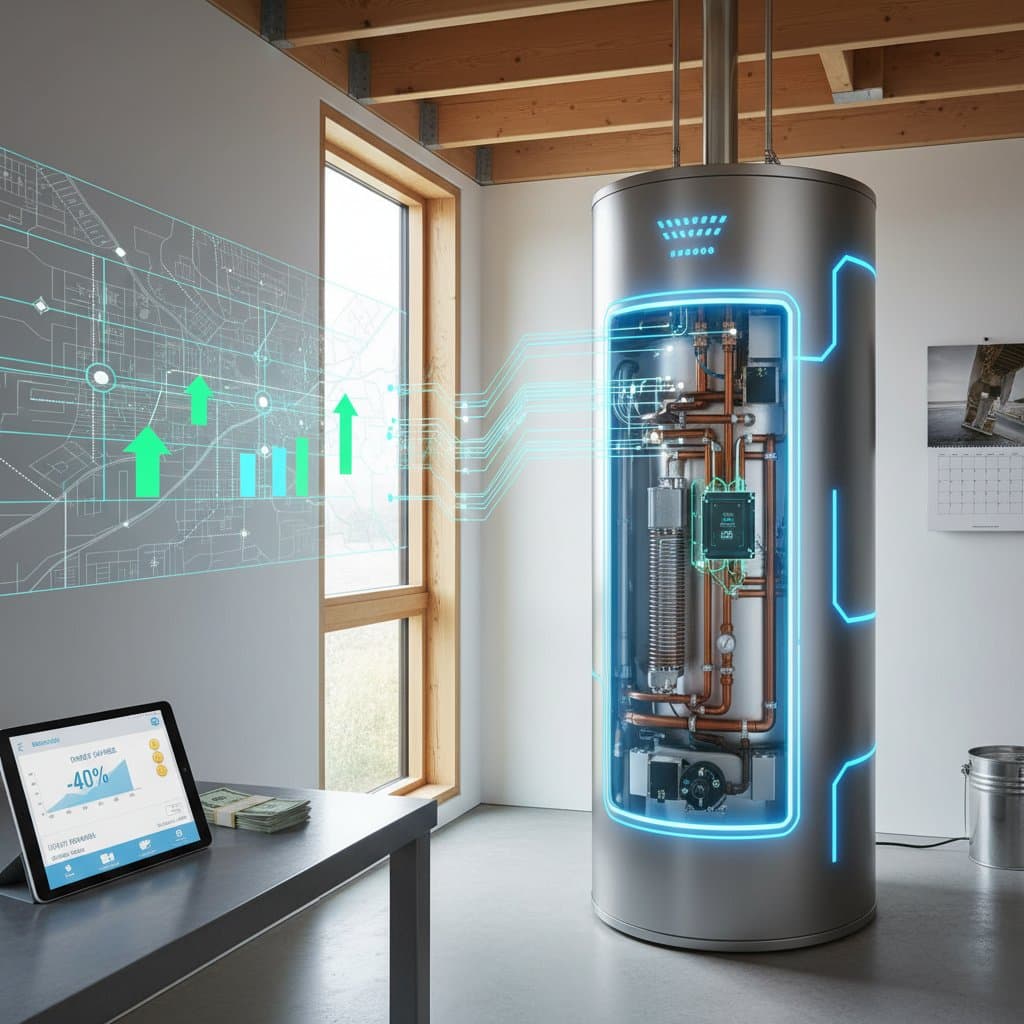
Grid-Interactive Water Heaters in 2026: Achieve 40 Percent Bill Reductions
Homeowners seek ways to lower energy expenses while preserving comfort and ease. Grid-interactive water heaters deliver substantial savings on water heating, potentially reducing costs by nearly half. These advanced systems integrate with the electric grid, heating water during periods of low-cost and renewable-rich electricity. The outcome includes reduced bills, lower emissions, and uninterrupted access to hot water.
No technical expertise is required to realize these benefits. Grid-interactive water heaters, known as GIWHs, operate seamlessly in the background. After installation, they adapt to household routines and collaborate with utilities to ease grid pressure during peak demand. For an average household, annual water heating savings can reach 40 percent.
The Role of Water Heaters in Household Energy Expenses
Water heating typically represents 15 to 20 percent of a home's electricity consumption. A standard electric water heater consumes 3 to 5 kilowatts during operation. At a rate of 24 cents per kilowatt-hour, three hours of daily use results in approximately 65 dollars monthly, or 780 dollars annually.
Grid-interactive models shift heating to off-peak periods when rates are lower. They store thermal energy efficiently, maintaining readiness through superior insulation. Even during evening price surges, pre-heated water ensures avoidance of premium costs. These savings follow straightforward calculations.
Mechanics of Grid-Interactive Water Heaters
Heating elements within the tank function similarly to those in conventional models. The innovation lies in the control mechanism. Sensors and a communication module link the unit to the utility or a third-party aggregator. During surplus renewable generation or reduced demand, the heater activates to capture and store heat.
In periods of elevated demand, the system pauses operations, allowing power allocation to critical areas. This bidirectional interaction enhances grid dependability. The heater serves as a thermal storage solution, akin to a battery for heat rather than electricity. Certain advanced units strategically release stored heat to aid grid equilibrium during high-load scenarios. Hot water delivery remains consistent throughout.
Advantages Extending Past Financial Savings
Bill reductions provide the primary appeal, but additional benefits emerge.
- Enhanced environmental profile. Heating aligns with peak renewable production, such as solar or wind, incorporating more sustainable electricity.
- Utility incentives. Demand response enrollments often yield bill credits or installation rebates.
- Prolonged durability. Intelligent controls minimize frequent on-off cycles, lessening component stress.
- Unwavering comfort. Temperature regulation stays precise, rendering adjustments imperceptible to users.
- Broader grid contributions. Widespread adoption stabilizes the network, improving resilience against weather extremes or surges.
Investment and Return Timeline
Installation of a basic electric tank water heater ranges from 800 to 1,200 dollars. Grid-interactive versions cost 1,200 to 1,800 dollars, influenced by capacity and connectivity features. Utilities frequently offset this premium with rebates of 200 to 600 dollars. Ongoing credits, typically 50 to 100 dollars yearly, add further value.
With 780 dollars in annual water heating expenses and 40 percent savings, yearly gains total 312 dollars. Factoring in incentives, the return on investment usually occurs within three to five years. Subsequent savings persist over the unit's 10- to 15-year lifespan.
Process for Installation and Configuration
The setup mirrors that of traditional electric water heaters. A qualified plumber or electrician secures connections to water lines and electrical service. An additional requirement involves network integration. Technicians configure the controller via Wi-Fi or a dedicated cellular module supplied by the utility program.
Post-setup, a companion application enables oversight of operations. Users view temperature controls, projected savings, and program engagement details. Manual overrides are available for exceptions, though most households require minimal intervention beyond initial calibration.
Available Incentives and Utility Initiatives
Numerous utilities administer demand response initiatives incorporating grid-interactive water heaters. Participants receive compensation for permitting minor, brief modifications to heating patterns. Offerings include installation rebates or recurring credits.
Prior to acquisition, verify program suitability by inquiring about:
- Rebates or on-bill financing
- Yearly compensation for engagement
- Complimentary setup services
- Necessary communication devices
- Enrollment terms and exit provisions
Layering these with federal efficiency credits or local grants accelerates cost recovery.
Factors Influencing System Effectiveness
Performance varies with environmental and usage elements, much like other appliances.
- Capacity considerations. Greater tank volumes enable extended off-peak storage.
- Thermal retention. Select units with an energy factor exceeding 3.0 for optimal insulation.
- Usage patterns. Consistent hot water demands yield superior outcomes.
- Pricing models. Time-of-use or real-time rates maximize reductions.
- Connection stability. Dependable broadband or cellular access guarantees seamless grid dialogue.
Habits to Amplify Energy Efficiency
Equipment intelligence pairs best with mindful practices to optimize results.
- Maintain thermostat at 120 degrees Fahrenheit for balanced safety and economy.
- Align laundry and dishwasher operations with off-peak windows.
- Repair leaks promptly to conserve hot water.
- Apply insulation to pipes in cooler areas.
- Conduct routine servicing to clear deposits and inspect components.
Such measures sustain efficiency and longevity.
Integrating with Comprehensive Home Upgrades
When pursuing wider efficiency enhancements, position grid-interactive heaters strategically.
High-Impact Strategies
- Combine with solar panels or home batteries for comprehensive energy management.
- Upgrade to heat pump variants for amplified performance.
Moderate Enhancements
- Install intelligent thermostats and adopt time-based billing.
- Bolster attic insulation and seal drafts for thermal consistency.
Accessible Entry Points
- Fit low-flow aerators on fixtures.
- Deploy smart plugs to eliminate phantom power.
- Employ usage trackers to identify consumption patterns.
Progressive implementations foster greater self-sufficiency.
Practical Actions and Ongoing Care
To initiate adoption, gather 12 months of electricity statements. Document average consumption and per-kilowatt-hour rates. Reach out to your utility for details on demand response options. Obtain approved device lists and installer recommendations. Secure estimates encompassing incentives and review guarantees.
Following deployment, arrange yearly inspections. Confirm sensor and module functionality. Annually drain the tank to eliminate sediment. Analyze application insights to ensure continued program involvement. These routines preserve savings and reliability.
This upgrade transforms your residence into a contributor to an intelligent, sustainable grid, delivering enduring hot water alongside financial and ecological gains.
Frequently Asked Questions
What distinguishes a grid-interactive water heater from a standard model?
The key difference is its ability to communicate with utilities and modulate heating schedules according to grid needs and pricing dynamics.
How much can I expect to save annually?
Savings typically range from 20 to 40 percent on water heating costs, depending on usage, rates, and program participation.
Are these heaters compatible with existing homes?
Yes, they install like conventional units, with added connectivity setup suitable for most electrical systems.