
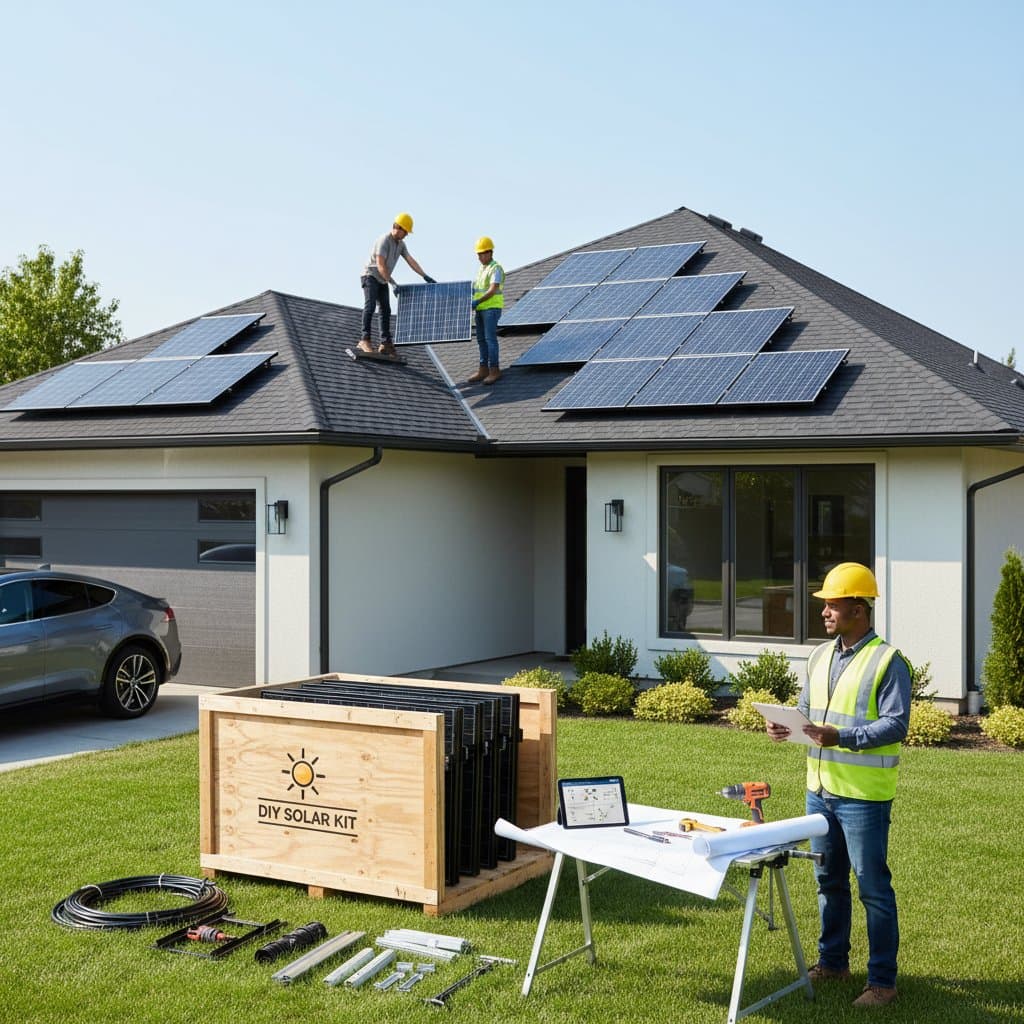
Bypass Solar Installer Markups: DIY Permit-Ready Kits for Savvy Homeowners
Solar installations frequently carry substantial markups from installers, sales personnel, and subcontractors. These added expenses deter many homeowners from adopting renewable energy. DIY permit-ready solar kits present a viable solution, enabling individuals to manage their projects, reduce expenses, and adhere to local regulations.
Solar projects entail electrical and structural risks. Individuals lacking experience in wiring or roofing should consult a licensed electrician or solar expert immediately. Safety remains the primary concern, with cost savings as a beneficial outcome.
Components of a Permit-Ready Solar Kit
A permit-ready solar kit provides all essentials for a compliant setup. Standard packages contain the following items:
- High-quality solar panels paired with mounting hardware
- Grid-tied inverter or microinverter assembly
- Pre-engineered drawings and detailed wiring schematics
- Component specification documents
- Stamped plans for structural and electrical approval by your authority having jurisdiction (AHJ)
- Comprehensive installation guidelines
These kits facilitate assembly with common tools. A licensed electrician completes the electrical integration to the service panel when necessary.
Essential Roles for Licensed Electricians
Certain tasks require professional expertise at all times:
- Installation or alteration of the main service disconnect
- Integration of solar wiring with the utility meter or load center
- Confirmation of grounding and bonding integrity
- Final torque verification on energized conductors
In the event of a failed inspection or tripped breaker upon activation, halt operations and engage a licensed electrician. Specialized diagnostic equipment identifies hidden issues effectively.
Realizing Cost Savings and Investment Returns
By eliminating contractor overheads, DIY permit kits lower system expenses by 20 to 40 percent. Homeowners cover only hardware, design fees, and selective professional services. This method allows precise budget management and flexible scheduling.
Solar United Neighbors notes, “Transparent pricing and owner-managed permits can cut project costs without lowering quality.” Such clarity enables equipment comparisons, warranty evaluations, and independent financing choices.
Typical savings translate to quicker payback periods. For a 5-kilowatt system, markups might add $5,000 or more; kits position net costs closer to equipment value alone. Long-term, reduced utility bills enhance financial returns, often yielding positive cash flow within 5 to 7 years depending on local incentives.
Guiding Your DIY Solar Installation
Follow this structured approach to execute your project successfully:
- Assess your roof's sunlight exposure and load-bearing capacity using a professional structural evaluation if needed.
- Obtain a customized quote for a permit-ready kit sized to your energy needs, typically 3 to 10 kilowatts for residential use.
- Present the enclosed plans to your local AHJ for permit approval, addressing any feedback promptly.
- Install components according to the provided manual, ensuring all fasteners meet specified torque values with a calibrated wrench.
- Arrange inspections at structural and electrical milestones to verify compliance.
- Engage a licensed electrician for interconnection and system commissioning.
Upon approval, activate the array to harvest solar energy without delay.
Sustaining Your Solar System Long-Term
Organize all permits, inspection certificates, and maintenance logs in a dedicated file. Conduct yearly checks on mounts and wiring for corrosion or loose connections. Clean panels using plain water and a soft brush to preserve efficiency.
DIY permit-ready kits democratize solar access, delivering professional outcomes at a fraction of traditional costs. Through meticulous preparation and adherence to safety protocols, homeowners secure reliable clean energy production tailored to their needs.