
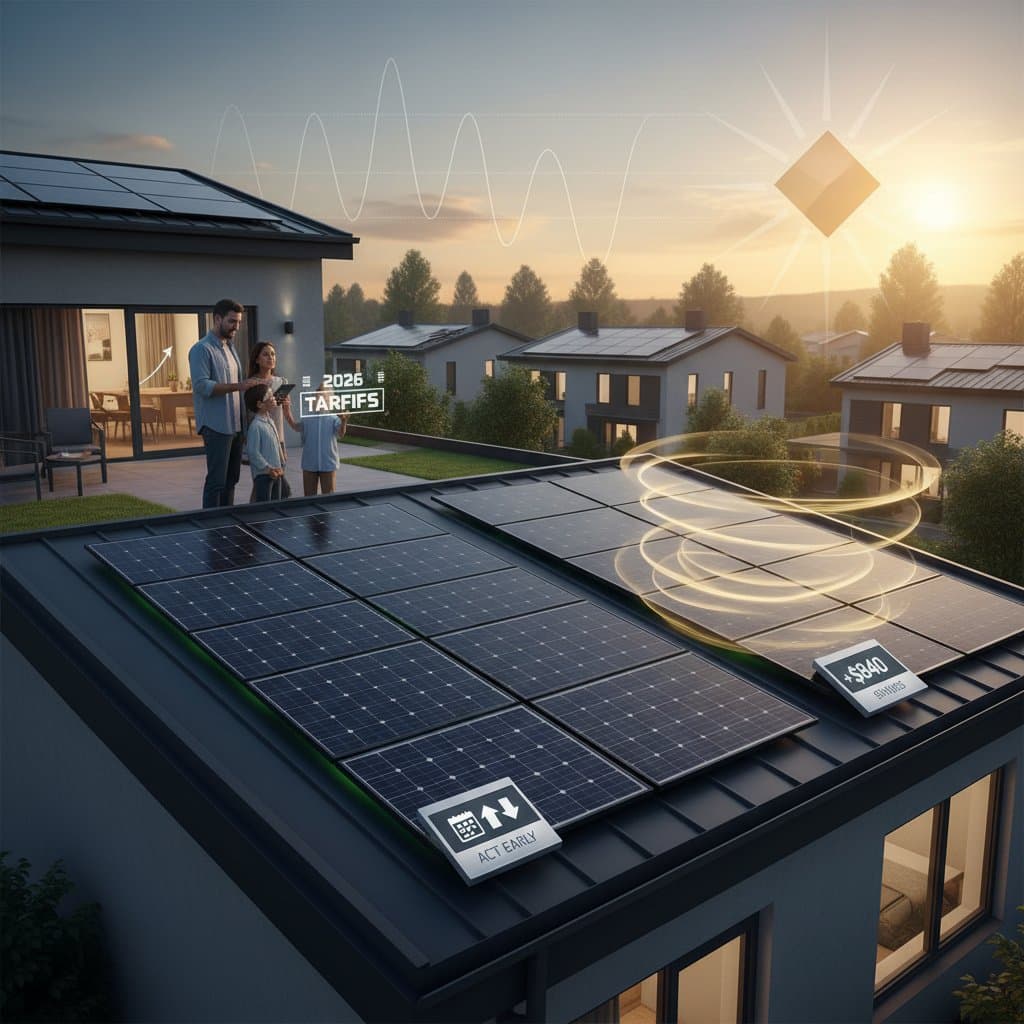
Solar Prices Set to Surge in the 2026 Tariff Wave
Homeowners often face uncertainty when deciding the optimal time to install solar panels. Equipment prices have declined steadily for years, yet impending trade tariffs promise to elevate costs. For those considering a solar project in the near term, precise timing proves essential. A clear grasp of the underlying factors enables informed planning that aligns with budget constraints and enduring objectives.
Why Tariffs Affect Solar Costs
Solar panels depend on intricate global supply chains. Key components, including cells, wafers, and complete modules, frequently traverse multiple countries before installation on rooftops. Tariffs on imported panels directly increase the price per watt. Even modest hikes, ranging from ten to fifteen cents per watt, translate to system-wide cost increases of several hundred to thousands of dollars.
Consider a standard 7 kW residential system priced at 2.70 dollars per watt before incentives, totaling 18,900 dollars. A tariff-induced rise of twelve cents per watt in module costs elevates the figure to approximately 19,740 dollars. Such an adjustment extends the payback period, although energy bill reductions persist at robust levels.
What Drives the 2026 Tariff Wave
Trade policies frequently evolve to bolster domestic manufacturing. Governments apply tariffs to safeguard local industries and preserve employment opportunities. In the solar sector, these measures target imported crystalline silicon panels from prominent international suppliers. Although the goal involves fostering homegrown production, immediate consequences include constrained supply and elevated market prices.
Distributors and installers often preempt tariffs by building inventory reserves. Upon implementation, these new duties inflate stock values, which propagate to end consumers. Historical tariff episodes demonstrate this dynamic, and experts anticipate a comparable escalation as stakeholders adapt to forthcoming regulatory phases.
How Homeowners Can Prepare
Proactive planning safeguards against cost escalations. Individuals anticipating solar installation within the coming years should compile recent utility statements and evaluate roof integrity. Solar professionals rely on this information to design appropriately scaled systems. Securing preliminary quotes facilitates price comparisons prior to market disruptions from tariffs.
Follow these targeted actions:
- Solicit multiple quotes based on consistent parameters for system capacity and component specifications.
- Commission a shade analysis to validate your roof's solar exposure potential.
- Examine incentive programs, including federal tax credits, state rebates, and municipal performance-based payments.
- Initiate financing discussions to secure advantageous loan or lease conditions ahead of price surges.
- Coordinate with your utility on interconnection processes, as approval backlogs tend to grow during periods of heightened demand.
Cost and Payback Expectations
In the Philadelphia area and surrounding communities, optimally positioned roofs generate approximately 1,300 kilowatt-hours per installed kilowatt annually. A 7 kW array thus produces about 9,100 kilowatt-hours each year. With average utility rates at 24 cents per kilowatt-hour, this output offsets roughly 2,180 dollars in electricity expenses, excluding fixed fees.
A system priced at 18,900 dollars qualifies for a 30 percent federal tax credit, reducing the net expense to 13,230 dollars. Annual savings of 2,180 dollars yield a payback period of six years. A five percent tariff-driven increase extends this timeline by under one year, underscoring solar's enduring viability amid ascending utility rates.
Broader Benefits Beyond Cost
Solar installations deliver advantages that transcend mere financial savings. Panels avert several tons of carbon emissions annually, shield against escalating electricity rates, and enhance property marketability. Residences equipped with solar typically command higher sale prices and attract buyers more rapidly. Contemporary systems incorporate real-time monitoring applications, empowering owners to observe energy generation patterns daily.
Integrating solar with efficiency measures amplifies returns. Enhancements like attic insulation, duct sealing, or heat pump water heaters lower overall consumption, allowing solar output to cover a greater portion of household needs. These upgrades foster greater stability in the face of volatile energy markets.
Innovations That May Offset Tariff Impacts
Technological progress continues despite policy hurdles. Current panels achieve efficiencies exceeding 21 percent, extracting superior output from limited roof areas. Advanced inverters regulate voltage fluctuations and interface with the grid for peak efficiency. Declining battery prices enable storage solutions for nighttime usage or power interruptions.
Domestic production capacity expands through emerging facilities. Increased local output may alleviate pricing strains over time. In the interim, proactive buyers benefit from existing stockpiles and fixed-rate contracts that preempt tariff effects.
Choosing the Right Timing
Delaying installation in pursuit of ideal conditions risks missed opportunities. Incentives gradually diminish, utility costs ascend, and regulatory shifts occur abruptly. The soundest approach centers on your property's preparedness and fiscal readiness. For roofs in excellent condition and long-term residency plans, proceeding before tariffs fully materialize secures optimal pricing and incentive benefits.
Those opting to postpone can engage constructively in the interim. Accumulate consumption records, research regional installers, and implement usage-reduction tactics. This groundwork equips you to proceed swiftly when conditions align, minimizing exposure to tightening markets.
Maintenance and Long-Term Care
Installed solar systems demand limited upkeep. Clear panels of substantial debris periodically, arrange inspections biennially, and review output monthly. Leading installers provide panel warranties spanning 20 to 25 years and inverter guarantees of 10 to 15 years. Vigilant oversight detects minor faults early, preserving optimal functionality.
Battery additions require periodic charge status checks and firmware updates. Automated operations prevail, yet routine assessments verify seamless performance. Upkeep expenses stay negligible relative to sustained savings, bolstering lifetime profitability.
Next Steps
- Collect 12 months of electricity bills for analysis.
- Obtain at least three comprehensive solar proposals.
- Confirm eligibility for incentives and note deadline schedules.
- Assess roof for obstructions or durability concerns.
- Evaluate proceeding prior to tariff-induced price hikes.
Every commitment to renewable energy fortifies local sustainability and curtails environmental harm. Incremental actions or comprehensive setups alike contribute meaningfully, potentially motivating broader adoption within your community.