
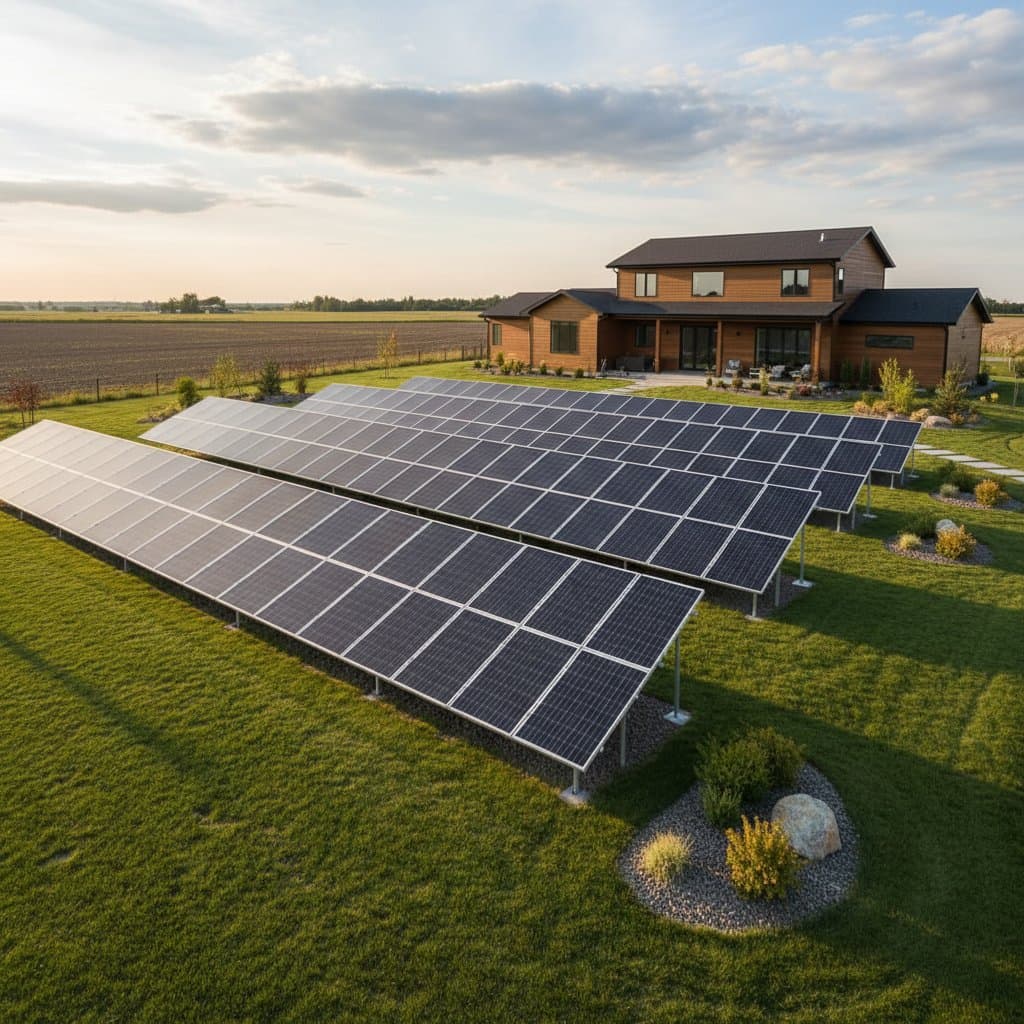
Why Ground-Mount Solar Excels in 2025
Solar energy options can seem complex at the outset. Homeowners often begin with rooftop panels, only to learn that ground-mounted systems provide superior energy production, simpler upkeep, and greater placement versatility. For properties with available open space, a ground-mount array frequently surpasses roof-based installations in overall performance and enduring value.
This trend gains traction in suburban and rural Pennsylvania areas, where residents seek reliable, long-term cost reductions free from roof-related constraints. Grasping the reasons behind the rise of ground-mount solar clarifies its suitability for specific homes and financial plans.
Illustrative Case: Energy Production and Cost Reductions
Examine a 10 kW ground-mount system installed in the Philadelphia area. Solar setups in this region typically yield approximately 1,300 kilowatt-hours per kilowatt of capacity annually. Thus, such a system generates roughly 13,000 kilowatt-hours each year.
With an average electricity rate of 17 cents per kilowatt-hour, this output offsets around 2,210 dollars in annual utility expenses. Across a 25-year period, accounting for a 0.5 percent yearly degradation, the total production surpasses 300,000 kilowatt-hours. This results in over 50,000 dollars in avoided payments, excluding potential rate hikes or Pennsylvania state incentives.
Key Advantages of Ground-Mount Over Roof-Mount Systems
1. Optimal Orientation for Peak Efficiency
Roof-mounted panels must align with the existing roof angle and direction. An east- or west-facing roof may generate 15 to 25 percent less power than a south-facing one. Ground systems eliminate this limitation, allowing precise positioning for ideal sunlight capture. Installers can incorporate dual-axis trackers that adjust to follow the sun's path, boosting output by 20 to 25 percent relative to fixed rooftop arrays.
2. Simplified Cleaning and Upkeep
Positioned at about waist level, ground-mounted panels permit quick removal of pollen, dust, or snow without roof access. Technicians reach wiring and inverters effortlessly. This design reduces ongoing expenses and streamlines routine checks.
3. Enhanced Cooling for Extended Durability
Freely circulating air keeps ground panels at lower temperatures during warm months. Such conditions preserve efficiency and voltage output while prolonging panel life. In contrast, rooftop panels absorb heat from underlying shingles, which diminishes performance and may strain roofing integrity.
4. Protection of Roof Integrity and Visual Appeal
Rooftop installations necessitate drilling for mounts and conduits. Although professionals seal all penetrations, many prefer to maintain an unaltered roof. Ground arrays avoid such modifications and integrate seamlessly into landscapes, such as behind hedges or fences, for a discreet look.
Investment Costs and Return Timeline
Initial expenses for ground systems run higher than rooftop due to foundational framing and underground cabling. Fixed-tilt configurations average 2.80 to 3.20 dollars per watt installed. For a 10 kW array, the total before incentives approaches 30,000 dollars.
The federal investment tax credit reimburses approximately 30 percent, reducing the effective cost to near 21,000 dollars. Annual savings of about 2,200 dollars yield a payback period of 8 to 10 years. Thereafter, the system provides electricity at minimal cost. While rooftop payback aligns closely, ground-mount systems achieve greater cumulative returns through elevated production.
Evaluating Site Suitability and Utility Integration
Ground-mount solar demands unshaded, open terrain receiving at least six hours of direct sunlight daily. Ideal locations feature flat or mildly sloped ground oriented southward. Professionals conduct shading assessments via drone surveys or solar pathfinder tools to account for seasonal sun variations and obstructions like trees or buildings.
Permitting varies by locale, treating ground systems as independent structures. Suburban areas might require setback compliance or aesthetic barriers, whereas rural zones typically approve with ease. Utility connection processes mirror those for rooftops, enabling net metering or time-of-use billing to credit excess generation against usage.
Ongoing Maintenance and Expansion Options
Basic upkeep involves rinsing panels several times yearly using a soft brush or gentle water spray. Inspect beneath the array for debris or loose connections periodically. Property owners often install gravel bedding or wildlife barriers to control undergrowth. Inverter-linked apps monitor output in real time and alert to any performance dips.
Upgrades prove straightforward. Integrate battery storage directly at the inverter site, or replace and add panels without roof involvement. Upon selling the home, the visible, functional array enhances marketability by demonstrating immediate energy cost reductions for prospective buyers.
Practical Steps for Ground-Mount Adoption
To determine fit, measure available yard space and sunlight exposure using free online tools or consult a certified installer for a site visit. Review local zoning via township offices to anticipate permitting needs. Factor in Pennsylvania's solar renewable energy certificates, which further accelerate returns. By selecting ground-mount, homeowners secure a resilient investment that maximizes clean energy benefits for decades.