
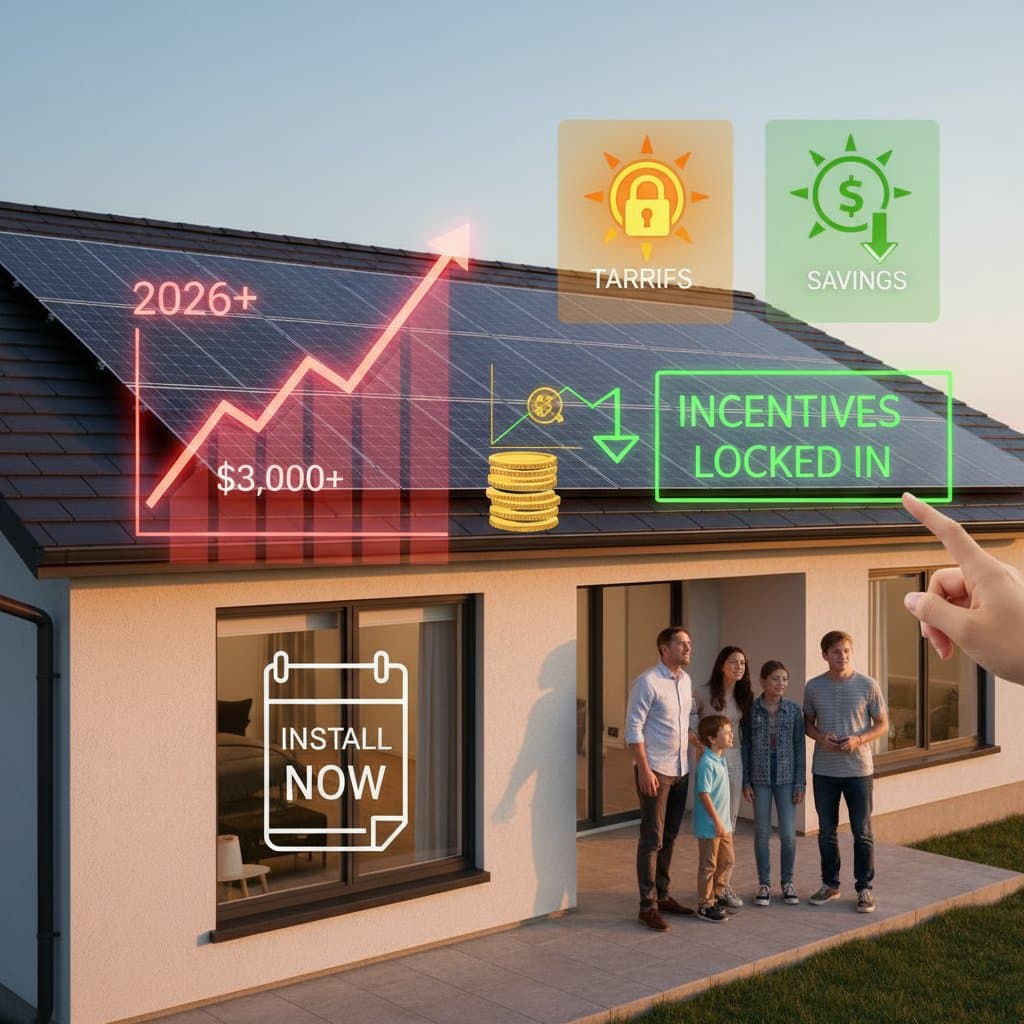
Understanding the 2026 Solar Tariffs and Their Impact on Panel Prices
Prospective solar adopters increasingly discuss potential import tariffs on panels and their implications for project budgets. These concerns hold validity. Anticipated trade policies will elevate the expense of imported solar modules, which constitute a significant portion of installations nationwide. For homeowners evaluating solar options, the core dilemma emerges: proceed with installation promptly or delay and encounter elevated costs.
The Mechanism Behind Tariffs and Solar Pricing
The majority of solar panels deployed in the United States originate from manufacturing facilities in Asia. A tariff functions as a tax imposed on these imports at the point of entry. When tariff rates increase, manufacturers and distributors typically transfer the additional expense to installers, who subsequently revise customer quotations. Even a modest percentage hike can elevate the overall project expenditure by thousands of dollars.
Consider a standard 7 kW residential system priced at 2.80 dollars per watt for installation, yielding a total of approximately 19,600 dollars. A 15 percent tariff-induced rise in panel costs could push the figure to about 22,500 dollars. Such an adjustment might extend the payback period by one to two years, depending on local energy rates and incentives.
The Fundamentals of Solar Energy Production and Value
Solar panels harness sunlight to generate electricity via layers of silicon semiconductors. Photons from the sun impact the panel surface, dislodging electrons that flow through an internal circuit to produce direct current. An inverter then transforms this direct current into alternating current suitable for household appliances. Panel efficiency, combined with roof exposure to sunlight, directly influences annual energy output.
In a typical Philadelphia residence, a 7 kW system generates around 9,100 kilowatt-hours annually. With an average electricity rate of 18 cents per kilowatt-hour, this production offsets approximately 1,640 dollars in utility bills each year. Across a decade, cumulative savings reach about 16,000 dollars, excluding adjustments for escalating rates or evolving incentives.
Tariffs, Domestic Production, and Market Dynamics
Proponents of tariffs maintain that increased import expenses foster growth in domestic manufacturing. Expanded local production promises job creation and more resilient supply chains. However, implementation presents challenges related to timing. Establishing new factories demands considerable duration, and initial supply constraints may drive interim price escalations. Installers could experience extended procurement periods or restricted availability during this phase.
Homeowners thus benefit from strategic planning in the near term. Postponing decisions risks higher expenditures for equivalent systems. Initiating projects now secures prevailing rates and available incentives.
Key Factors in Solar Project Economics
Several elements shape the financial viability of solar installations:
- System scale and roof characteristics, including slope, direction, and obstructions from shade
- Local utility pricing, which quantifies the worth of offset kilowatt-hours
- Available rebates and credits, such as municipal programs and the federal investment tax credit
- Component selections, encompassing panel manufacturers, inverter models, and optional battery integration
Engaging a certified installer enables precise roof modeling and tailored cost projections. Soliciting estimates from several reputable firms provides comprehensive insights into anticipated expenses.
Immediate Steps for Homeowners
- Arrange a professional site evaluation. An expert assesses roof dimensions, predicts energy yield, and calculates prospective savings.
- Secure current incentives. Federal tax credits and regional rebates remain applicable to systems initiated prior to policy shifts.
- Review financing alternatives. Options like fixed-interest solar loans or power purchase agreements establish stable monthly obligations, insulating against future equipment price fluctuations.
- Monitor regulatory developments. Consult trusted energy publications and initiatives like Philly Goes Solar for timely information on tariffs and support programs.
Ensuring Long-Term System Performance
Solar panels demand minimal maintenance, limited to periodic surface cleaning and yearly professional reviews. Digital monitoring tools notify owners of efficiency declines, frequently attributable to vegetation growth or inverter malfunctions. Panels typically include 25-year performance guarantees, whereas inverters endure 10 to 15 years under normal conditions. Timely component replacements sustain optimal generation and preserve economic benefits well beyond the initial setup.
Frequently Asked Questions
Will tariffs render solar installations unaffordable?
Incentives and diverse financing mechanisms continue to mitigate elevated equipment expenses, preserving accessibility for many households.
Is it advisable to delay installation until domestic production reduces prices?
Scaling local manufacturing requires extended periods, potentially resulting in short-term cost premiums for those who wait.
Do tariffs impact the quality of solar panels?
Tariffs affect pricing exclusively; panel reliability hinges on the producer's adherence to industry standards and independent certifications.