
Hidden Impacts of 2026 Solar Tariffs on Your Costs
Homeowners increasingly hear discussions about new solar tariffs and question their implications for personal budgets. This subject appears complex at first glance, but its effects reach anyone considering solar panel installation in the coming years. Tariffs raise the price of imported solar equipment, which influences overall installation costs and project schedules. The positive aspect lies in proactive planning, which maintains solar affordability amid evolving market regulations.
Why Tariffs Matter to Homeowners
Solar panels typically incorporate components produced across multiple countries before final assembly and sale in the United States. Tariffs imposed on imported solar cells or modules prompt suppliers to elevate prices to offset these additional expenses. Installers subsequently transfer a portion of that elevation to customers. For example, a 10 percent tariff on imported modules can increase the total installed price of a standard home system by approximately 2 to 4 percent, varying with local labor rates and balance-of-system expenses.
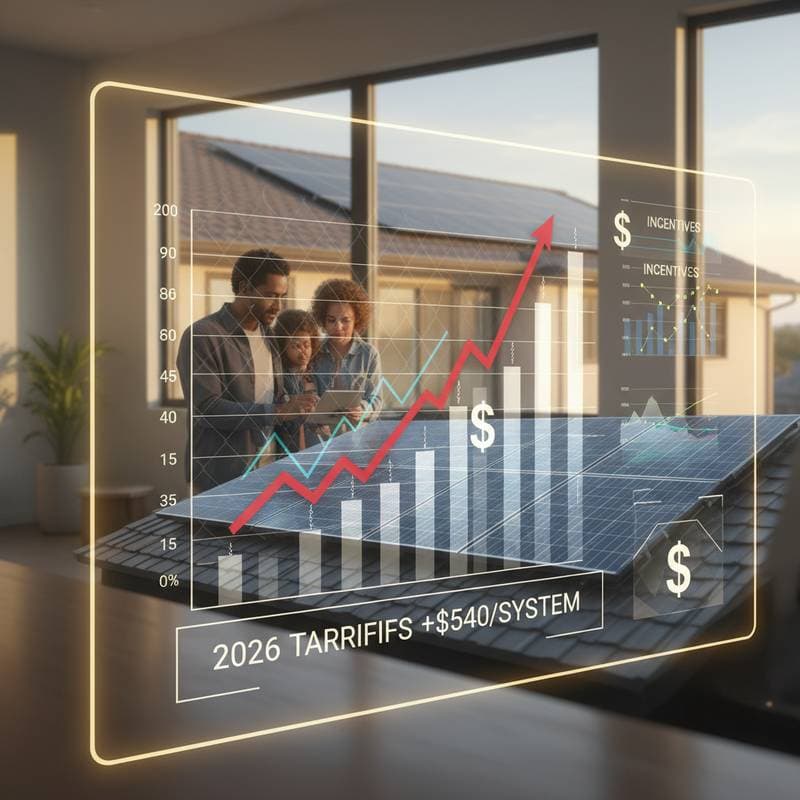
Consider a 7-kilowatt system that typically costs $18,000 before incentives. A 3 percent increase due to tariffs adds about $540 to the initial price. This amount might seem modest, yet it extends the payback period by several months and alters the return on investment. Grasping these figures enables better preparation and informed timing for installation.
How Tariffs Influence the Solar Supply Chain
Tariffs extend their reach beyond panels to include inverters, racking systems, and wiring components. Manufacturers frequently shift production or sourcing locations to evade peak duties, which generates temporary supply constraints. Distributors often accumulate stock prior to tariff implementation, resulting in price fluctuations tied to inventory availability.
Expansion of domestic manufacturing occurs as imports lose competitiveness, although new facilities require time to achieve full capacity. During this adjustment phase, installers encounter elevated equipment prices or reduced options. Such conditions can postpone project initiation or accelerate quote expiration. Maintaining regular dialogue with installers regarding product availability and lead times helps avoid unexpected delays.
Cost and Incentive Balancing
Although tariffs elevate equipment expenses, various incentive programs counteract these rises. Federal tax credits, local rebates, and renewable energy certificates deliver substantial value. For a homeowner qualifying for a 30 percent tax credit on a system, a modest tariff-induced increase frequently falls within the credit's coverage. In the case of an $18,000 system with a $540 tariff addition, the total qualifies for a credit of about $5,562. The net price after the credit drops to roughly $12,978, reducing the tariff's effective impact to under 2 percent of the final expenditure.
In regions with robust net metering policies, each kilowatt-hour produced offsets retail electricity rates. This consistent revenue stream surpasses transient tariff influences. Homeowners benefit from evaluating costs and incentives together through current quotes.
How to Prepare for Changing Prices
Homeowners possess multiple strategies to address tariff uncertainties.
- Obtain multiple quotes promptly. Secure at least three proposals prior to full tariff integration into pricing. Request installers to detail equipment brands and underlying cost assumptions.
- Examine contract timing provisions. Certain contracts fix pricing upon permit submission. Others permit adjustments for tariff-driven equipment cost increases. Confirm all terms prior to commitment.
- Monitor local inventory levels. Installers with existing panel stockpiles often provide superior pricing compared to those awaiting fresh deliveries.
- Explore smaller or phased installations. Initiate with a primary array and expand later should costs rise briefly.
- Assess efficiency enhancements. Upgrades such as improved insulation, smart thermostats, or duct sealing reduce energy demands, thereby decreasing required solar capacity.
Long-Term Market Effects
Tariffs encourage the industry to prioritize domestic production, potentially leading to price stabilization in the future. As additional factories commence operations, supply chains simplify, and transportation expenses decline. These developments may realign or even reduce prices over time. The interim transition proves challenging, yet it frequently drives advancements in module construction and inverter performance.
Battery storage costs may also adjust. Some batteries utilize supply networks overlapping with solar panels. Tariffs on imported cells could prompt minor modifications. Battery manufacturers typically counter by enhancing energy density, providing greater capacity at comparable prices.
Hidden Benefits Beyond the Price Tag
Despite potential slight initial cost increases from tariffs, solar installations yield enduring advantages that transcend policy fluctuations. Each kilowatt-hour generated mitigates emissions and lessens reliance on fossil fuels. Properties equipped with solar systems sell more quickly and command premium prices relative to similar non-solar homes. Integration of smart inverters and monitoring enhances outage resilience, particularly when combined with batteries.
Next Steps and Ongoing Maintenance
For those intending to adopt solar soon, collect utility bills and schedule a site assessment. Direct installers to simulate pricing under both current conditions and tariff scenarios to inform decision-making. Following installation, sustain optimal performance through seasonal panel cleaning and monthly monitoring reviews. Most systems experience output degradation below 0.5 percent annually, making routine maintenance highly rewarding.
Incorporate everyday practices to amplify solar effectiveness. Operate appliances during peak sunlight hours, install LED lighting, and maintain clean air filters. These measures extend the utility of generated power and optimize every kilowatt-hour.
FAQ
1. Will tariffs make solar unaffordable?
No. Tariffs may elevate costs modestly, but incentives and electricity savings render solar a viable investment.
2. How much could tariffs add to a typical system?
Anticipate 2 to 4 percent additions to total installed costs, based on supplier pricing strategies.