
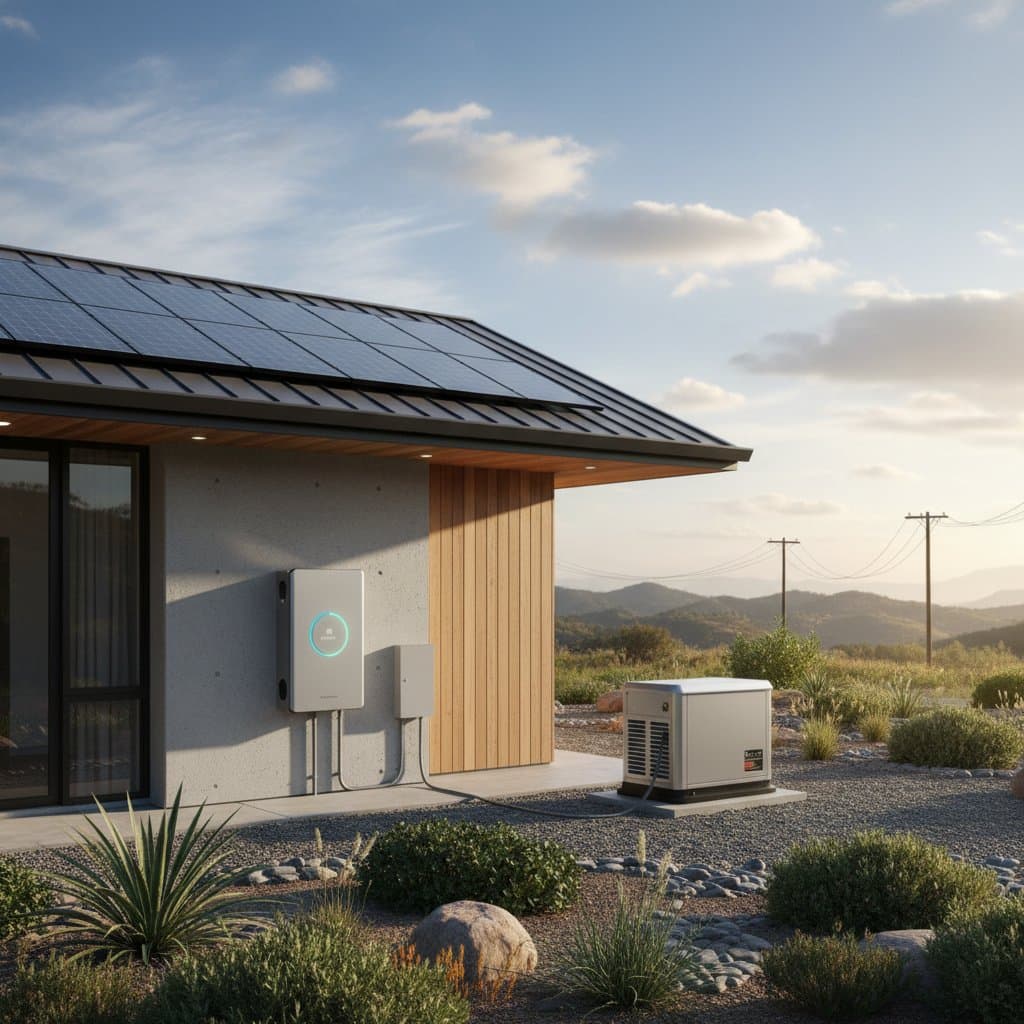
Survive 2026 Blackouts with Solar-Generator Hybrids
Power outages occur more frequently and without warning. Homeowners who previously considered backup power a luxury now seek dependable options to sustain lighting, refrigeration, and connectivity. Individuals often evaluate solar panels, batteries, and conventional fuel generators separately, only to discover that integration yields the most robust configuration. A solar-generator hybrid delivers uninterrupted electricity during prolonged grid disruptions while minimizing routine energy expenditures.
Understanding the Challenges of Blackouts
Grid failures initiate immediate risks, such as food spoilage, loss of climate control, and severed communications. Brief interruptions inconvenience daily routines, whereas extended ones raise significant safety issues. Portable generators suffice for short durations but rely on fuel supplies that may become unavailable amid widespread crises. Solar panels generate power solely during daylight without storage, limiting their standalone utility. Hybrid systems address these limitations by combining solar generation, battery reserves, and on-demand generator support.
The Mechanics of Solar-Generator Hybrids
These systems comprise three core components: solar panels, an inverter paired with battery storage, and a generator. Sunlight energizes the panels to produce direct current electricity during daylight hours. The inverter transforms this into alternating current suitable for household appliances. Surplus energy replenishes the battery reserves. If net metering applies, excess power returns to the grid.
Upon grid failure, an automatic transfer switch isolates the home setup. Batteries discharge first to meet demands. When reserves fall below a predefined threshold, the generator engages automatically. It operates briefly to restore battery levels before idling again. This process cycles as required until grid restoration, yielding efficient, low-noise backup capable of indefinite operation with adequate sunlight and fuel.
Designing the Right System Size
An average midsize residence consumes approximately 30 kilowatt-hours daily. A 7-kilowatt solar array generates around 9,000 kilowatt-hours annually, assuming 1,300 kilowatt-hours per kilowatt of capacity, which translates to about 25 kilowatt-hours per day on average. Complement this with a 10-kilowatt-hour battery and a 9-kilowatt generator to address both routine and crisis requirements.
Solar panels manage primary daytime consumption. Batteries cover nighttime needs. The generator intervenes during inclement weather or extended low-light conditions. Effective design achieves equilibrium: an oversized generator consumes unnecessary fuel, while an undersized battery curtails operational duration. Professional installers analyze utility bills, local solar irradiance, and roof specifications to simulate performance and select optimal components.
Investment Costs and Return Analysis
Solar-generator hybrids demand higher initial outlay than solar installations alone, yet they confer unmatched reliability absent in grid-dependent setups. A 7-kilowatt solar array typically costs $15,000 prior to rebates. Incorporating a 10-kilowatt-hour battery and standby generator elevates the total to approximately $28,000.
At a utility rate of 15 cents per kilowatt-hour, annual solar output offsets about $1,350 in bills. Federal tax credits and state programs often reduce costs by 30 percent, netting around $20,000. The solar elements recoup investment in roughly 10 years via savings, with the generator serving as blackout protection. Expect 25 years or more of service life with diligent upkeep.
Key Advantages in Outage Scenarios
Hybrid configurations prioritize essential circuits, powering refrigerators, medical devices, sump pumps, and network equipment seamlessly. Automatic activation eliminates the need for manual intervention, even if occupants are absent. Inverter-based generators operate more quietly than legacy units, minimizing neighborhood disturbances. Advanced models enable remote oversight of fuel, production, and charge levels via mobile applications.
Upkeep and System Durability
Solar panels demand little maintenance; periodic cleaning and inspections suffice. Batteries endure 10 to 15 years based on usage cycles. Generators require regular oil changes, filter swaps, and load tests. Monthly 10-minute runs ensure readiness; many controllers automate this protocol.
Broader Environmental and Neighborhood Effects
By limiting generator runtime, hybrids curb emissions significantly. Solar energy dominates supply, with fuel support reserved for necessities. This approach eases grid strain during high-demand periods, bolstering regional stability. Homeowners frequently inspire community adoption, fostering microgrids that enhance collective durability.
Advanced Controls and Oversight
Contemporary hybrids feature smart energy orchestration. Controllers allocate resources optimally—solar for immediate use, batteries for storage, generators for replenishment. They sequence loads by priority, defer secondary devices, and log metrics for analysis. Users refine settings to accommodate evolving habits or weather variations, preparing for integrations like vehicle charging or utility programs.
Steps to Implementation and Sustained Performance
Initiate with a professional site evaluation to assess roof pitch, obstructions, and equipment locations. Examine 12 months of billing data for precise load profiling. Inquire about warranties: solar panels often span 25 years, generators 5 to 10. Document all maintenance and conduct biannual tests. This diligence guarantees functionality during unforeseen disruptions.
FAQ
1. What occurs if the generator depletes its fuel mid-outage?
Batteries sustain power until exhaustion. Essential circuits then remain active pending refueling or solar recharge.
2. Is propane a viable alternative to gasoline or diesel?
Yes. Propane offers cleaner combustion and extended shelf life, ideal for standby applications.
3. Do hybrid systems require unique permits?
Local regulations typically mandate electrical and mechanical approvals. Certified installers manage submissions and compliance checks.