
Agrivoltaics: Solar Panels That Pay Farmers Twice
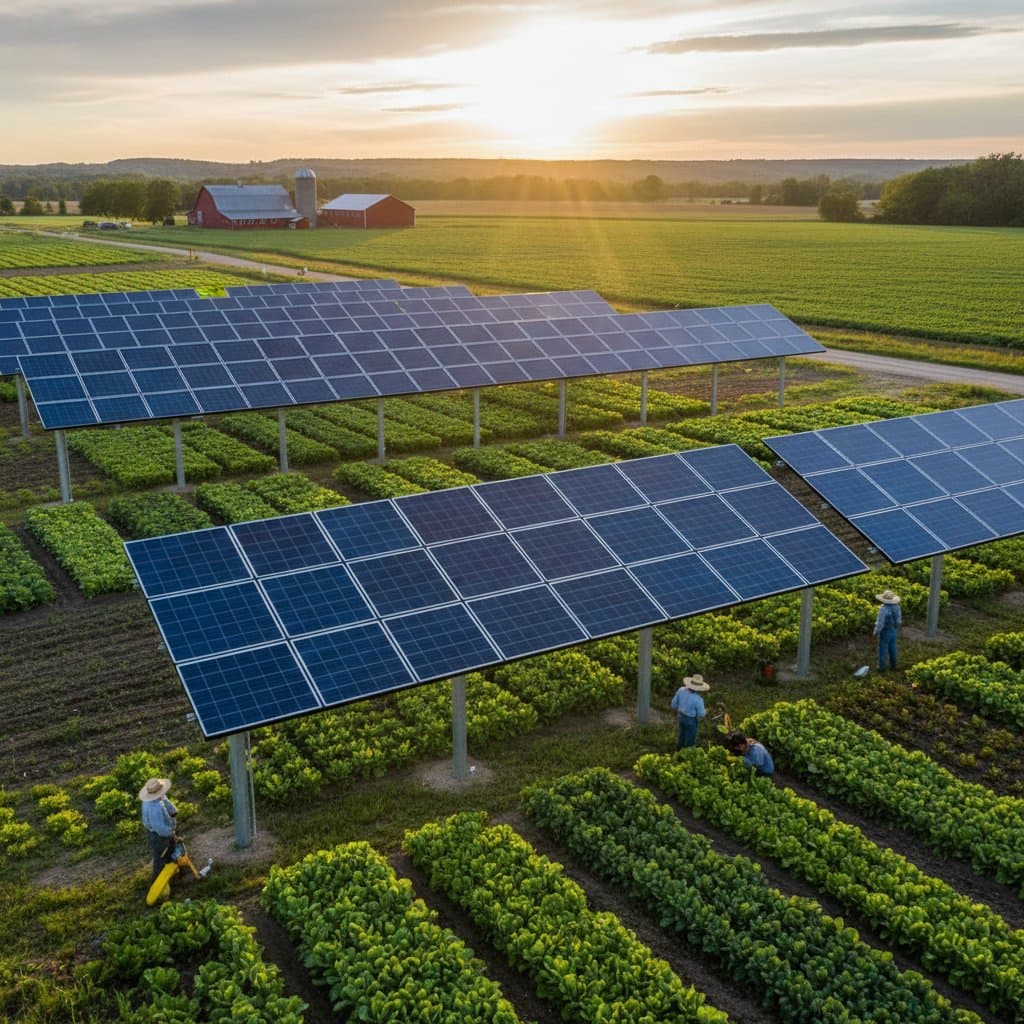
In rural America, agricultural fields increasingly accommodate both crop rows and solar panels angled toward the sun. This innovative practice, known as agrivoltaics or dual-use solar, permits the simultaneous production of food and renewable energy on the same terrain. Such systems safeguard farming legacies while expanding clean energy infrastructure to bolster local utilities and regional economies.
Farmers confront volatile weather patterns, fluctuating crop prices, and escalating energy expenses. Agrivoltaics mitigates these uncertainties by enabling one acre to yield both agricultural produce and electricity, thereby establishing dual income sources from identical land.
Understanding Agrivoltaics
Agrivoltaics merges agriculture with photovoltaics, the technology behind solar power generation. Unlike conventional solar installations that displace farmland, dual-use configurations maintain productive soil. Panels mount at elevated heights or with increased spacing to permit sunlight penetration to underlying vegetation, while the partial shading minimizes water evaporation and shields plants from excessive heat.
Effective implementation demands meticulous planning. Engineers evaluate site-specific factors, including soil composition, crop varieties, and sunlight patterns, prior to deployment. They fine-tune panel angles, inter-row distances, and mounting elevations to align with operational requirements, optimizing energy output without compromising plant development.
Reasons Farmers Adopt Dual-Use Systems
The practical advantages drive adoption among farmers navigating tight profit margins. Rising costs for energy, fertilizers, and variable harvests erode earnings. Leasing portions of land to solar providers or installing personal arrays delivers reliable revenue from electricity sales or generation offsets, all while preserving crop cultivation.
Principal drivers encompass:
- Reliable revenue: Long-term solar agreements provide stable payments spanning 20 to 30 years.
- Energy cost savings: On-site generation powers irrigation pumps and machinery, lowering utility bills.
- Land preservation: Active farming use discourages shifts to non-agricultural purposes.
- Enhanced climate adaptation: Shading preserves soil moisture, aiding crops through droughts.
Dr. Karen Miles, an agricultural engineer at Penn State Extension, observes, “When managed correctly, dual-use solar can increase a farm’s total productivity per acre while protecting its long-term viability.”
Operational Mechanics of Agrivoltaic Systems
Agrivoltaic setups incorporate integrated elements for seamless function:
- Elevated mounting frameworks: Panels position 6 to 12 feet above ground, accommodating crop stature and equipment passage.
- Variable angle adjustments: Tilts modify seasonally to maximize crop light exposure during key growth phases.
- Automated irrigation with soil monitors: Sensors track moisture levels and activate targeted water delivery.
- Integrated inverters and oversight tools: These connect arrays to farm operations or grids, facilitating secure energy distribution.
All configurations adhere to electrical standards. Grounding, cabling, and surge protection mirror conventional solar protocols. Licensed electricians inspect every junction before activation. Operators must refrain from altering inverters or wiring independently.
Suitable Crops and Power Generation
Crop selection influences success under panels. Shade-tolerant options like leafy greens, berries, and tubers often excel, gaining from moderated light. Taller row crops such as corn necessitate broader gaps or higher elevations. Field trials demonstrate that vegetables including lettuce, tomatoes, and peppers achieve comparable or superior yields in shaded conditions versus open exposure.
Power yields align with standard solar performance, modestly adjusted for spacing. This compromise offsets through sustained crop earnings and decreased irrigation needs from reduced evaporation.
Environmental Advantages
Agrivoltaics advances ecological objectives alongside productivity. Notable benefits include:
- Minimized soil erosion: Shading sustains ground cover, curbing sediment loss.
- Decreased water usage: Lower soil temperatures slow evaporation.
- Enhanced biodiversity: Diverse plantings and pollinator habitats flourish amid rows.
- Reduced emissions: On-farm energy offsets fossil fuel reliance, with excess power supporting grids.
These effects support conservation initiatives and eligibility for grants or carbon offset schemes.
Prioritizing Safety and Code Compliance
Safety underpins every solar deployment. Farmers distinguish permissible self-maintenance from professional obligations.
Permissible operator activities:
- Inspecting panels for accumulated debris or soiling.
- Trimming nearby foliage with non-conductive implements.
- Reviewing performance data via monitoring interfaces.
Exclusive professional responsibilities:
- Handling wiring, enclosures, and earthing.
- Erecting arrays, configuring inverters, and linking to grids.
- Conducting voltage checks, installing breakers, or replacing components.
- Performing yearly electrical audits or connector integrity tests.
Report any visible damage to a licensed solar electrician without delay. Systems must conform to the National Electrical Code (NEC) and jurisdiction-specific permits overseen by the Authority Having Jurisdiction (AHJ).
Addressing Structural and Fire Risks
Solar arrays impose additional stresses on fields. Mounting frameworks withstand winds and snow loads while ensuring access for farm vehicles. Faulty foundations risk structural failure or hazards.
Fire hazards remain minimal yet require vigilance. Compromised wiring may spark amid dry brush. Authorities advise 10-foot clear zones around installations and vehicle-accessible routes. Insurers often mandate verified inspection logs for policy validity.
Financial Models for Dual-Use Solar
Economic feasibility hinges on site costs, rebates, and configurations. Viable approaches include:
- Land leasing: Developers manage installation and operations, compensating owners with fixed annual fees.
- Partnerships: Farmers share ownership and energy proceeds.
- Independent installations: Self-funded systems prioritize on-site consumption to cut bills.
Models differ in upkeep duties and fiscal impacts. Engage renewable energy legal and financial specialists prior to agreements. Projects typically access identical incentives as traditional solar developments.
Navigating Local Regulations and Zoning
Regulations differ by locality. Certain areas view agrivoltaics as farming activity; others as energy infrastructure. Approvals may span agricultural and utility agencies.
Pennsylvania’s pilot initiatives expedite dual-use permits on arable land, fostering progress without endangering soil resources. Farmers verify district policies early to sidestep preservation conflicts.
Case Study: Mid-Atlantic Berry Operation
A Mid-Atlantic berry farm collaborated with a solar firm for a three-acre dual-use installation. Panels elevated to eight feet with 15-foot separations allowed blueberries and strawberries to thrive in dappled light, matching prior outputs. The site now feeds power to the grid and supports refrigeration and watering systems.
The proprietor states, “Our land now works twice as hard without losing its character. The panels protect our crops from heat stress, and the income keeps the farm stable.”
This initiative serves as a blueprint for nearby operations pursuing energy diversification.
Routine Maintenance Protocols
Dual-use systems demand consistent care akin to standard solar. Essential procedures involve:
- Washing panels using gentle brushes or moderate water pressure.
- Verifying mounting hardware for secure fastening.
- Examining cables for wear from pests or elements.
- Recalibrating monitoring devices yearly.
Licensed professionals conduct all electrical reviews. Maintain detailed records of upkeep and audits to uphold warranties and coverage.
Assessing Enduring Benefits
Agrivoltaics bolsters land durability beyond short-term gains. Shaded profiles preserve humus and hydration. Plants endure heat extremes more effectively. Cumulative effects may elevate overall site productivity.
Economically, these systems steady revenues over generations. Solar contributions offer consistency amid crop fluctuations, enabling sustained investments in infrastructure, soil health, and legacy planning.
Dispelling Frequent Concerns
Landowners sometimes fear sunlight obstruction or yield declines. Empirical research indicates most crops adapt to partial cover, with shading occasionally improving quality by alleviating stress.
Access limitations for equipment represent another worry. Contemporary elevations and spacings accommodate standard machinery, including tractors and harvesters. Collaborative design between specialists and operators resolves operational hurdles.
Steps to Implement Dual-Use Solar
Agrivoltaics requires tailored strategies per property. Prospective adopters conduct:
- Site evaluations: Analyze soil, topography, and hydrology.
- Regulatory consultations: Verify zoning and approvals with the AHJ.
- Vendor comparisons: Solicit bids on designs, funding, and guarantees.
- Expert involvement: Engage extension services, engineers, and electricians.
- Upkeep planning: Schedule checks and plant control.
These measures secure safety, adherence, and viability.
Guidance for Prospective Adopters
Begin by auditing energy demands and field configurations. Seek installers versed in farm-integrated projects for comprehensive assessments covering loads, shadows, and soils.
Confirm installer credentials, including active licenses, compliance proofs, and client portfolios. Professionals manage approvals, AHJ coordination, and grid ties.
Agrivoltaics charts a harmonious course, sustaining farm output while advancing renewable objectives. Rigorous preparation, standards compliance, and expert guidance enable landowners to derive dual value from their acres.