
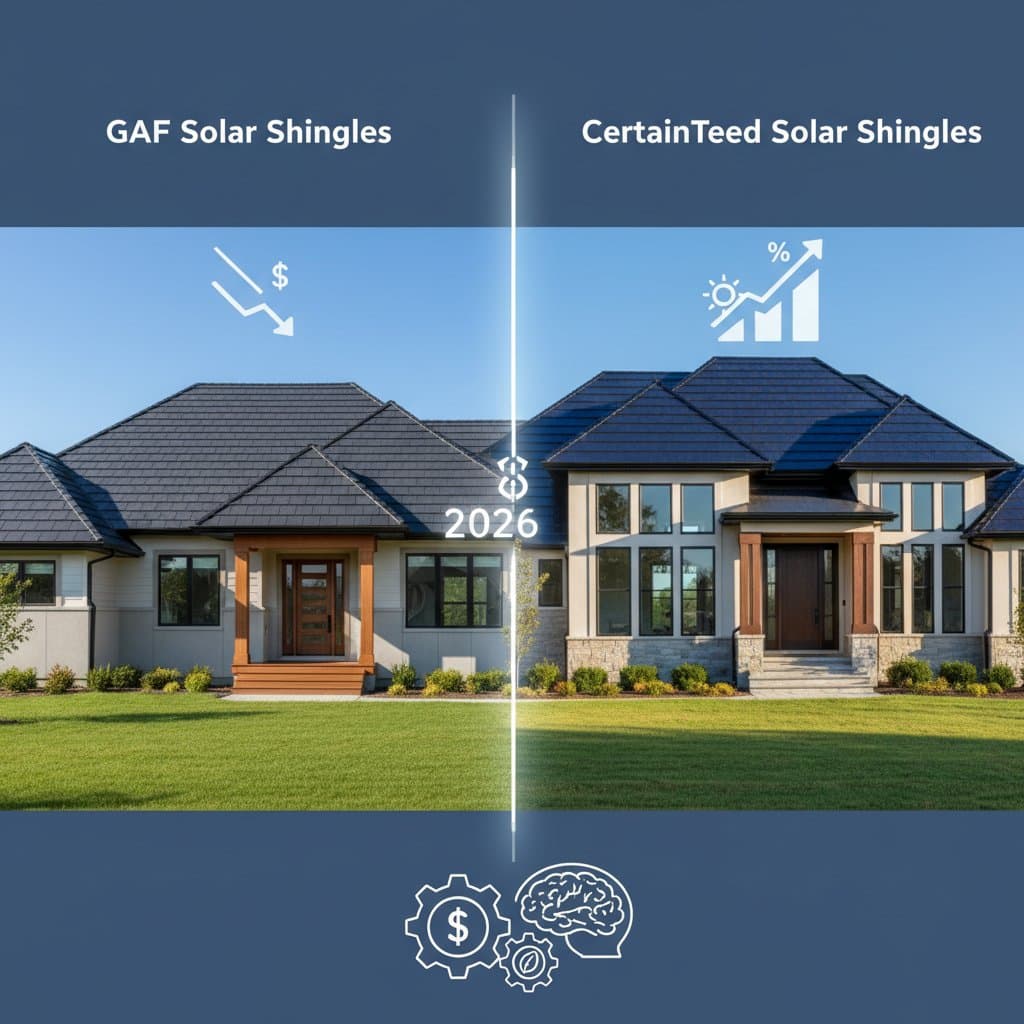
Introduction to Solar Shingles
Solar shingles represent an innovative fusion of photovoltaic technology and traditional roofing materials. These products enable homeowners to generate clean energy while maintaining a durable roof. As solar adoption grows, brands like GAF and CertainTeed lead the market with distinct approaches to design and performance.
This breakdown focuses on projected costs for 2026, drawing from current trends in material prices, labor rates, and technological advancements. Homeowners in regions like Philadelphia benefit from these options due to abundant incentives and suitable climates. Understanding the nuances helps in selecting a system that balances upfront investment with long-term value.
Understanding Solar Shingles Basics
Solar shingles function similarly to conventional solar panels but integrate seamlessly into the roofline. Each shingle contains embedded solar cells that capture sunlight and convert it into electricity for home use. Installation replaces or supplements existing roofing, minimizing visual disruption.
Key considerations include energy output per square foot, durability against weather, and compatibility with standard roofing structures. Both GAF and CertainTeed shingles meet rigorous building codes, but their formulations differ in weight, flexibility, and integration ease. These factors influence total project costs and system reliability over time.
GAF Timberline Solar: Overview and Features
GAF introduces Timberline Solar as an accessible entry into integrated solar roofing. This product emphasizes simplicity for installers, featuring nailable designs that align with asphalt shingle workflows. Each shingle produces approximately 45 watts of power, with a sleek black appearance that blends into most home aesthetics.
The system's modular nature allows partial roof coverage, ideal for homes with varied orientations or shading issues. GAF partners with certified contractors to ensure proper setup, reducing errors and warranty claims. Durability ratings include resistance to hail and high winds, making it suitable for diverse climates.
Efficiency stands at 18 to 20 percent, competitive for integrated solutions. GAF provides a 25-year warranty on power output, guaranteeing at least 80 percent performance after that period. This reliability appeals to budget-conscious homeowners seeking straightforward solar integration.
CertainTeed Solaris: Premium Performance Profile
CertainTeed's Solaris shingles target efficiency-focused consumers with advanced cell technology. These shingles achieve up to 22 percent efficiency, generating around 72 watts per unit. The design incorporates impact-resistant materials, enhancing longevity in harsh environments.
Integration requires specialized installers due to the product's rigidity and electrical complexity. CertainTeed emphasizes aesthetic versatility, offering colors that match luxury roofing lines. This positions Solaris as a high-end choice for upscale residences or commercial applications.
Warranties extend to 30 years for both product and performance, with guarantees maintaining 85 percent output. CertainTeed's focus on innovation includes better heat dissipation, which sustains efficiency in warmer conditions. These attributes justify the premium pricing for users prioritizing maximum energy harvest.
2026 Cost Breakdown: GAF Versus CertainTeed
Projected costs for 2026 reflect declining solar component prices and stable labor rates. For a typical 2,000-square-foot roof, GAF Timberline Solar installation ranges from $40,000 to $60,000 before incentives. This includes materials at $15 to $20 per square foot and labor at $10,000 to $15,000.
CertainTeed Solaris commands higher figures, with total costs between $55,000 and $80,000. Material expenses reach $25 to $35 per square foot, driven by superior cells and protective layers. Labor adds $15,000 to $20,000, accounting for specialized handling and system testing.
Incentives like the federal solar tax credit, expected to remain at 30 percent, reduce net outlays significantly. State rebates in Pennsylvania could further lower effective costs by 10 to 20 percent. Homeowners should factor in roof preparation, such as underlayment upgrades, adding $5,000 to $10,000 across both brands.
| Aspect | GAF Timberline Solar | CertainTeed Solaris |
|---|---|---|
| Material Cost per Sq Ft | $15–$20 | $25–$35 |
| Total Installation (2,000 sq ft) | $40,000–$60,000 | $55,000–$80,000 |
| After 30% Tax Credit | $28,000–$42,000 | $38,500–$56,000 |
Efficiency and Performance Comparison
Efficiency determines how much electricity a system produces from available sunlight. GAF's 18 to 20 percent rating suits moderate energy needs, yielding 8 to 10 kilowatt-hours daily for a full roof array. CertainTeed's 22 percent edge translates to 12 to 14 kilowatt-hours, ideal for high-consumption households.
Performance extends to real-world conditions. GAF excels in low-light scenarios due to its broad-spectrum cell response, maintaining output during cloudy days common in the Northeast. CertainTeed outperforms in peak sun, with faster energy ramp-up that maximizes summer production.
Both systems integrate with home batteries for storage, enhancing self-consumption. Monitoring apps from each brand provide real-time data, aiding in usage optimization. Over 25 years, CertainTeed's higher efficiency could generate 20 to 30 percent more lifetime energy.
Payback Period and Long-Term Savings
Payback period calculates when energy savings offset initial costs. For GAF, expect 7 to 10 years, assuming average electricity rates of $0.15 per kilowatt-hour. Annual savings reach $2,000 to $3,000, accelerating return through net metering credits.
CertainTeed's payback extends to 9 to 12 years, but higher output yields $3,000 to $4,500 in yearly savings. This results in greater cumulative benefits, potentially $100,000 over the system's life versus GAF's $80,000. Rising utility rates amplify these figures, favoring efficient systems.
Additional savings stem from roof replacement avoidance, as solar shingles last 25 to 30 years. Insurance discounts for energy-efficient homes add 5 to 10 percent to financial advantages. Evaluate personal usage patterns to project accurate returns.
Installation Considerations and Warranties
Installation demands professional expertise to maximize safety and efficiency. GAF's user-friendly design shortens timelines to 3 to 5 days for a standard roof, minimizing disruption. CertainTeed projects require 5 to 7 days, with emphasis on precise alignment for optimal wiring.
Permitting and inspections follow local codes, typically adding 2 to 4 weeks to planning. Both brands offer financing partnerships, easing upfront payments through low-interest loans. Post-installation, maintenance involves annual inspections costing $200 to $500.
Warranties provide peace of mind. GAF covers workmanship for 10 years alongside product guarantees. CertainTeed extends comprehensive protection, including labor reimbursement. Review terms carefully to understand coverage for natural disasters or manufacturing defects.
Selecting the Right Solar Shingle for Your Home
Choose based on budget, energy demands, and roof specifications. GAF suits families seeking affordable entry with solid performance. CertainTeed fits those willing to invest for superior efficiency and aesthetics.
Assess your roof's pitch, age, and orientation using online calculators. Consult certified installers for site-specific quotes. Consider future expansions, as both systems allow additions.
Realizing Energy Independence Through Solar Roofing
Adopting solar shingles advances toward sustainable living while cutting costs. GAF offers practical affordability; CertainTeed delivers premium returns. Weigh these options against your goals to secure a roof that powers and protects for decades.
This investment not only reduces reliance on grid power but also enhances property value by 4 to 6 percent. Start by evaluating your current energy bills to gauge potential impact. With informed choices, solar roofing transforms homes into efficient, resilient assets.