
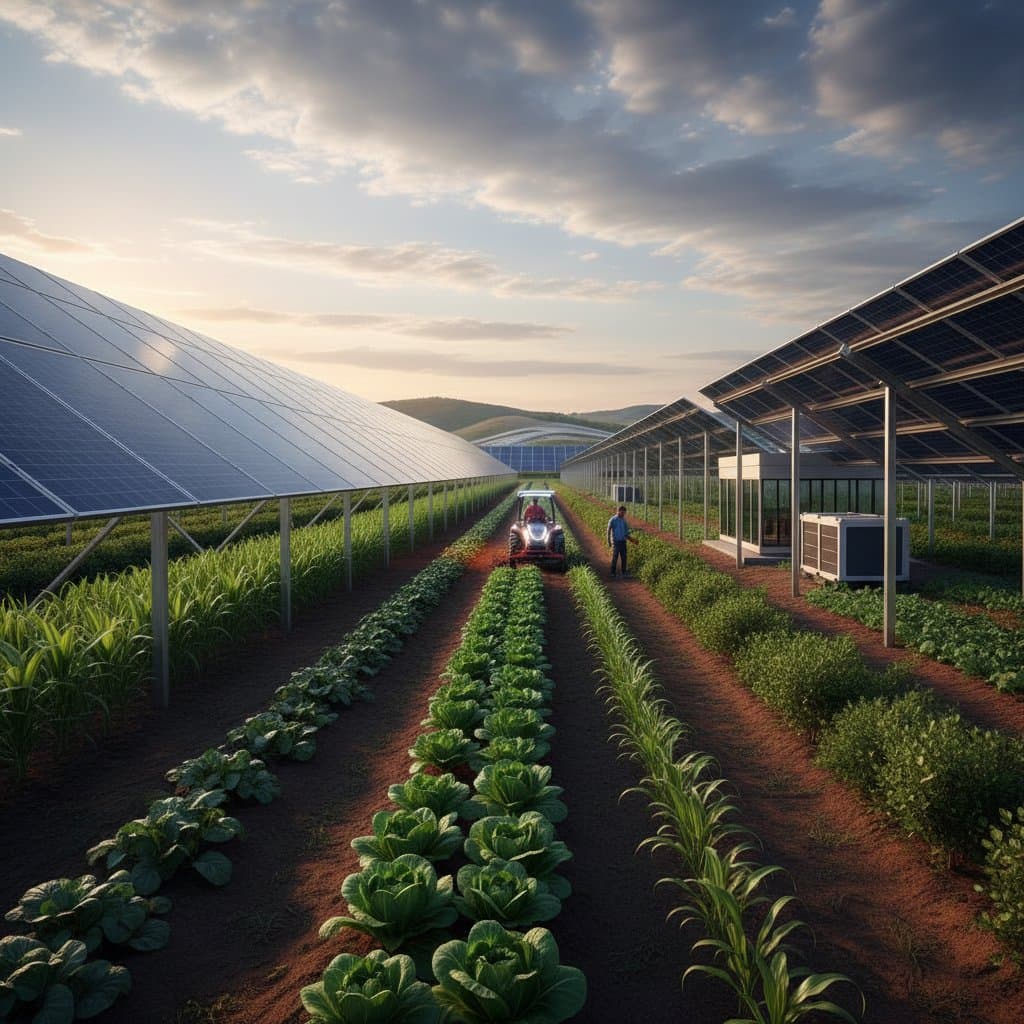
The Emergence of Agrivoltaics: Integrating Solar Power with Farming
Farmers and solar developers traditionally vied for the same valuable resource: open, flat land suitable for both crop cultivation and photovoltaic installations. Choosing one use often meant sacrificing the other. Agrivoltaics resolves this tension by enabling simultaneous agricultural and energy production on shared terrain. This innovative approach safeguards food security, expands renewable energy output, and fortifies rural economic foundations.
Redefining Land Use Through Agrivoltaics
Agrivoltaics, sometimes referred to as dual-use solar, positions photovoltaic panels at sufficient height and spacing to permit the growth of crops, grazing of livestock, or establishment of pollinator habitats beneath them. Rather than fully obscuring sunlight with ground-mounted arrays, this method distributes light resources between vegetation and energy-capturing technology.
Such installations reshape perceptions of energy infrastructure in agricultural settings. They maintain farmland productivity instead of converting it solely to solar use. Local economies benefit as farms continue operations alongside the generation and distribution of clean electricity, either for on-site needs or grid sales.
Essential Safety Measures for Farm-Based Solar Systems
Agrivoltaic setups operate as hybrid environments, combining electrical infrastructure with active farming activities. Adherence to safety protocols remains paramount from design through operation. Licensed electricians handle all wiring, grounding, and utility interconnections, ensuring compliance with permits and professional standards.
Key risks include direct contact with live components from faulty insulation or inadequate grounding, hazards from tripping over structural elements or conduits, water ingress into electrical enclosures, and potential animal interactions with cabling or mounts. Prior to installation, verify that designs align with the National Electrical Code and local regulations. This involves appropriate conductor sizing, ground-fault circuit interrupter protection for moisture-exposed areas, and clear labeling of all disconnect switches. Select only certified components rated for outdoor durability.
Mechanics of Agrivoltaic Installations
Conventional solar farms employ fixed panels optimized for peak sunlight capture. In contrast, agrivoltaic configurations modify panel angles and elevations to accommodate both crop needs and energy efficiency. Options include sun-tracking mounts or stationary frames raised several feet off the ground to facilitate equipment passage and plant access.
Effective designs consider specific factors such as the light requirements of selected crops, soil hydration demands, clearance for machinery, erosion prevention through proper drainage, and provisions for livestock including secure fencing. When implemented thoughtfully, these systems foster robust plant development and reliable power generation. The partial shade from panels minimizes soil evaporation, maintaining cooler, more consistent moisture levels. In response, the vegetation below helps regulate panel temperatures, potentially enhancing overall electrical performance.
Impacts on Crop Yields and Solar Production
Crop responses to partial shading vary by type. Shade-tolerant options like leafy greens, root crops, and pasture grasses typically thrive, often matching or exceeding expectations. High-light-demanding fruits or vegetables might experience yield dips unless panel arrangements provide ample spacing.
Research from agricultural universities indicates that agrivoltaic fields sustain 70 to 90 percent of conventional crop productivity alongside substantial solar energy yields. Outcomes hinge on configuration details, panel orientation, and regional weather patterns. In arid climates, the shading effect can mitigate heat stress, sometimes leading to higher-than-normal harvests.
For operations incorporating livestock, prioritize secure fencing and electrical grounding. Bond metal posts to the system ground to prevent conduction risks from impacts. Restrict animal access to sensitive areas like inverters and junction boxes to avoid disruptions.
Implementation Guide for Interested Farmers
-
Assess site suitability. Survey parcels with reliable sunlight exposure, low tree interference, and effective drainage. Steer clear of flood zones or wetlands.
-
Consult a certified solar specialist promptly. They evaluate technical viability, grid connection possibilities, and regulatory obligations.
-
Seek advice from agricultural extension services. Experts suggest shade-adapted varieties and cultivation techniques.
-
Review local zoning and permits. Solar projects may fall under industrial classifications, requiring distinct approvals from typical farm activities.
-
Develop a maintenance strategy. Plan for yearly vegetation control, panel washing, and electrical inspections.
Address any electrical issues immediately, such as frequent breaker trips, insulation degradation, or voltage anomalies near fences. Shut down the system and summon a qualified electrician; avoid handling live circuits personally.
Financial and Ecological Advantages
Agrivoltaic ventures diversify farm revenue through steady income from energy sales or reduced utility costs. Generated power supports essential operations like irrigation, cooling units, and machinery. Excess electricity qualifies for grid buyback programs via net metering.
Ecologically, these systems yield multiple gains: diminished greenhouse gas emissions from solar generation, better soil hydration under shaded canopies, enriched habitats for pollinators amid panel rows, and decreased erosion from persistent vegetative cover.
This synergy bolsters community resilience by supplying local food and reliable energy. Pairing with energy storage solutions further ensures power availability during disruptions, enhancing overall sustainability.
Ensuring Structural and Electrical Standards
Agrivoltaic designs demand rigorous compliance with building and electrical codes. Elevated panels face amplified wind forces, necessitating robust, tested mounting systems. Bury conduits to specified depths and shield them from agricultural equipment.
Electricians employ calibrated tools to secure connections per manufacturer guidelines. Route all wiring through approved outdoor-rated conduits, and seal junction boxes against moisture. Prominently label circuits with voltage details, origins, and emergency shutoff points for responder safety.
Incorporate ground-fault and arc-fault interrupters on vulnerable circuits to halt current during anomalies, averting shocks or fires.
Fostering Partnerships Between Farmers and Solar Experts
Success in agrivoltaics relies on mutual understanding between agricultural operators and technical teams. Installers accommodate farming rhythms, while farmers observe electrical safety limits. Open dialogue minimizes risks to equipment, wiring, and harvests.
Emerging training initiatives equip participants with skills for safe upkeep, including non-conductive panel cleaning methods and secure mowing practices under arrays. These competencies cut operational interruptions and incident rates.
Sustaining Performance Through Regular Upkeep
Periodic evaluations safeguard agricultural output and energy reliability. Inspect for loose or oxidized connections, fractured panel surfaces, compromised wiring protection, pest intrusions or foundation instability, and overgrowth impeding inverter ventilation.
Engage professionals for advanced diagnostics like thermal imaging and insulation tests to uncover latent problems. Farmers manage routine visual assessments but refrain from accessing sealed units or active elements.
Advancing Rural Sustainability with Integrated Solar
Agrivoltaics marks a forward-thinking adaptation in agricultural energy management, preserving land productivity while harnessing solar potential. Begin exploration with modest test areas backed by expert guidance. As technology advances and costs moderate, these dual-purpose systems promise broader adoption and enduring benefits.