
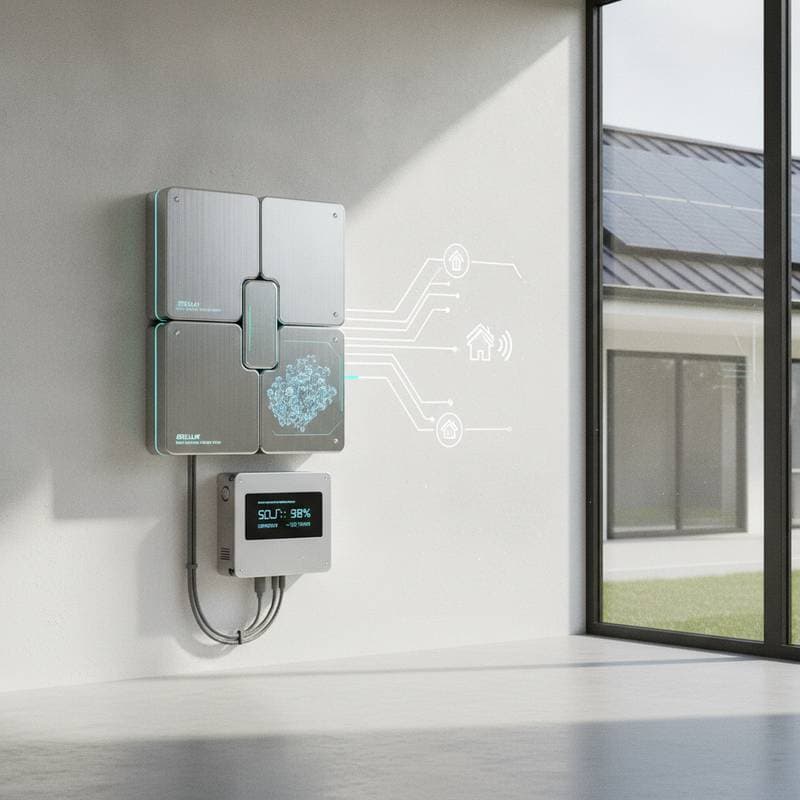
Solid-State Batteries Poised to Transform Home Energy
Many homeowners now encounter mentions of solid-state batteries and ask how these units differ from existing lithium-ion options. The key distinctions include safer operation, extended service life, and greater energy density. For residential storage these traits deliver more capacity within a smaller footprint along with improved reliability.
Why Solid-State Batteries Matter
Homeowners choose solar panels to reduce utility costs and increase energy independence. Storage performance determines how much of that generated power remains available after sunset or during outages. Conventional lithium-ion batteries contain liquid electrolytes that degrade under heat or frequent cycling. Solid-state models substitute a ceramic or polymer layer that conducts ions with greater stability.
A solid electrolyte lowers fire risk, accepts higher voltages, and supports faster charging. It also permits denser cell packing. In a household setting a compact cabinet can therefore hold enough energy to operate essential loads through the night.
How the Technology Works
Ions travel between electrodes during charge and discharge cycles. In solid-state designs a thin solid layer replaces the flammable liquid found in older cells while maintaining structural integrity. This layer blocks dendrite formation that can create internal short circuits.
Prototypes demonstrate cycle lives exceeding ten thousand full charge-discharge events. Daily solar cycling at that rate projects more than twenty years of service with limited capacity decline.
Expected Performance and Capacity
Energy density serves as the primary performance metric. Typical lithium-ion home batteries deliver 200 to 250 watt-hours per kilogram. Early solid-state versions approach 400 watt-hours per kilogram. A current 10 kilowatt-hour unit weighing roughly 200 pounds could therefore shrink by half or double its stored energy within the same space.
Round-trip efficiency also rises. Lithium-ion systems reach about 92 percent. Solid-state targets range from 95 to 98 percent. On an annual solar yield of 9,000 kilowatt-hours the improvement preserves approximately 270 kilowatt-hours that would otherwise be lost.
Cost and Payback
Production costs remain the chief barrier. Precise manufacturing requirements keep early prices between 1,200 and 1,500 dollars per kilowatt-hour versus 600 to 800 dollars for lithium-ion. Scaling supply chains should reduce these figures over time.
Longer life can offset the initial premium. A solid-state battery that lasts twice as long produces comparable lifetime cost per kilowatt-hour stored while requiring fewer replacements.
Incentives and Support
Federal and state rebates for storage paired with solar depend on capacity and grid features rather than chemistry. Solid-state units qualify once certified. Utilities may additionally grant time-of-use credits for daytime charging and evening discharge.
Installation and Integration
Physical installation follows the same sequence used for current systems: site assessment, electrical design, permitting, and interconnection. Hybrid inverters already accommodate multiple battery types through firmware or minor adjustments. Lower heat output can reduce required clearances and simplify placement in garages or utility rooms.
Maintenance and Longevity
Absence of liquid electrolyte removes leak and swelling concerns. Annual capacity loss stays below one percent, so a 13 kilowatt-hour unit retains more than 11.5 kilowatt-hours after fifteen years. Routine tasks focus on firmware checks, cable inspection, and monitoring-app connectivity.
Lifestyle Benefits and Use Cases
Solid-state storage supports reliable backup for lighting, refrigeration, and climate control. It also enables load shifting that moves midday solar output to evening peak-rate periods. Pairing the battery with a heat pump water heater or induction range advances an all-electric household that lowers fossil-fuel dependence.
Preparing for Adoption
- Compile twelve months of utility data to identify usage patterns.
- Verify solar-array output and available wall space near the service panel.
- Request professional shade and load analysis.
- Obtain installer quotes that compare both chemistries under identical assumptions.
- Confirm current rebate eligibility with the utility and state programs.
Monitoring Market Developments
Major manufacturers continue to adapt automotive solid-state research for stationary use. Homes already equipped with compatible inverters and wiring will integrate new units first. Continued equipment checks and timely software updates preserve performance and resale value while supporting a more stable local grid.