
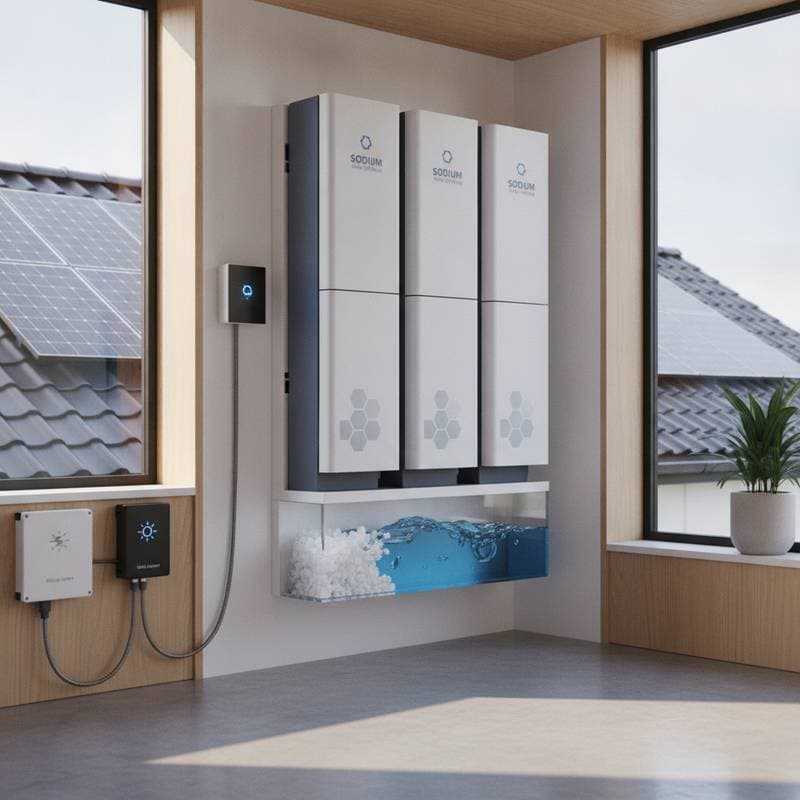
Sodium Ion Batteries Reduce Home Storage Costs
Many homeowners exploring solar energy find that storing power for nighttime use or outages adds complexity and expense. Lithium ion batteries have dominated the market. Their costs and sourcing issues often slow adoption. Sodium ion batteries now offer a practical shift with lower prices, simpler material sourcing, and safer performance.
Benefits for Homeowners
Solar panels generate clean power yet cannot supply energy after dark without storage. Sodium provides an abundant alternative to lithium. It comes from common salt compounds rather than scarce regional deposits. This abundance supports steadier pricing and broader availability.
Sodium ion systems store less energy per unit of weight than lithium options. Production costs can fall 30 to 40 percent once manufacturing scales. A typical 10 kilowatt hour lithium battery setup might total 10,000 dollars installed. A comparable sodium ion unit could reach 6,000 to 7,000 dollars. The resulting cost per kilowatt hour drops from roughly 1,000 dollars to about 650 dollars.
Operating Principles
Sodium ion batteries move charged ions between electrodes during charge and discharge cycles. Sodium ions travel through an electrolyte to layered oxide cathodes and hard carbon anodes. Recent electrode improvements support more than 3,000 cycles with reliable output.
Larger sodium ions move more slowly than lithium ions. This reduces energy density slightly. Round trip efficiency still reaches 85 to 90 percent. The difference remains minor for most household loads.
Cost Breakdown and Comparisons
Lower storage costs shorten payback periods by one or two years when paired with solar panels. Homeowners can also install larger battery banks to capture more daytime generation. Sodium chemistry maintains capacity in cold temperatures better than lithium. It requires less added heating or cooling in northern climates.
Safety and Sustainability Factors
Sodium ion batteries operate at lower voltage and resist thermal runaway more effectively. Many designs avoid nickel and cobalt entirely. This reduces toxic material handling at end of life. Extraction from salt deposits creates a smaller environmental footprint than lithium mining and simplifies recycling.
Connecting to Solar Installations
These batteries integrate through standard hybrid inverters already used with solar arrays. They accept deeper discharge cycles while preserving longevity. A 10 kilowatt hour sodium unit can deliver about 9 kilowatt hours of usable capacity. Installers apply familiar safety standards and communication protocols.
Available Incentives and Outlook
Federal tax credits and state rebates apply equally to certified sodium ion systems. Utilities may also offer demand response payments. As production expands, both lithium and sodium options will appear together in installer quotes.
Recommended Actions for Homeowners
- Request site assessments that compare lithium and sodium quotes side by side.
- Choose hybrid inverters rated for multiple battery chemistries.
- Combine storage with efficient appliances to maximize self consumption.
- Review annual utility data to size batteries for peak rate savings.
- Schedule annual inspections to confirm ventilation and firmware status.
Operate batteries between 20 and 90 percent charge to reach 10 to 15 years of service. Proper placement in dry, ventilated spaces further extends performance.
Moving Toward Energy Independence
Affordable sodium ion storage lowers barriers for households seeking reliable backup and greater solar utilization. Early adoption helps expand supply chains and encourages continued product refinement.