
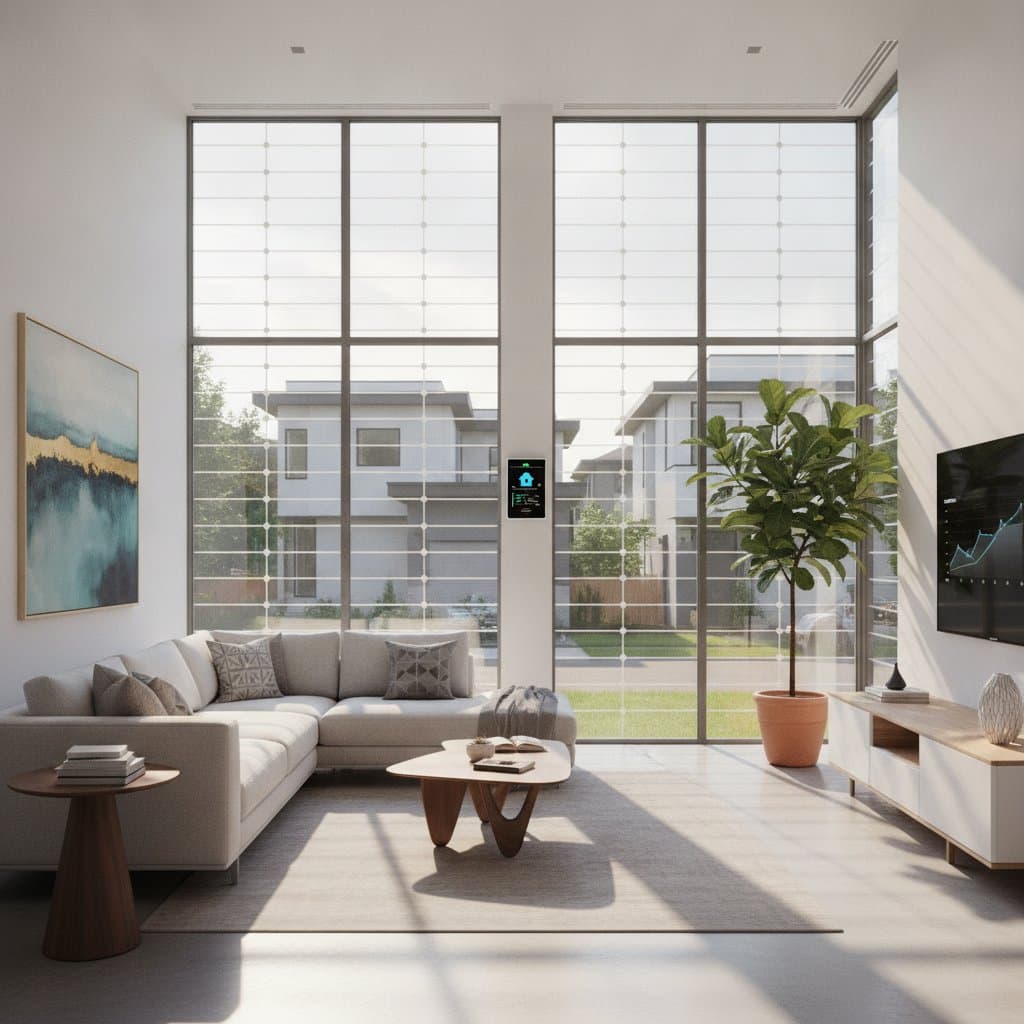
Smart Glass Solar Windows Generate Home Power
Homeowners now have access to solar technology that converts window glass into an electricity source. Smart glass solar windows integrate transparent photovoltaic layers with standard glazing. This approach allows buildings to produce power while preserving natural light and outward views. The systems suit properties where roof space is limited or where design restrictions prevent traditional panel installation.
Core Functions of Smart Solar Glass
Transparent solar cells capture ultraviolet and infrared wavelengths while permitting visible light to pass. Conductive coatings on the glass surface channel the resulting direct current through concealed busbars to a junction box. From there the current reaches a microinverter or battery system. The same glass unit continues to serve as a weather barrier and thermal insulator.
Because the photovoltaic function is built into the glazing, the windows function as building-integrated photovoltaics. They require no additional roof penetrations and maintain the original appearance of the structure.
Electrical and Safety Requirements
Any connection to a home electrical system must follow National Electrical Code rules. Local authorities require permits and inspections before the windows tie into the grid. Homeowners must not attempt internal wiring changes or circuit modifications.
Watch for these warning signs that indicate a need for immediate professional attention:
- Flickering lights tied to changes in window output
- Inverter error messages or fault codes
- Unusual heat or discoloration around frames
- Breakers that trip on the solar circuit
If any sign appears, disconnect the system and contact a licensed electrician.
Technical Operation Details
Organic or perovskite materials form the active layers that absorb non-visible light. Sealants protect the layers from moisture. Low-voltage output travels to power optimizers that raise voltage for household use or battery charging. Separate low-current wiring controls optional tinting sensors that reduce glare and heat gain without affecting the photovoltaic circuit.
Advantages for Urban Properties
Philadelphia row homes and historic buildings often face barriers to roof-mounted arrays. Smart solar windows replace existing units without altering rooflines or facades. Practical benefits include:
- Visual consistency with neighboring structures
- Continued daylighting alongside power generation
- Ability to install in stages as budget allows
- Lower cooling loads from integrated tinting
These features support long-term energy savings and potential utility credits.
Installation and Upkeep Steps
Only certified installers should perform electrical integration, grounding, and load calculations. Homeowners can prepare by completing these tasks:
- Record exact window dimensions and solar exposure for each opening.
- Note nearby trees or structures that cast shade during peak hours.
- Verify that existing frames can support the added weight of laminated units.
- Retain copies of permits, inspection reports, and serial numbers.
Clean glass surfaces with non-abrasive solutions. Report any internal condensation to the manufacturer, because seal failure requires factory service.
Consulting a Professional Installer
A licensed solar contractor experienced with building-integrated systems can assess panel compatibility, estimate output per square foot, and outline storage or grid options. Most homes achieve the best results when smart windows supplement rather than replace roof panels. Proper planning and code compliance turn ordinary windows into reliable contributors to household power needs.