
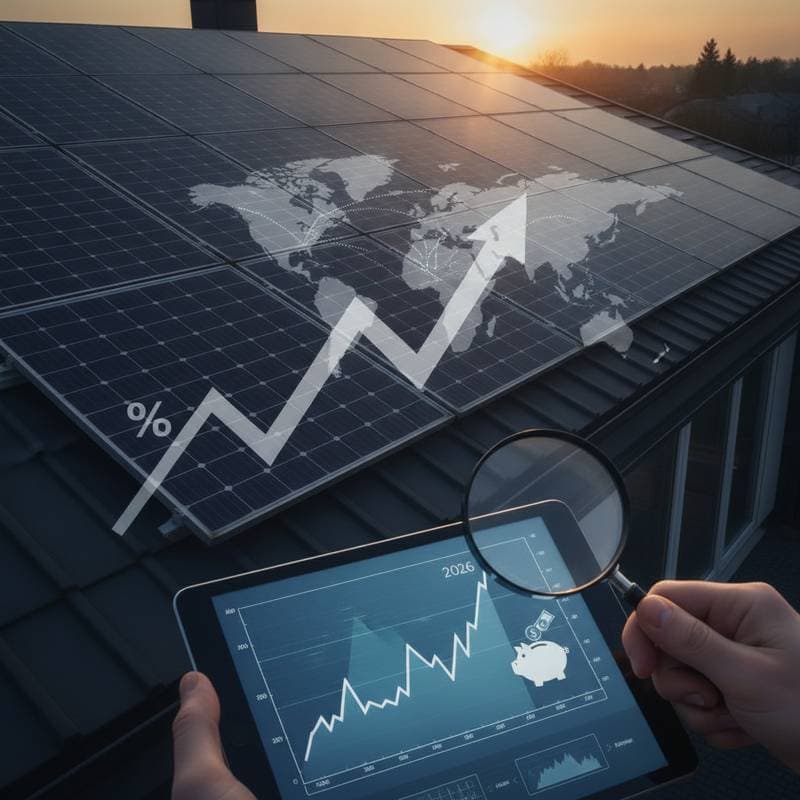
Projected 2026 Tariffs May Increase Solar Panel Costs by 40 Percent
Solar prices have declined steadily for years. This trend has encouraged more homeowners to adopt clean energy systems. Recent projections indicate that new import duties could reverse part of that progress by raising panel costs as much as 40 percent.
How Import Duties Influence Equipment Pricing
Tariffs function as taxes on goods brought into the country. Many residential solar panels arrive from overseas factories. Higher duties raise the cost to importers, and those increases move through distributors and installers to the final customer.
A typical 7 kilowatt residential system now averages about 3 dollars per watt installed. The project totals roughly 21,000 dollars before incentives. A 40 percent rise would push the same system near 29,400 dollars. The difference remains noticeable even after tax credits apply.
Current Sources of Residential Modules
Most modules installed in homes still come from Asian production facilities. Domestic factories have grown, yet imported panels continue to fill the majority of demand. Tariffs aim to shift more production onshore. New factories require time to reach full capacity, which can create temporary price pressure.
Installers depend on stable component costs when they prepare quotes months in advance. Sudden tariff changes create uncertainty. Distributors may purchase inventory early, which can lead to short term shortages and longer project timelines.
Technical Basics and Manufacturing Realities
Each panel contains silicon cells that turn sunlight into direct current electricity. Cells connect into arrays that feed an inverter converting power for household use. Production demands high purity silicon, specialized machinery, and controlled environments.
Lower cost regions have historically supplied the bulk of global volume. Tariffs interrupt that pattern and can elevate the price per watt until local output expands sufficiently.
Example Cost and Payback Calculations
A 7 kilowatt array in the Philadelphia region typically generates about 9,100 kilowatt hours each year. At an average rate of 15 cents per kilowatt hour, annual savings reach roughly 1,365 dollars.
A price increase from 3 dollars to 4 dollars and 20 cents per watt raises the gross cost from 21,000 dollars to 29,400 dollars. After the 30 percent federal credit the net investment becomes about 20,580 dollars. The simple payback period lengthens from approximately 15 years to more than 20 years under steady utility rates.
Available Incentives That Reduce Net Expense
Federal tax credits continue to lower the initial outlay. State and utility rebates or performance payments provide additional support. Net metering policies credit excess generation sent to the grid.
Philadelphia homeowners may also receive property tax relief on new solar installations. Combining these measures early helps offset higher equipment prices before they take effect.
Steps Installers Take to Limit Price Exposure
Many companies now source a larger share of panels from domestic plants. Others secure multi year supply agreements ahead of tariff implementation. Mixed equipment packages that combine imported and locally made components help balance cost changes.
Efficiency improvements such as faster installation methods and optimized system designs reduce labor expenses. These adjustments can partially counter hardware price increases.
Key Variables That Shape Final Pricing
Several factors will determine the actual impact:
- Scale of new domestic manufacturing capacity.
- Tariff treatment of related components such as inverters and racking.
- Future utility rate trends that affect annual savings.
- Short term demand surges before tariffs begin.
Homeowners who monitor these elements can make more informed timing decisions.
Recommended Actions for Homeowners
Request written quotes that lock pricing for a defined period. Confirm panel country of origin and warranty terms with each installer. Compare multiple bids to see how different companies plan for tariff risk.
Secure financing with fixed rates before costs rise. Once a project begins, verify that equipment is already purchased and protected by contract. Twice yearly panel cleaning and regular performance monitoring preserve output and long term value.
Preparing Systems Before Potential Price Changes
Homeowners who evaluate options and finalize contracts now can capture current pricing and available incentives. This approach shortens payback periods and protects projected savings even if equipment costs increase later.
FAQ
1. Will tariffs make all solar panels more expensive?
Most imported panels could increase in price, though domestic models may hold steadier depending on supply.
2. Can I avoid tariff costs by buying panels early?
Possibly. If you sign a contract before suppliers adjust pricing, you may secure current rates.
3. Are there U.S.-made panels that bypass tariffs?
Yes, several manufacturers produce modules domestically. Availability depends on demand and regional supply.
4. How can incentives offset higher costs?
Federal and state programs provide credits and rebates that directly reduce the upfront investment.