
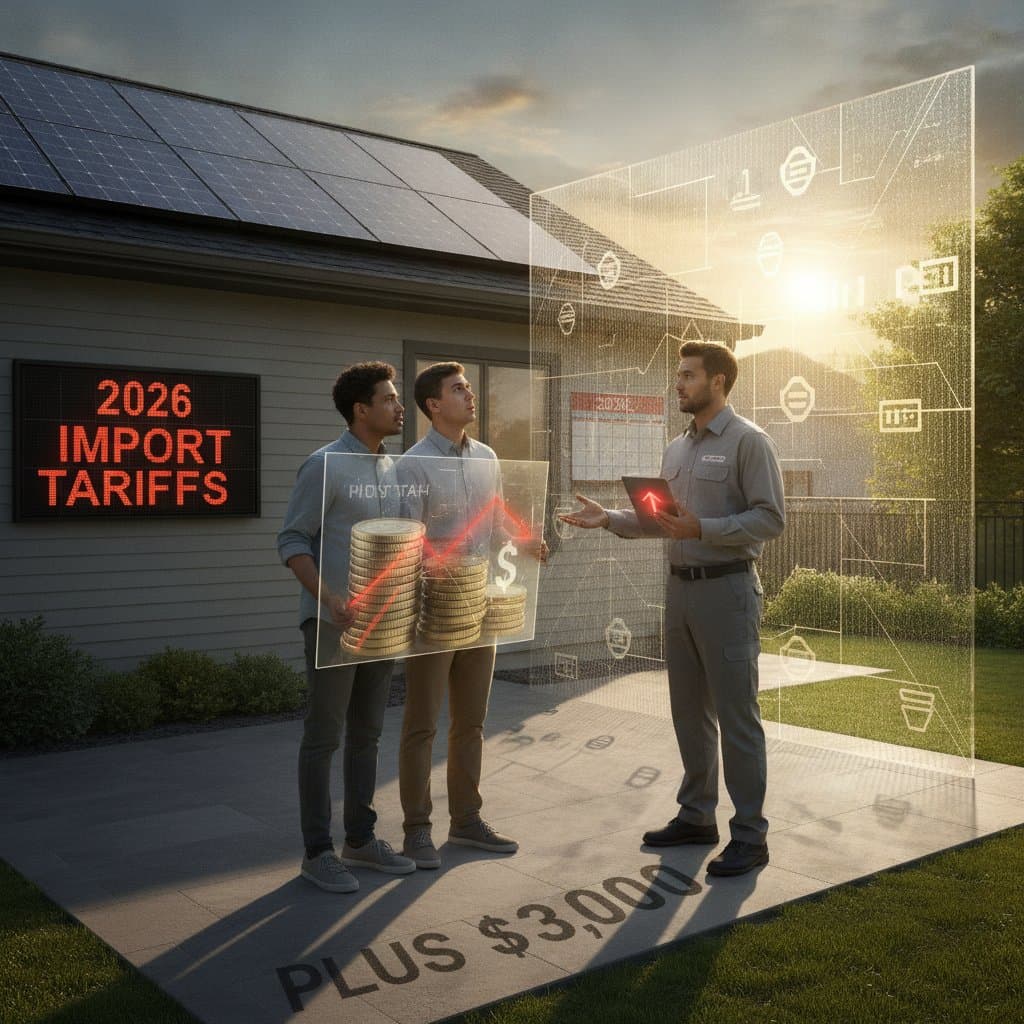
Installers Warn: 2026 Solar Tariffs Could Raise Costs
Homeowners often face uncertainty when deciding on solar installation. Shifting policies create questions about timing and expenses. Upcoming import tariffs represent one key factor that installers identify as a potential driver of higher equipment prices.
Impact of Import Tariffs on Equipment Pricing
Solar panels installed across the United States frequently incorporate imported cells or complete modules. Tariffs add fees to these imports and elevate final system prices. Installers project increases of 10 to 20 percent based on sourcing locations and supply adjustments.
A typical 7 kilowatt residential system could see an added cost of roughly 2400 dollars under a 15 percent rise. This change extends the time required to recover the initial investment through utility savings. Households may postpone projects when payback periods lengthen.
Supply Chain Adjustments and Market Effects
Tariffs affect manufacturers, distributors, and installation teams in sequence. Companies sometimes purchase inventory ahead of deadlines to maintain current pricing. Limited warehouse capacity and added storage expenses restrict this approach for many firms.
New domestic production facilities require several years to reach full output. Short term supply constraints may appear in high growth areas such as the Mid Atlantic region. Both residential and commercial projects face exposure to these shifts.
Projected Financial Returns for Philadelphia Homes
A 7 kilowatt system generates approximately 9100 kilowatt hours annually in the Philadelphia area under favorable conditions. At an average rate of 24 cents per kilowatt hour, annual offsets reach about 2180 dollars before fixed charges.
Systems priced at 16000 dollars after incentives recover costs in seven to eight years. A tariff driven increase to 18400 dollars extends recovery to roughly nine years. Panels maintain output for 25 years or longer with warranties that ensure at least 80 percent performance after two decades.
Steps to Secure Current Pricing
Homeowners can take several measures to limit exposure to future price changes.
- Obtain quotes from multiple installers using consistent assumptions on system size and equipment.
- Confirm whether contractors can commit to pre tariff pricing through early equipment purchases.
- Review available state and utility rebates that apply in the Philadelphia region.
- Evaluate loan structures or power purchase agreements that distribute payments across multiple years.
- Pair solar installation with efficiency measures such as insulation upgrades to reduce required system capacity.
Efficiency Measures That Improve System Value
Lower household consumption allows a smaller array to meet energy needs.
- Install LED lighting throughout living spaces.
- Apply weather sealing to doors and windows.
- Request a professional energy audit to identify major loss points.
- Shift large appliance use to daylight hours when production peaks.
These adjustments can cut daily usage by 10 to 20 percent and improve overall project economics.
Industry and Environmental Considerations
Tariffs support expanded domestic manufacturing capacity over time. Short term price pressure may reduce installation volume and associated local employment. Environmental gains from increased clean energy adoption could slow during the transition period.
Continued advances in module efficiency and inverter technology help offset cost pressures. Battery storage options also expand energy independence during outages. These developments sustain long term project viability despite tariff influences.
Ongoing System Care Requirements
Solar arrays require limited routine attention after installation. Panels benefit from cleaning once or twice each year. Inverter monitoring applications provide early alerts for performance changes. Component replacements such as inverters typically occur around the ten year mark under warranty coverage.
Next Actions for Homeowners
Gather utility statements from the previous twelve months. Contact three established installers to request detailed proposals. Compare equipment sourcing details, incentive assumptions, and production estimates side by side. Clear warranty terms and output projections support informed timing decisions.