
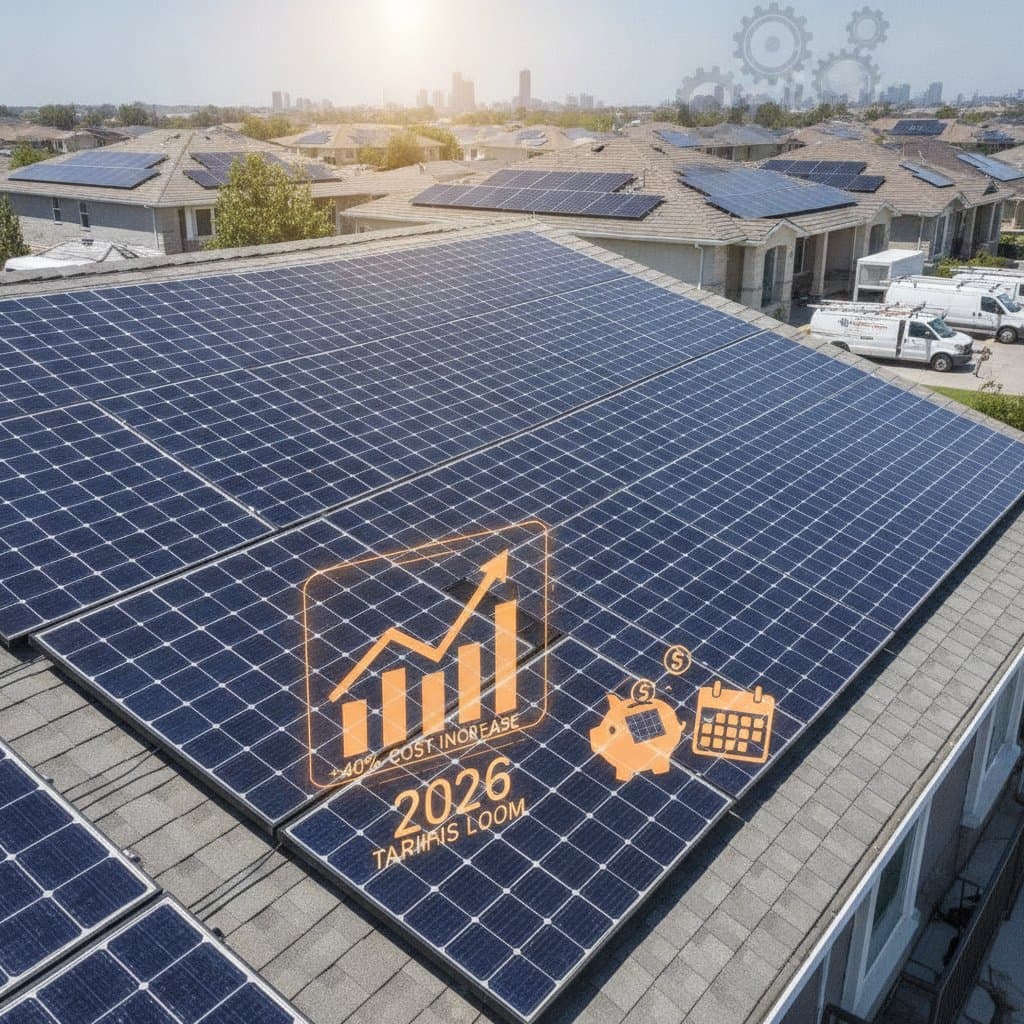
Prepare for 40% Solar Price Hike From 2026 Tariffs
Many homeowners wonder how upcoming tariffs will affect their solar plans. New import duties are expected to raise the cost of many solar panels and related equipment by as much as 40 percent. Understanding the reasons behind the increase and the steps available now supports informed decisions.
Why Solar Costs Are Set to Rise
Most residential solar panels installed in the United States rely on imported components. Tariffs applied to these imports aim to encourage domestic manufacturing, yet they also increase costs across the supply chain. When a tariff adds 40 percent to imported panel pricing, the effect reaches distributors, installers, and homeowners.
For example, a panel that costs 100 dollars before tariffs would rise to 140 dollars after a 40 percent import duty. Multiplied across dozens of panels, the difference becomes significant. A typical 7 kilowatt home system that once totaled 15,000 dollars before incentives could approach 20,000 dollars once the new duties take hold.
How Solar Works in Simple Terms
Solar panels convert sunlight into direct current electricity. An inverter changes that to alternating current for home use. When sunlight hits the silicon cells, electrons move across a junction and create current flow. Each kilowatt of installed panels produces roughly 1,300 kilowatt hours of electricity per year in a location with good sunlight like the Philadelphia area.
A 7 kilowatt system would yield about 9,100 kilowatt hours annually. If the utility rate averages 15 cents per kilowatt hour, that output offsets about 1,365 dollars in yearly electricity costs. Those savings remain steady even as utility prices climb, which is why early installation can lock in long term value.
Cost and Payback Scenarios
Two cases illustrate the difference.
Case One: Install before tariffs. A 7 kilowatt system costs 15,000 dollars. After a 30 percent federal tax credit, the net cost drops to 10,500 dollars. Annual savings of 1,365 dollars lead to a simple payback of about eight years.
Case Two: Install after tariffs. If equipment costs rise 40 percent, the same system could approach 20,000 dollars before incentives. After the tax credit, the net cost reaches 14,000 dollars. The payback stretches toward ten years.
Both cases still offer solid returns. Waiting, however, could mean paying thousands more for the same energy output. Acting sooner secures a lower equipment price, a shorter payback, and a faster path to free solar energy.
What Homeowners Can Do Now
- Request multiple quotes from licensed installers to compare equipment sources and pricing.
- Ask specifically about U.S. made panels that may avoid new tariffs and qualify for local incentives.
- Confirm permit timelines with local authorities, because approvals require several weeks.
- Review financing options such as low interest solar loans or leases that reduce upfront costs.
- Lock in a contract with an installer who will honor quoted pricing when the agreement is signed before tariff changes.
Long Term Maintenance and Value
Once installed, solar systems require little attention. Keep panels clear of debris and schedule an inspection every few years. Most modern panels degrade less than one percent each year and carry 25 year performance warranties. Monitoring software tracks production and alerts the owner if output drops unexpectedly. When panels eventually reach end of life, recycling programs reclaim valuable materials such as silicon, aluminum, and copper.
Solar continues to deliver value through reduced bills, cleaner energy, and higher home resale potential. Planning ahead for tariff driven cost changes ensures capture of those benefits at the best possible price.