
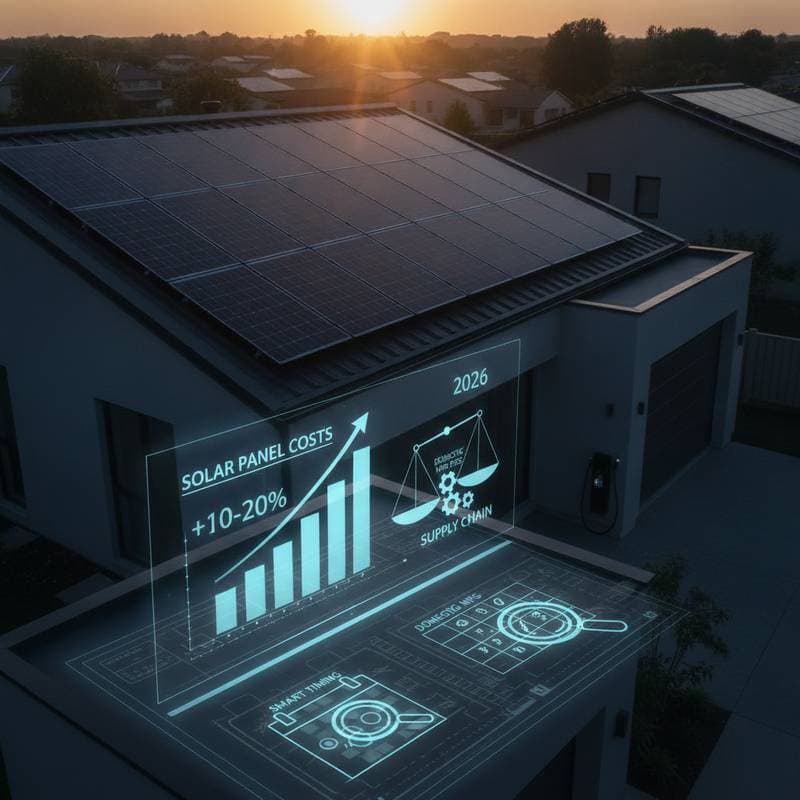
Why 2026 Solar Tariffs Could Increase Panel Prices
Solar energy offers homeowners a reliable path to lower utility bills and reduced carbon emissions. Upcoming trade policy changes may alter the cost structure of solar panels in meaningful ways. Many homeowners sense that future tariffs could increase prices, yet the underlying supply and cost mechanics remain unclear to most.
Understanding What Solar Tariffs Are
A tariff functions as a fee imposed on imported goods. In the solar sector these fees target panels, cells, and components manufactured overseas. The policy goal centers on shielding domestic producers from lower-priced imports. Importers pay the fee upon entry, and the added expense travels through distributors and installers to the final buyer.
Global supply chains underpin most solar panels. Materials often originate in multiple regions before final assembly. Any tariff applied at one stage can shift the delivered price of an entire system. Even modest per-watt adjustments alter project economics for both installers and homeowners.
Projected Effects of the 2026 Tariff Adjustments
The 2026 changes target the largest volume of imported modules, which currently arrive mainly from Asian manufacturers. Higher fees could raise landed panel costs by 10 to 20 percent. A residential system priced at 2.70 dollars per watt today might reach 2.95 to 3.10 dollars per watt after implementation.
For a typical 7 kW array the increase translates to roughly 1,750 to 2,800 dollars in added expense. Regional labor rates and installer pricing will produce variation, yet the direction of change remains consistent. Payback periods may lengthen modestly before utility savings restore the original timeline.
Mechanics of Tariff Application
Consider an imported panel priced at 0.30 dollars per watt at the factory. Shipping and insurance add 0.05 dollars. A 15 percent tariff on the imported value contributes another 0.045 dollars. The resulting landed cost reaches 0.395 dollars per watt before wholesaler and installer margins push the retail increase to 0.10 or 0.12 dollars per watt.
Anticipation of new fees can also tighten supply. Installers may accelerate purchases ahead of the effective date, creating short-term inventory pressure and earlier price movement.
Domestic Production Capacity
Tariffs aim to stimulate United States manufacturing and local employment. Current domestic output covers only a small share of national demand. Scaling factories requires time, investment, and trained workers. Until capacity expands fully, most installations will continue to rely on imported modules.
Even expanded domestic lines face higher labor, material, and energy expenses than overseas competitors. Incentives can narrow the gap, yet retail prices for American-made panels may remain elevated for several years.
Supply Chain Adjustments
Panels represent one element within a complete system. Inverters, racking, and batteries often contain imported content as well. When one component rises in price, installers may adjust margins on other items to remain competitive. This pressure can limit resources available for service improvements.
Some suppliers will reroute purchases to countries outside the tariff scope. The transition requires months and can produce temporary shortages. New sources must also complete testing and certification before they reach the market.
Homeowner Considerations
Several variables will determine final costs for residential projects. Installers holding pre-tariff inventory can offer current pricing for a limited window. Larger companies with locked supply contracts gain additional protection. The federal tax credit continues to offset a percentage of total system cost regardless of tariff levels.
Rising utility rates help preserve solar value even when equipment prices climb. A homeowner saving 1,200 dollars annually on electricity may see payback extend from eight to nine years, yet long-term savings stay intact.
Installer Strategies
Companies monitor policy developments and plan inventory builds before tariffs activate. Partnerships with emerging domestic producers are forming. Some installers promote modular designs that let homeowners add capacity later when pricing stabilizes.
Quality remains central. Panels carrying 25-year performance warranties that degrade at 0.5 percent per year deliver superior lifetime output compared with lower-cost alternatives that lose efficiency faster.
Incentive and Financing Options
Federal and state incentives provide the strongest buffer against higher equipment costs. Tax credits reduce net out-of-pocket expense directly. Solar loans and leases spread remaining payments over time, so a modest system price increase adds only a few dollars monthly while electricity savings continue to exceed that amount.
Steps Homeowners Can Take Now
- Obtain multiple quotes before tariff implementation to compare designs and current pricing.
- Inquire about available pre-tariff inventory that may secure existing rates.
- Review loan terms to lock fixed rates ahead of any cost changes.
- Verify product warranties cover at least 20 years on performance and 10 years on workmanship.
- Confirm eligibility for state incentive programs before funding windows close.
Planning Your Solar Investment
Proactive timing and informed product selection allow homeowners to manage tariff effects while capturing long-term energy savings. Monitoring policy updates supports decisions about system expansion or storage additions in future years.