
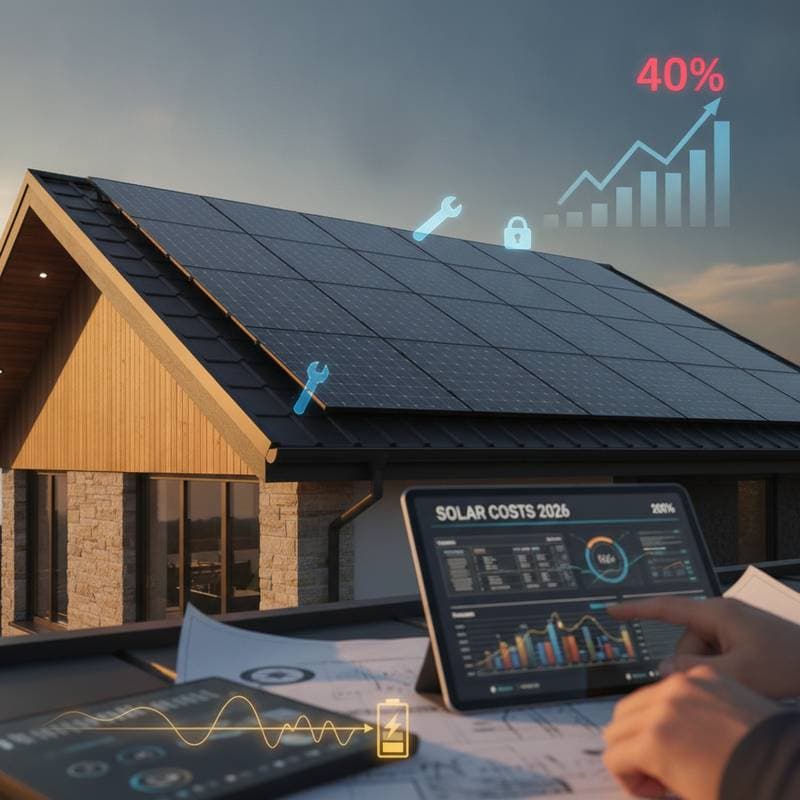
Tariffs Will Raise Solar Panel Costs 40% in 2026
New tariffs scheduled for 2026 are projected to increase solar panel prices by up to 40 percent. These changes will affect panels, inverters, and mounting hardware. Homeowners who plan ahead can manage the impact through careful timing and informed decisions.
Financing Considerations
Review interest rates and loan terms with attention to detail. Even a modest difference in rates can help balance higher equipment expenses.
Calculate the full cost of ownership. Factor in ongoing maintenance, insurance premiums, and inverter replacement across the system lifespan.
Verify eligibility for local rebates and tax credits. State and municipal programs sometimes offset a portion of increased costs.
Inquire about domestic panel options. Certain incentives require components manufactured in the United States.
Long Term Value and Payback
Solar power continues to deliver strong returns despite higher initial outlays. Rising electric rates in Philadelphia make fixed solar costs more attractive over time. Payback periods may stretch by one to three years when equipment prices climb 40 percent, yet lifetime savings stay significant for most households.
Installer Strategies and Questions
Established solar companies are securing inventory and exploring domestic supply partnerships. When obtaining bids, ask these specific questions:
- Are the panels imported or produced domestically?
- Will the quoted price remain fixed until installation is complete?
- What protections exist if material costs rise before work begins?
- Which backup suppliers are available if primary stock is depleted?
Transparent contractors supply written assurances and clear sourcing details. Bids that appear unusually low or omit equipment origins warrant extra scrutiny.
Compliance and Safety Standards
Tariffs leave electrical codes unchanged. Confirm that all components carry UL listing and meet National Electrical Code requirements. Local inspectors examine grounding, conductor sizing, disconnect labeling, and structural attachments.
Request documentation for any substituted parts. Only licensed electricians should handle wiring connections, testing, or modifications.
Identifying Reliable Equipment
Some imported panels reach the market without proper certification. These units risk early failure or safety issues. Reject proposals that show incomplete labels, missing serial numbers, absent warranties, nonstandard connectors, or unverified efficiency claims.
Demand product data sheets before proceeding. Unlisted equipment can invalidate insurance and utility approvals.
Immediate Steps for Homeowners
- Arrange a professional site assessment to determine solar suitability.
- Collect detailed quotes from certified installers who reveal equipment origins.
- Discuss tariff exposure and confirm price lock provisions in any contract.
- Examine warranty terms for panels, inverters, and labor.
- Analyze past electric bills to forecast accurate savings.
- Establish a maintenance schedule covering cleaning, inverter checks, and system monitoring.
Industry Perspective
Energy economist Dana Lewis notes that tariffs elevate near term expenses while encouraging domestic supply chains. This transition may stabilize future pricing, although households encounter the initial effects first. Analysts observe that the policy goal of job protection produces higher consumer costs in the short run. Early action paired with verified sourcing reduces exposure.
Next Actions
Consult a licensed electrician or certified installer before finalizing any agreement. These professionals confirm code compliance, equipment certification, and roof structural capacity. Existing system owners should arrange annual inspections to address connections, shading, or performance alerts. Acting with verified information supports reliable energy independence even as prices adjust.