
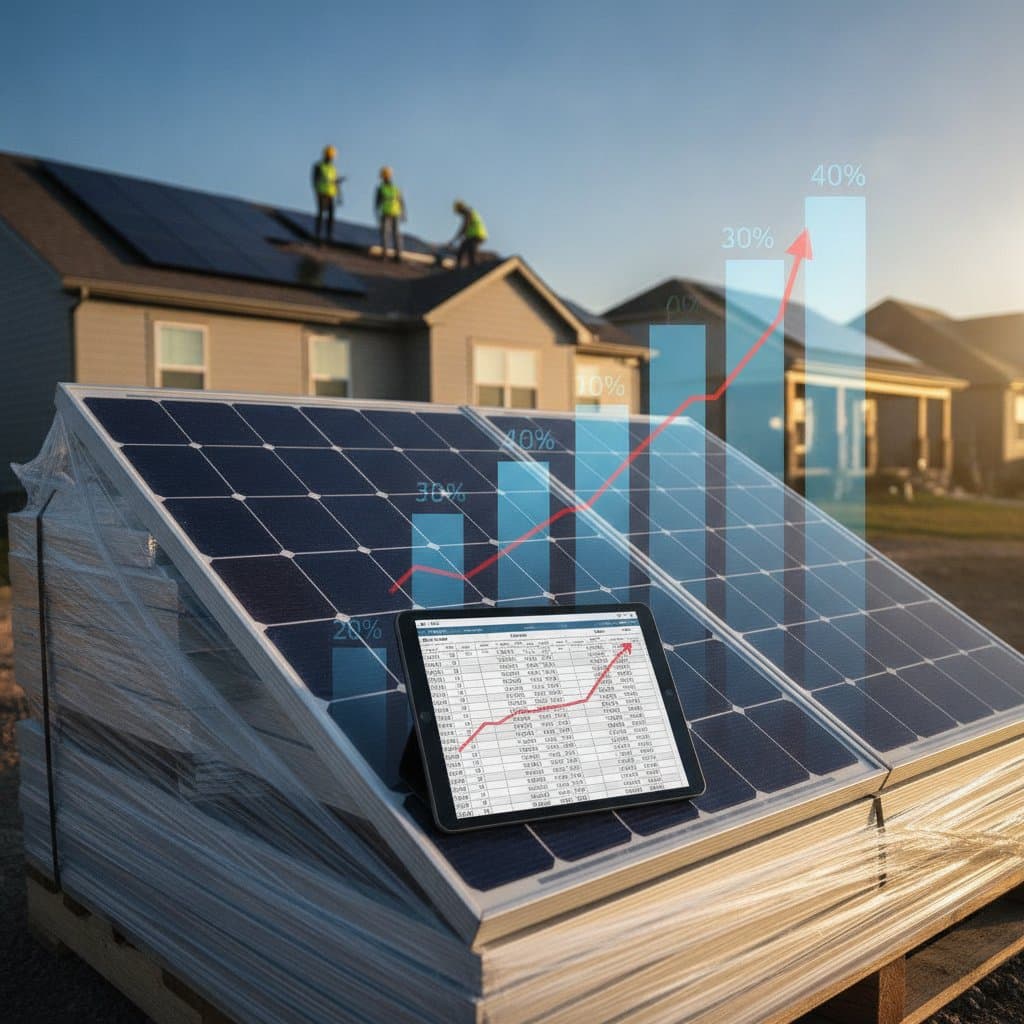
Solar Panel Prices Projected to Rise 20 to 40 Percent Due to Tariffs
Solar research often presents conflicting signals about future costs. Homeowners who have benefited from declining installation expenses now confront a reversal. New trade actions on imported solar panels and components will increase prices by 20 to 40 percent. This shift will influence installation decisions, inventory strategies, and utility planning for renewable energy.
Solar power continues to represent a reliable long term investment in residential energy. Tax credits, ongoing energy savings, and consistent output support positive returns even when hardware expenses increase. Clear information about price drivers allows homeowners to plan effectively.
Core Components of a Residential Solar System
A typical home solar installation converts sunlight into usable electricity through photovoltaic cells housed in panels. These panels contain silicon wafers, protective glass, and aluminum frames. Sunlight triggers electron movement that generates direct current, which an inverter then transforms into alternating current for household appliances.
System expenses break down primarily into panels, inverters, and labor. Panels represent roughly half the total investment while inverters account for about 10 percent. Labor, mounting hardware, and wiring complete the balance. Tariffs target panel materials most directly, though related components may experience secondary effects.
A 30 percent rise in panel costs on a 20000 dollar project adds approximately 3000 dollars to the overall price. This adjustment can extend the time required to recover the initial outlay by one or two years based on local electricity rates and available incentives.
Cost and Payback Analysis for a Philadelphia Home
Consider a 7 kilowatt system in Philadelphia that produces 1300 kilowatt hours per kilowatt annually. Annual output reaches 9100 kilowatt hours. At an average utility rate of 18 cents per kilowatt hour, the system offsets 1640 dollars in annual electricity expenses.
Before tariffs, a 20000 dollar system qualifies for the 30 percent federal tax credit and reduces net cost to 14000 dollars. Payback occurs in approximately 8.5 years. After a 30 percent hardware increase the pre credit price becomes 26000 dollars and the net cost after incentives reaches 18200 dollars. Payback extends to about 11 years while the system continues generating power for 25 years or longer.
Market Adjustments and Supply Chain Responses
Installers are building inventory reserves to secure current pricing levels. Some companies are exploring domestic manufacturing sources to bypass tariff impacts. These transitions require time and may create short term competition for unaffected equipment.
Homeowners should anticipate extended scheduling for permits and inspections as demand rises ahead of policy changes. Early planning reduces exposure to these delays. Over several years tariffs may encourage expanded United States production, which can stabilize future pricing and shorten supply routes.
Steps Homeowners Can Take Now
Evaluate roof condition and current electricity expenses to determine whether installation timing makes sense before tariffs apply. Secure written quotes that remain valid for several weeks to preserve existing rates.
Review utility rate structures, including time of use options, to optimize system design. Software modeling based on historical bills helps identify the most effective configuration. Pairing solar with battery storage can address peak pricing periods and supply backup power, and narrowing price differences may make storage more attractive.
Enduring Financial and Environmental Benefits
Panels typically lose less than 0.5 percent of output each year, and warranties cover 25 years for modules along with 10 to 12 years for inverters. Multiple incentive layers at federal, state, and utility levels can offset much of the added expense and restore payback periods close to earlier projections.
After installation, periodic panel cleaning and monitoring software maintain performance. Request detailed cost breakdowns from several installers to isolate tariff effects. Existing system owners will not experience operational changes, yet higher replacement costs may increase property resale value.
Solar technology continues to advance toward greater energy independence. Thoughtful timing, thorough quote comparisons, and incentive awareness support sound investment decisions amid market shifts.