
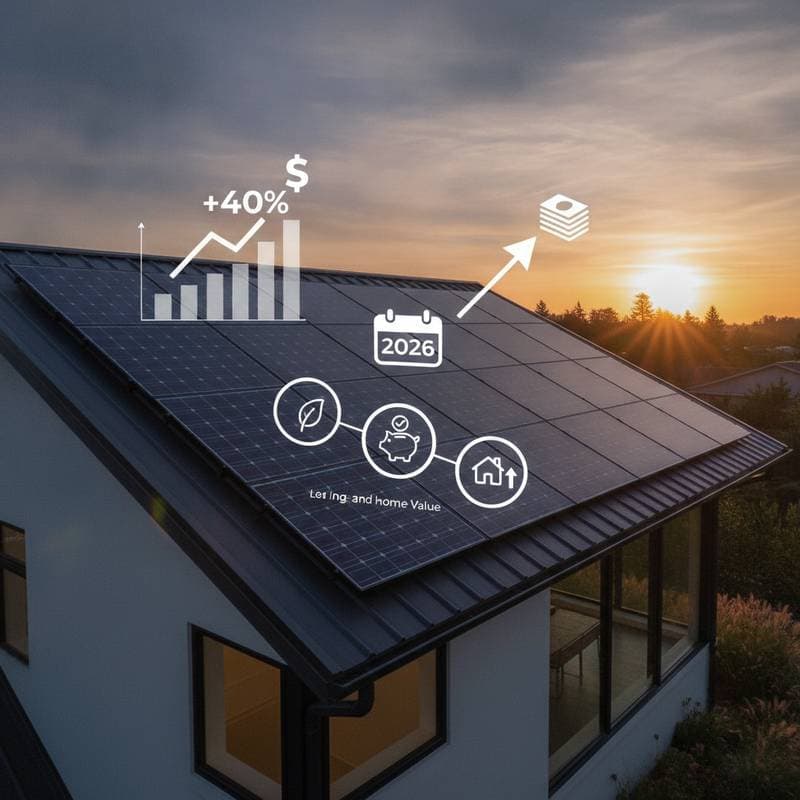
2026 Solar Tariffs Signal Higher Panel Prices
Solar research involves many variables. Shifting incentives and new tariff announcements create questions about timing. A projected 40 percent increase in imported solar panel prices will reshape installation budgets and payback periods. Homeowners benefit from understanding the drivers and planning ahead.
Tariff Impacts on Pricing
The changes target imported solar panels and cells. The policy promotes domestic manufacturing by raising costs for foreign products. Imported panels represent most residential inventory today. A 40 percent tariff raises a panel from 30 cents per watt to 42 cents per watt.
A typical 7 kilowatt residential system faces roughly 840 dollars in added hardware cost. Full system costs may increase by 1500 to 2000 dollars after equipment and labor markups. These figures show how tariffs move through the supply chain.
Effects on Homeowner Investments
Panels account for 25 to 35 percent of total project cost. A 40 percent rise in that segment lifts overall installed price by about 10 percent. A 20000 dollar system could reach 22000 dollars after tariffs take effect.
Payback periods lengthen as a result. The same system that offsets 1500 dollars yearly moves from 13 years to 15 years. Financing decisions and incentive value shift with this change.
System Performance Basics
Photovoltaic cells in each panel convert sunlight into electricity. Sunlight excites electrons and creates direct current. An inverter changes that current to alternating current for home use or grid export.
Output depends on panel count, wattage rating, and local sunlight. A 7 kilowatt system in an area with 1300 kilowatt hours per kilowatt per year produces about 9100 kilowatt hours annually. This output offsets roughly 90 percent of a 10000 kilowatt hour household load.
Supply Chain Adjustments
New domestic manufacturing facilities are planned or under construction. Full capacity takes time to reach. Demand will exceed supply in the interim and keep prices elevated.
Domestic panels often cost more upfront yet offer shorter lead times and stronger warranties. Performance levels now approach those of imported products. Homeowners gain reliability and alignment with local production values.
Available Incentives
Federal tax credits cover a percentage of total system cost. State and utility rebates add further reductions. Combined incentives can lower net cost by several thousand dollars.
A post tariff system at 22000 dollars qualifies for a 30 percent federal credit. The homeowner receives 6600 dollars back. Net cost falls to 15400 dollars and payback returns near 10 years.
Strategic Timing for Purchases
Pricing responds to tariffs, material costs, and demand. Wholesalers already adjust inventory ahead of the policy change. A signed contract before tariffs activate usually locks in current rates.
Homeowners should gather multiple quotes now. Compare equipment, financing, and timelines while flexibility remains. Installers with pre tariff stock can protect pricing for several months.
Ongoing System Care
Solar systems require minimal maintenance. Clean panels once or twice yearly and monitor inverter output through apps. Modern panels degrade below 0.5 percent per year and retain over 85 percent output after 25 years.
Longer warranties reduce long term risk. Quality components preserve value and sustain savings after payback ends.
Preparing for Installation
Collect quotes that detail hardware, labor, and permitting. Confirm domestic panel options and pre tariff inventory. Verify incentive eligibility for chosen financing.
Schedule roof and electrical assessments early. Structural updates can finish before installation. This sequence secures current pricing while organizing project details.