
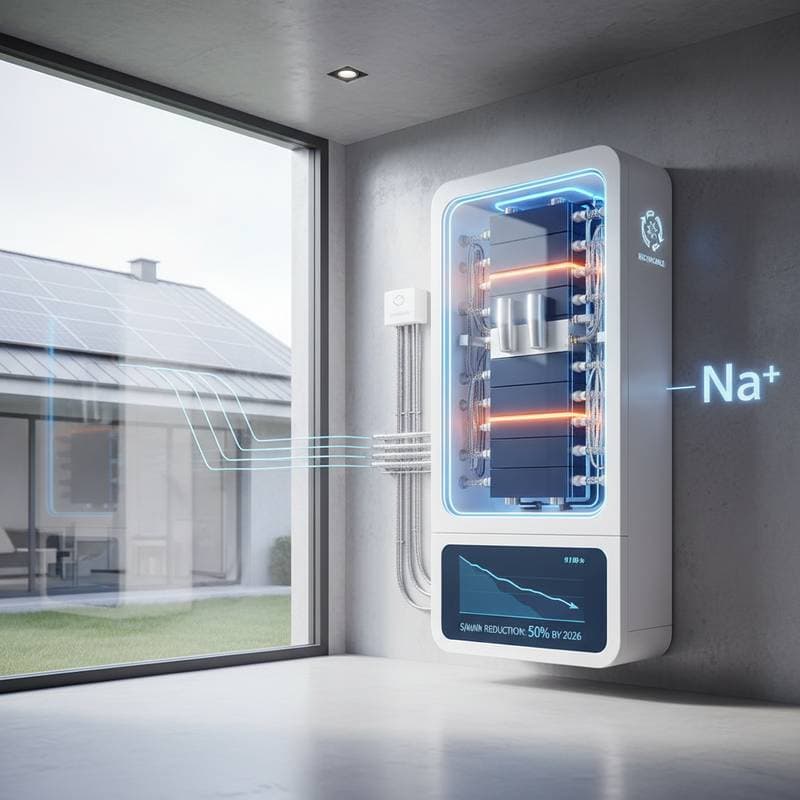
Sodium Batteries Could Cut Solar Storage Costs in Half
Sodium-ion batteries represent a promising advancement in energy storage technology. These batteries utilize sodium, an abundant element, rather than scarce lithium, which could reduce costs for solar energy systems significantly. By 2026, experts predict that sodium-ion batteries will halve the expenses associated with storing solar power, making renewable energy more accessible for residential use.
Homeowners who install solar panels often face high costs for battery storage, which limits widespread adoption. Traditional lithium-ion batteries dominate the market but rely on materials that are expensive and environmentally challenging to source. Sodium-ion alternatives offer a path to lower prices and greater sustainability, potentially transforming how households manage their energy needs.
Understanding Sodium-Ion Batteries
Sodium-ion batteries function similarly to lithium-ion batteries but replace lithium with sodium ions. Sodium exists in vast quantities in seawater and salt deposits, ensuring a steady supply without the geopolitical tensions linked to lithium mining. This shift addresses key limitations in current battery technology.
The core components include a cathode, anode, and electrolyte, where sodium ions move between electrodes during charge and discharge cycles. Researchers have developed variations using hard carbon anodes and layered oxide cathodes to optimize performance. These designs maintain energy density close to lithium-ion levels while prioritizing cost efficiency.
Safety improves with sodium-ion batteries due to their higher thermal stability. Lithium-ion batteries can overheat or catch fire under stress, but sodium versions resist such risks better. This reliability suits home solar setups, where safety remains a primary concern for families.
Advantages Over Lithium-Ion for Solar Storage
Cost stands as the most compelling benefit. Lithium prices fluctuate due to limited supply chains, whereas sodium costs remain stable and low. Manufacturers project that sodium-ion systems will reach price parity with lead-acid batteries soon, cutting solar storage expenses by up to 50 percent.
Recycling processes for sodium-ion batteries prove simpler and more efficient. Components dissolve more readily in standard recycling solutions, reducing waste and environmental impact. Homeowners benefit from batteries that last longer in terms of lifecycle sustainability, aligning with green energy goals.
Performance in solar applications shines through consistent output across temperature ranges. Sodium-ion batteries operate effectively in cold climates, unlike some lithium options that lose efficiency below freezing. For regions with variable weather, this reliability ensures uninterrupted power from rooftop solar arrays.
Timeline for Adoption in Residential Solar Systems
Development accelerates with major companies investing in production. By 2024, pilot projects demonstrate viability in grid-scale storage, paving the way for home use. Projections indicate commercial availability for residential markets by 2026, integrated into popular solar inverters and battery packs.
Regulatory support grows as governments promote alternatives to lithium dependency. Incentives for sustainable batteries could lower upfront costs further, encouraging solar installers to adopt the technology. Early adopters might see installations in select markets within the next two years.
Challenges persist, such as scaling manufacturing to meet demand. Energy density lags slightly behind lithium-ion, requiring larger units for equivalent storage. However, ongoing research addresses these issues, with prototypes already matching performance in real-world tests.
Practical Implications for Homeowners
Solar energy independence becomes more attainable with affordable storage. Families can store excess daytime production for evening use, reducing reliance on utility grids and lowering bills. A typical home system might store 10 to 20 kilowatt-hours, sufficient for daily needs during outages or peak pricing.
Integration with existing solar setups requires minimal adjustments. Compatible inverters handle sodium-ion batteries seamlessly, allowing phased upgrades. Consult certified installers to assess compatibility and maximize savings through rebates or tax credits.
Long-term savings extend beyond initial costs. Durable batteries endure thousands of cycles with minimal degradation, providing 10 to 15 years of service. This longevity offsets the investment quickly, especially in areas with high electricity rates.
Steps to Prepare for Sodium-Ion Integration
Evaluate current solar capacity to determine storage needs. Calculate daily usage and peak production to size the battery appropriately. Tools from solar providers offer free assessments based on utility bills.
- Research local incentives for advanced battery technologies.
- Contact installers experienced in emerging storage solutions.
- Monitor industry announcements for 2026 product launches.
- Consider hybrid systems that allow easy transitions from lithium to sodium.
Stay informed through reputable solar associations, which provide updates on technology shifts. Early planning positions homeowners to capitalize on cost reductions as sodium-ion batteries enter the market.
The Path to Affordable Energy Independence
Sodium-ion batteries herald a new era for solar storage, emphasizing abundance and sustainability. Homeowners gain access to reliable, cost-effective power that supports environmental stewardship. As this technology matures, residential energy systems evolve toward greater efficiency and self-sufficiency, benefiting communities nationwide.